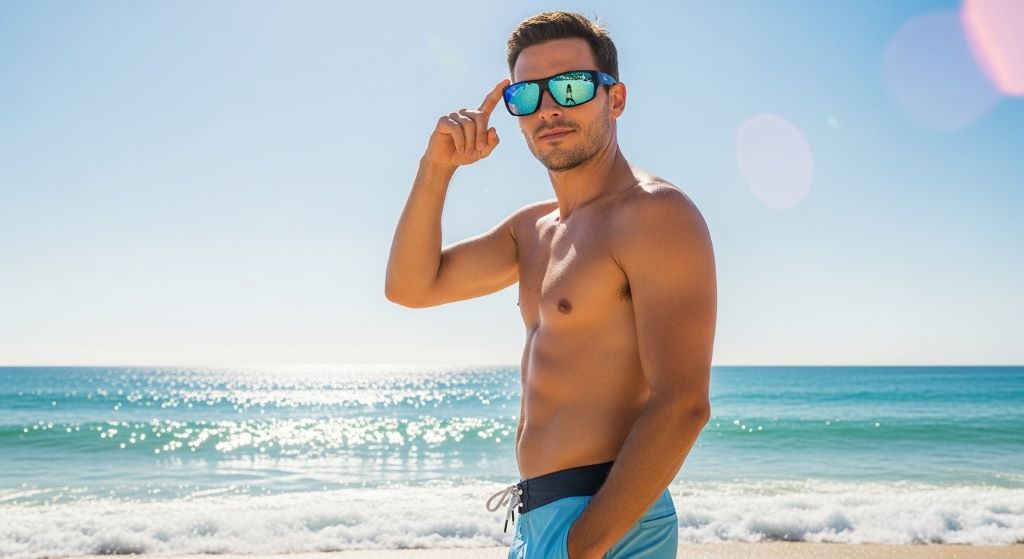
Summer at the beach is one of life’s great pleasures. The sun, the sand, the water — it all feels perfect. However, all that sunshine comes with a serious risk to your eyes. Prolonged exposure to ultraviolet rays can cause lasting damage, including cataracts, macular degeneration, and even eyelid cancer.
The right pair of sunglasses is not just a fashion statement. It is a health decision. Therefore, knowing how to pick the best beach sunglasses for men can protect your vision for years to come. This guide covers everything you need to know — from lens types and frame styles to fit, durability, and value.
Why Eye Protection at the Beach Matters More Than You Think
Most people apply sunscreen before heading to the beach. Far fewer think about protecting their eyes. That is a mistake.
At the beach, your eyes face a double threat. Sunlight hits you directly from above, and it also bounces back from the water and sand. This reflected glare is intense. It can cause temporary blindness, eye strain, and long-term retinal damage.
Additionally, UV exposure is cumulative. The damage builds up over years, even if you do not notice it right away. Starting to protect your eyes now — at any age — makes a meaningful difference in the long run. Choosing quality UV protection eyewear is one of the simplest steps you can take.
Understanding UV Rays and What They Do to Your Eyes
Not all sunlight is equally harmful. UV radiation comes in three forms: UVA, UVB, and UVC. UVC rays are mostly absorbed by the Earth’s atmosphere. However, UVA and UVB rays reach your eyes every time you step outside.
UVB rays are the more immediately harmful of the two. They are responsible for sunburns, including on the surface of the eye — a condition called photokeratitis, sometimes called “snow blindness” or “sunburn of the eye.” It is painful and temporary, but it signals real damage.
UVA rays penetrate deeper. Over time, they contribute to cataracts and damage to the retina. Therefore, any sunglasses you choose for beach use should block 100 percent of both UVA and UVB rays. This is non-negotiable.
What Polarized Lenses Actually Do
Many sunglasses claim UV protection, but not all of them include polarized lenses. These are two different things, and understanding the difference matters.
Standard tinted lenses reduce the overall brightness of light. They make things look darker, which can be helpful. However, they do not specifically address glare. Glare is the intense, blinding light that reflects off flat surfaces like water, wet sand, and car hoods.
Polarized lenses contain a special filter that blocks horizontal light waves — the kind that create glare. When you wear them at the beach, the water looks clearer, the colors appear more vivid, and your eyes feel far less strained. For any man spending time near water, polarized lenses are worth every extra dollar.
It is important to note, though, that polarization is a comfort feature, not a UV protection feature. A lens can be polarized without offering full UV protection. Always check that your sunglasses offer both.
Key Features to Look for in Beach Sunglasses
Full UV400 Protection
This is the most important specification on any pair of sunglasses. UV400 means the lenses block all light waves up to 400 nanometers in wavelength. That covers both UVA and UVB rays completely.
Look for this label on the product packaging or description. If a pair of sunglasses does not mention UV400 or “100% UV protection,” move on. Cheap, unrated lenses can actually be worse than wearing no sunglasses at all. Dark lenses cause your pupils to dilate, letting in more harmful rays if the lenses do not block UV.
Lens Material: Glass, Polycarbonate, or Nylon
The material of the lens affects clarity, weight, and durability.
Glass lenses offer the best optical clarity. They resist scratches well but are heavier and can shatter on impact. They work well for casual beach days but may not be ideal for active water sports.
Polycarbonate lenses are lightweight and impact-resistant. They are a great all-around choice for beach use. Most sports sunglasses use polycarbonate for this reason.
Nylon and Trivex lenses sit between glass and polycarbonate in terms of clarity and durability. They are lightweight, flexible, and excellent for high-performance use.
Lens Color and Tint
Lens color affects how you see contrast and color in different environments.
Gray lenses are the most natural choice for beach use. They reduce brightness evenly without changing how colors appear. This makes them ideal for driving and open-water activities.
Brown and amber lenses enhance contrast and depth perception. They work well on partly cloudy days or in variable light conditions. Many fishermen and boaters prefer them for this reason.
Green lenses offer a balance between gray and brown. They provide good contrast while maintaining accurate color perception. Additionally, they tend to reduce eye fatigue in bright conditions.
Avoid blue and pink mirrored lenses for serious UV protection purposes. They look stylish but often do not offer the same contrast or clarity as gray, brown, or green options.
Mirror Coatings
Mirror coatings are applied to the outside of the lens. They reflect extra light away from your eyes. This is especially useful at the beach, where light intensity is high.
Mirrored lenses also help with privacy — people cannot easily see your eyes through them. However, they scratch more easily than non-mirrored lenses, so handle them with care and store them in a hard case.
Wraparound vs. Standard Frames
Frame shape plays a bigger role in eye protection than most people realize. Standard frames leave gaps on the sides. Sunlight can sneak in from the edges, especially when the sun is at an angle.
Wraparound frames curve around the face to block light from all sides. They provide significantly more coverage. For beach use, a wraparound or semi-wraparound style is the smart choice. They look sporty, feel secure, and keep your eyes protected even when you are moving around.
Frame Materials: Durability Matters at the Beach
The beach is tough on gear. Sand, saltwater, sweat, and heat can degrade materials quickly. Therefore, choosing the right frame material is essential.
Nylon and TR90 are lightweight, flexible, and resistant to heat and corrosion. They are excellent for beach and sports use. Most performance sunglasses use these materials for a reason.
Acetate frames look premium and come in a wide range of colors and patterns. They hold up well in normal conditions but can warp in extreme heat. Leaving acetate frames on the dashboard of a hot car, for example, is a bad idea.
Metal frames — aluminum and titanium — are stylish and durable. However, they can heat up significantly in direct sunlight. They also tend to be heavier, which may cause discomfort during long beach days.
Getting the Right Fit
A well-fitting pair of sunglasses stays in place when you move and does not pinch or slide. At the beach, where you might be swimming, running, or playing sports, fit becomes especially important.
Look for sunglasses with rubberized nose pads and temple tips. These grip better when your face is sweaty or wet. They also help the frames stay put when you lean forward or move quickly.
Frame width should match the width of your face. If the frames extend past your temples, they are too wide. If they pinch, they are too narrow. Most brands list frame measurements — lens width, bridge width, and temple length — in millimeters. Taking the time to check these numbers helps you avoid the frustration of returning an ill-fitting pair.
Face Shape and Style: Finding What Works for You
Function should always come first, but style matters too. The good news is that certain frame shapes work better for certain face shapes, and there is a simple way to figure out which category you fall into.
Men with round faces tend to look best in rectangular or square frames. These add definition and balance out softer features.
Men with square or angular faces suit rounder, more curved frames. They soften the jawline and add a sense of balance.
Men with oval faces have the most flexibility. Almost any frame shape works well with this face shape.
Aviator-style frames are a timeless option that suits most men. They have a slightly curved, teardrop shape that works for a wide range of face types. Additionally, many aviator designs now come with UV protection eyewear specifications and polarized options, making them practical as well as stylish.
Price Range: What Should You Expect to Spend?
Beach sunglasses span a wide range of prices, from under ten dollars to several hundred. Here is a rough guide to what you get at each level.
Under $30: Decent for casual, occasional beach use. UV400 options are available, but optical quality and durability are limited. Do not expect polarization at this price.
$30 to $80: A solid mid-range choice. Many reputable brands offer genuine polarization and full UV protection in this range. Frame quality improves significantly.
$80 to $150: This is where you start to find performance-grade materials, better lens coatings, and more comfortable fits. Ideal for men who spend a lot of time at the beach.
$150 and above: Premium territory. Brands like Maui Jim, Oakley, and Ray-Ban sit here. Exceptional optical clarity, long-lasting build, and often better warranty coverage.
The sweet spot for most men is the $50 to $100 range. You get real protection and durability without overspending.
Lens Coatings Worth Paying For
Beyond polarization and tint, a few extra coatings can make your sunglasses much more functional at the beach.
Anti-reflective coating on the back surface of the lens reduces glare from light bouncing off the inside of the lens. This is often overlooked but makes a noticeable difference in comfort.
Scratch-resistant coating helps your lenses last longer, especially when they are tossed into a bag or dropped on a sandy surface. Almost all quality lenses come with this, but it is worth confirming.
Hydrophobic coating repels water and sweat. At the beach, this is a genuine game-changer. Water beads up and rolls off instead of smearing across your lenses.
How to Care for Your Beach Sunglasses
Even the best sunglasses will not last if you do not take care of them. A few simple habits extend their life considerably.
Rinse them with fresh water after beach use to remove salt and sand. Always use a microfiber cloth — not your shirt — to clean the lenses. Store them in a hard case when not in use. Avoid leaving them face-down on any surface, especially sand.
Additionally, keep them out of hot cars and direct heat exposure. Extreme temperatures warp frames and damage lens coatings faster than anything else.
Conclusion
Choosing the best beach sunglasses for men is about more than looks. It is about protecting your eyes from real and lasting damage. The key is to prioritize full UV400 protection above everything else. From there, polarized lenses add comfort and clarity, especially near water. Pay attention to frame fit, material, and wraparound coverage. Think about how and where you will use them, and set a realistic budget.
The right pair of sunglasses will serve you season after season. They will protect your vision, reduce eye fatigue, and let you enjoy the beach to the fullest. Take the time to choose wisely, and your eyes will thank you for it.
Frequently Asked Questions
- What is the difference between UV protection and polarized lenses? UV protection blocks harmful ultraviolet rays that can damage your eyes. Polarization reduces glare from reflective surfaces like water and sand. Both are important for beach use, but they serve different purposes. Always look for sunglasses that offer both features together.
- Do expensive sunglasses always offer better UV protection? Not necessarily. UV protection is a lens property, not a price indicator. Some affordable sunglasses offer full UV400 coverage, while some expensive ones do not. Always check the UV rating regardless of price.
- Are wraparound sunglasses really necessary for the beach? They are strongly recommended. Wraparound frames block sunlight from the sides, which is particularly important at the beach where light reflects from multiple angles. Standard frames leave gaps that allow UV rays and glare to reach your eyes.
- Can I wear beach sunglasses for driving? Yes, in most cases. Gray or green polarized lenses are excellent for driving. They reduce glare from other vehicles and wet roads. However, avoid overly dark lenses in low-light conditions, and note that some polarized lenses can make digital dashboards harder to read.
- How do I know if my sunglasses are truly polarized? The easiest test is to hold your sunglasses in front of a phone or tablet screen and rotate them slowly. A genuinely polarized lens will cause the screen to go dark at a certain angle. If there is no change, the lenses are not polarized.
Related Topics:
How to Choose Zero Waste Holiday Gifts for Kids
How to Identify Safe and Non-Toxic Toys for Toddlers