Finding the right mountain bike can feel overwhelming. There are hundreds of options, and the differences between them are not always obvious. However, choosing wisely makes every ride more enjoyable. This guide will help both men and women pick a mountain bike that fits well, rides smoothly, and suits their goals.
Understanding What You Need Before You Shop
Before you look at any bike, think about how you plan to use it. Will you ride on flat dirt trails? Steep rocky paths? Or a mix of both? Your riding style shapes every decision that follows.
Also consider how often you plan to ride. A casual weekend rider needs a different bike than someone who trains five days a week. Therefore, being honest about your habits saves you money and keeps you comfortable on the trail.
Finally, set a realistic budget. Mountain bikes range from a few hundred to several thousand dollars. You do not need the most expensive model to have a great experience. A mid-range bike with the right fit will always outperform a high-end bike that does not suit your body.
Frame Size Matters More Than Anything Else
The frame is the foundation of the bike. If the frame is too large or too small, no amount of seat adjustment will fix the problem. Most manufacturers label frames as small, medium, large, and extra-large. These sizes correspond to your height and inseam length.
To find your size, stand over the bike with both feet flat on the ground. There should be a small gap between you and the top tube. If you feel cramped or stretched out when holding the handlebars, the frame is the wrong size.
Additionally, pay attention to the reach. Reach is the distance from the seat to the handlebars. A shorter reach is better for shorter riders. A longer reach suits taller riders who want more stability at speed.
How Unisex Bikes Fit Into the Picture
Many brands now offer unisex bikes that work well for both men and women. Unisex bikes are designed around neutral geometry, meaning they do not assume a specific body shape. However, some riders find that gender-specific models fit their proportions better, particularly in the shoulder width and hip area.
Women, on average, have shorter torsos and longer legs relative to their height. Some women prefer bikes with shorter top tubes and narrower handlebars. Men, on average, have longer torsos and wider shoulders. They often need a longer reach and wider bars for better control.
That said, unisex bikes are a solid choice when you prioritize value and availability. The key is always to test ride before you buy.
Choosing the Right Type of Mountain Bike
Mountain bikes come in several categories. Each one is designed for a specific kind of riding.
Hardtail bikes have front suspension but no rear suspension. They are lighter and easier to maintain. Therefore, they work well for beginners and riders who mostly ride smooth trails.
Full-suspension bikes have both front and rear suspension. They absorb bumps better and give you more control on rough terrain. However, they cost more and require additional maintenance.
Cross-country bikes are built for speed and efficiency on rolling terrain. Enduro and trail bikes are more versatile and handle steep descents. Downhill bikes are heavy and built only for going downhill fast. Choose based on where you actually plan to ride, not where you hope to ride someday.
The Role of Ergonomic Bike Design in Comfort
Ergonomic bike design is one of the most important factors for long rides. A bike designed with ergonomics in mind reduces strain on your wrists, back, and knees. It lets you ride longer without discomfort.
Key ergonomic features to look for include:
- Handlebar width that matches your shoulder width
- Grips that fit your hand size without requiring a tight squeeze
- A saddle shape that supports your sit bones correctly
- Crank arm length suited to your leg length
- Brake levers that you can reach without stretching your fingers
Many riders overlook the saddle. It is one of the easiest components to swap, and the right saddle makes a dramatic difference. Women typically benefit from a wider saddle due to the wider spacing of sit bones. Men usually prefer a narrower saddle for better pedaling efficiency.
Suspension and Wheel Size
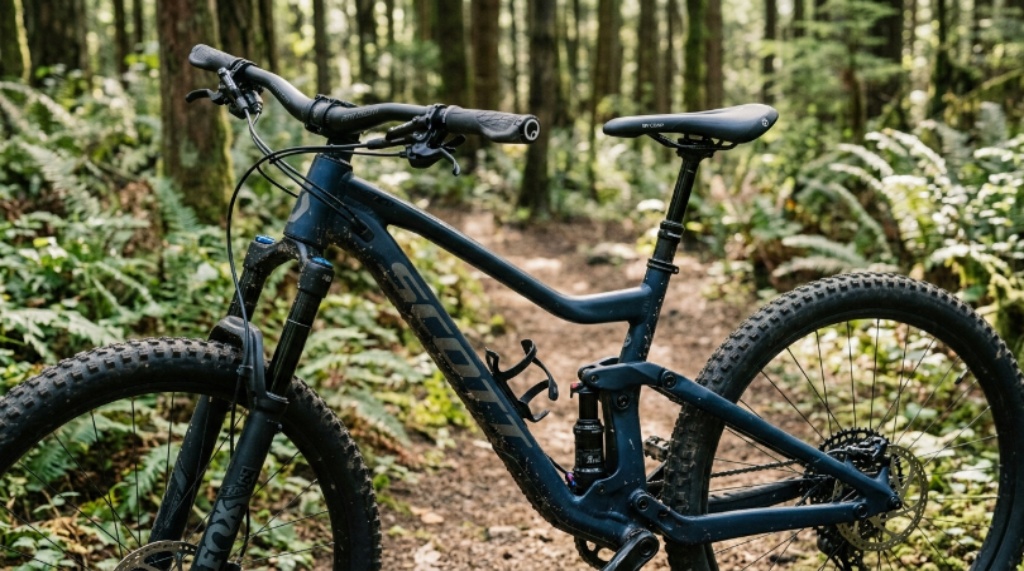
Suspension travel refers to how much the fork or rear shock can compress. More travel means more cushioning. For general trail riding, 120 to 140 millimeters of travel is a good range. Cross-country riders often prefer 100 millimeters. Enduro riders may want 150 to 160 millimeters.
Wheel size also affects how the bike feels. The three common sizes are 26 inches, 27.5 inches, and 29 inches. Larger wheels roll over obstacles more easily and maintain speed better. Smaller wheels are more agile and easier to control in tight corners. Most adult riders find 27.5 or 29-inch wheels most comfortable today.
Additionally, tire width plays a role in comfort riding. Wider tires at lower pressure absorb trail vibrations more effectively. This makes a real difference on long rides across rough ground.
Gears, Brakes, and Drivetrain Basics
Modern mountain bikes typically use 1x drivetrains, meaning one chainring in the front and multiple gears in the back. This setup simplifies shifting and reduces the chance of the chain falling off.
For brakes, hydraulic disc brakes offer the best stopping power with the least effort. They work well in wet conditions, which matters if you ride in rain or mud. Mechanical disc brakes are less powerful but easier to adjust and repair on the trail.
Look for a drivetrain with enough range for your terrain. If you ride steep hills, you need a low enough gear to climb without exhausting yourself. If you ride fast flats, you need a high enough gear to maintain speed efficiently.
Comfort Riding Starts With Proper Setup
Even the best bike feels wrong if it is set up incorrectly. Saddle height is the most critical adjustment. When you sit on the saddle and push one pedal to the bottom of the stroke, your knee should have a slight bend. Too high causes hip rocking. Too low strains your knees.
Handlebar height affects your posture. A higher position is more upright and easier on your back. A lower position gives more control on technical terrain but puts more weight on your wrists. For comfort riding, slightly higher bars are usually better for most recreational cyclists.
Furthermore, consider adding ergonomic grips if the stock grips feel uncomfortable. Padded grips or lock-on grips with a soft outer layer reduce hand fatigue significantly on longer rides.
Test Riding and Where to Buy
Always test ride a bike before purchasing if possible. Many local bike shops offer demo days or short test rides. Riding even for ten minutes tells you more than any spec sheet.
Local bike shops also offer expert fitting services. A professional fitting session costs a little extra but ensures the bike suits your body. Additionally, shop staff can suggest the right components and accessories for your style of riding.
Online shopping can save money, but you lose the ability to test before you buy. If you purchase online, make sure the retailer has a clear return or exchange policy. Some online retailers also offer virtual fitting consultations.
Conclusion
Choosing a mountain bike is a personal decision that depends on your body, your budget, and how you want to ride. Start by getting the right frame size. Then consider the type of trails you will ride and pick the appropriate bike category. Pay attention to ergonomic bike design features that support your comfort over time. Whether you choose a gender-specific model or explore unisex bikes, focus on fit first and features second. A well-fitted bike on the right terrain, with proper setup, will always deliver a better experience than an impressive-looking bike that does not feel right. Take your time, ask questions, and enjoy the process of finding your perfect ride.
Frequently Asked Questions
What is the difference between a men’s and women’s mountain bike?
Men’s and women’s mountain bikes differ mainly in frame geometry, handlebar width, and saddle shape. Women’s bikes are often designed with shorter top tubes, narrower bars, and wider saddles to suit average female proportions. However, the best choice always comes down to individual fit.
Are unisex bikes good for women?
Yes, unisex bikes work well for many women, especially taller women or those with a longer torso. The key is testing the fit. If the reach feels comfortable and the saddle supports your sit bones properly, a unisex model is a great choice.
What wheel size is best for beginners?
For most beginners, 27.5-inch or 29-inch wheels are the most practical. They roll over obstacles easily and provide good stability. Shorter riders may find 27.5-inch wheels more manageable, while taller riders often prefer 29-inch wheels.
How much should I spend on my first mountain bike?
A budget of $800 to $1,500 gets you a reliable, capable bike for trail riding. Bikes below $500 often use heavier components that wear out quickly. You do not need to spend thousands on your first bike, but investing in the mid-range pays off in durability and enjoyment.
How do I know if a mountain bike fits me properly?
A properly fitting mountain bike allows a slight bend in your knee at the bottom of the pedal stroke, lets you hold the handlebars without overstretching, and feels stable when you stand on the pedals. Your local bike shop can assist with a professional fitting if you are unsure.
Related Topics:
How to Pick Foldable Bike Rollers for Small Spaces
How to Find an Affordable Bike Helmet Without Compromising Safety