A 1-year-old child learns rapidly through touch, sound, movement, and repetition. At this stage, toys are not just for entertainment. They help develop motor skills, language, memory, and problem-solving abilities. Safe and educational toys for 1 year olds are designed to support early development while ensuring that materials, size, and structure prevent hazards.
According to the American Academy of Pediatrics, simple toys that encourage interaction and exploration are more beneficial than complex electronic gadgets during early childhood. Studies show that toddlers learn best through hands-on play rather than passive screen-based entertainment. This is why developmental toys for 1 year olds focus on stacking, sorting, pushing, pulling, and sensory exploration.
Parents often face a challenge when choosing toys. Many products claim to be “educational,” but not all actually support healthy development. Some toys contain small parts, harmful chemicals, or overstimulating electronic features that limit active learning.
This guide explains how to choose safe and effective baby learning toys and toddler starter toys. You will learn what features to prioritize, what safety standards to check, and which types of toys best support a child’s early developmental milestones.
Why Are Developmental Toys Important for 1 Year Olds?
Short answer: Developmental toys help toddlers build motor skills, language ability, cognitive awareness, and sensory coordination through play.
At around 12 months, babies transition into toddlers. During this period, they begin walking, pointing, imitating sounds, and interacting with objects more intentionally. Toys that encourage these behaviors help strengthen neural connections in the brain.
Research published in the journal Infant Behavior and Development found that children who regularly interact with problem-solving toys demonstrate improved cognitive flexibility and early reasoning skills.
Key Development Areas Supported by Toys
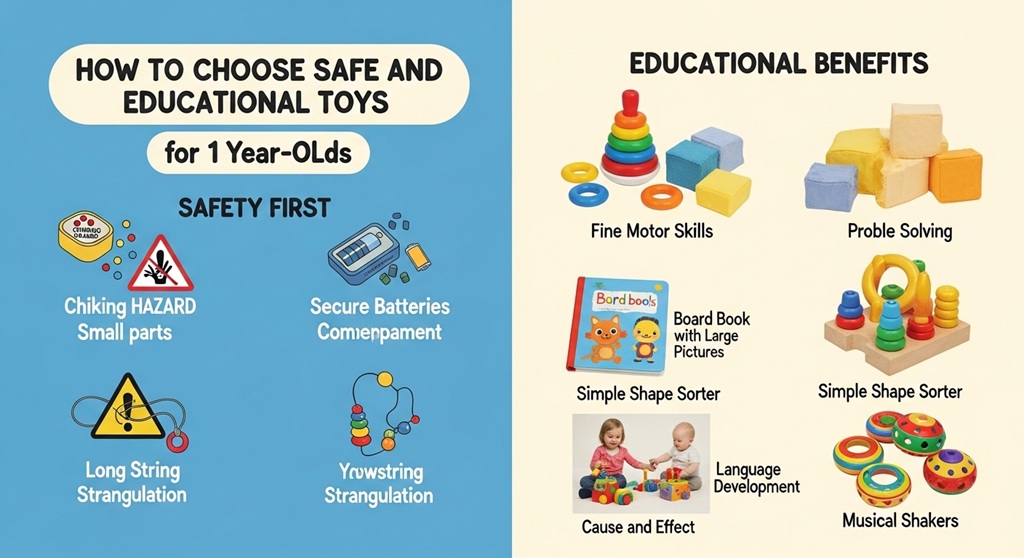
- Motor Skills: Pushing, stacking, and grasping improve muscle coordination.
- Language Development: Interactive toys introduce words and sounds.
- Sensory Exploration: Different textures, colors, and sounds stimulate senses.
- Problem Solving: Shape sorters and puzzles teach cause and effect.
- Social Interaction: Pretend play encourages communication with parents.
Because the brain develops rapidly during the first two years of life, choosing the right toddler starter toys can directly influence early learning outcomes.
What Safety Features Should Parents Look for in Baby Learning Toys?
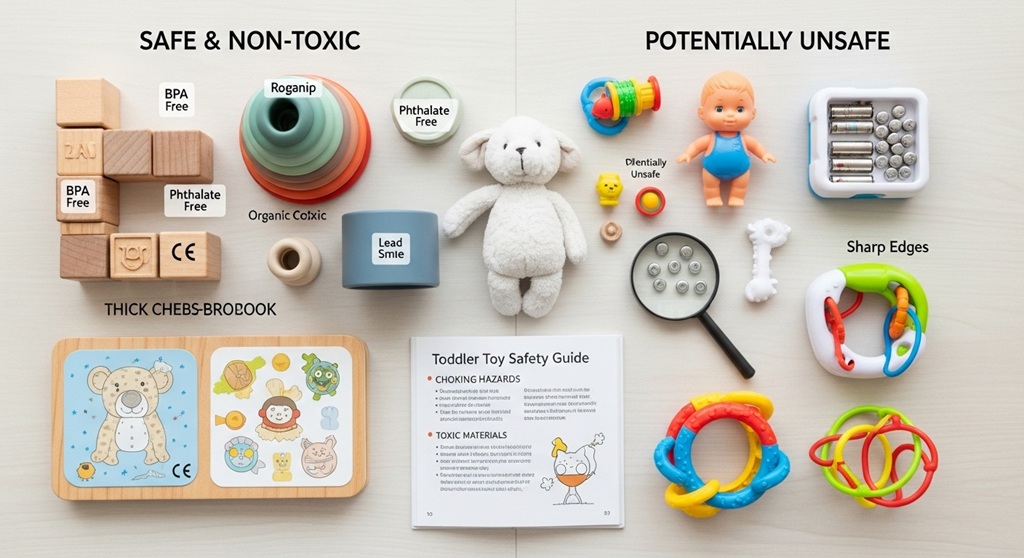
Short answer: Safe toys should be large enough to avoid choking hazards, made from non-toxic materials, durable, and compliant with child safety standards.
Safety is the first priority when selecting toys for toddlers. One-year-olds explore objects by placing them in their mouths. This increases the risk of choking or exposure to harmful materials.
Essential Toy Safety Guidelines
- Choose toys larger than 1.25 inches in diameter to prevent choking.
- Ensure edges are smooth and rounded.
- Check labels for non-toxic paint and BPA-free plastic.
- Avoid toys with detachable small components.
- Look for certifications such as ASTM or EN71 safety standards.
A 2023 safety report from the U.S. Consumer Product Safety Commission documented over 200,000 toy-related injuries among children under age 15, with choking hazards being the most common for toddlers. Proper toy selection significantly reduces these risks.
What Types of Toys Are Best for 1 Year Old Development?
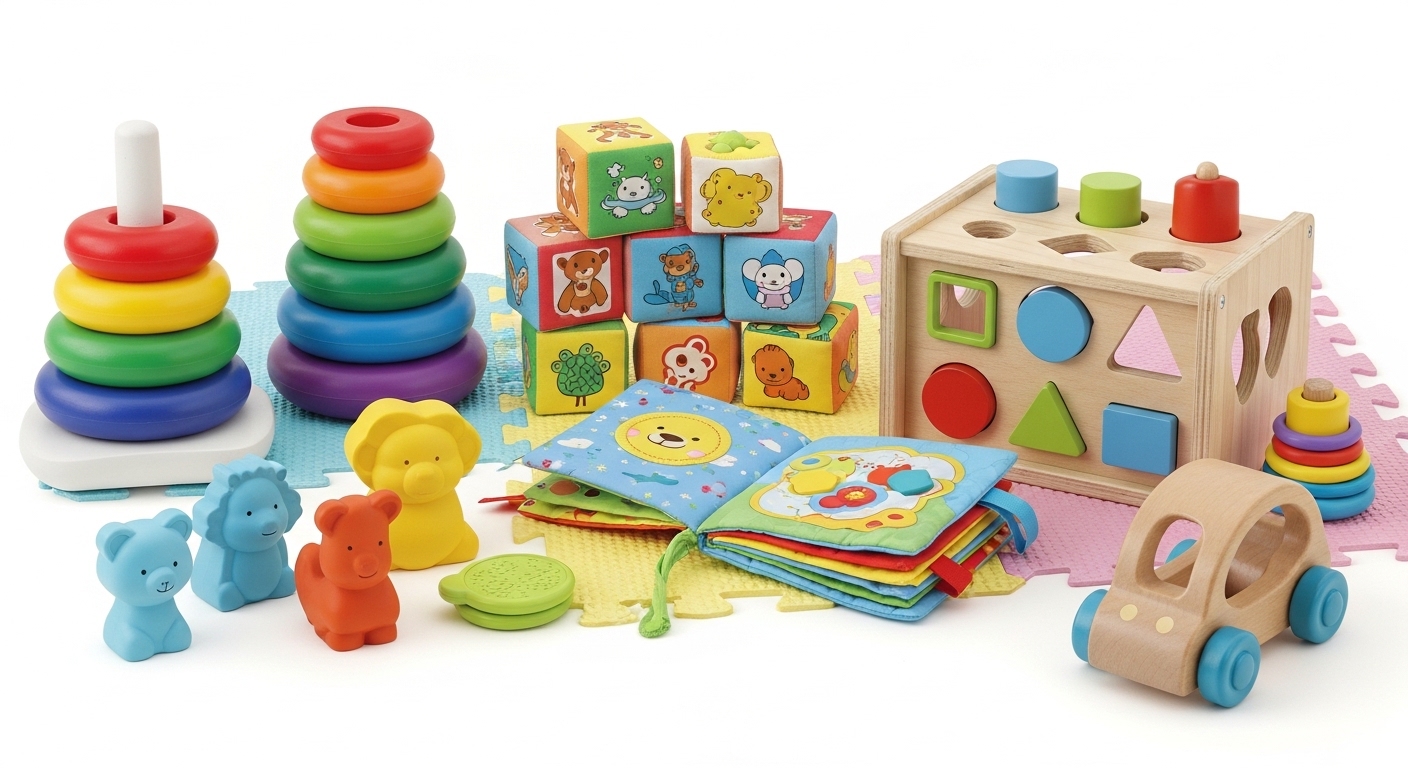
Short answer: The best developmental toys for 1 year olds include stacking toys, shape sorters, push toys, sensory toys, and simple musical instruments.
Each toy category supports a different developmental milestone. The best approach is to offer variety while keeping toys simple and interactive.
| Toy Type | Development Benefit | Example Activities |
|---|---|---|
| Stacking Toys | Hand-eye coordination | Stacking rings or cups |
| Shape Sorters | Problem solving | Matching shapes with slots |
| Push and Pull Toys | Walking practice | Walking while pulling toys |
| Sensory Toys | Touch and sound exploration | Textured balls or blocks |
| Musical Toys | Sound recognition | Drums, xylophones, rattles |
These baby learning toys encourage active engagement rather than passive observation.
How Do Educational Toys Support Brain Development?
Short answer: Educational toys stimulate neural pathways by encouraging exploration, repetition, and interaction.
The human brain forms up to 1 million neural connections per second during early childhood. Activities such as stacking, sorting, and moving objects strengthen these connections.
A Harvard Center on the Developing Child study shows that responsive interaction—when parents participate in play—significantly improves language acquisition and memory formation.
Examples of Brain-Stimulating Activities
- Sorting blocks by shape or color
- Stacking rings in order
- Pressing buttons that produce sounds
- Imitating animal sounds
- Rolling balls back and forth
These simple activities transform ordinary toys into powerful developmental tools.
Are Electronic Toys Good for 1 Year Olds?
Short answer: Limited use of electronic toys is acceptable, but simple hands-on toys support better learning outcomes.
Many electronic toys include lights, music, and automated actions. While these features may capture attention, research indicates that excessive stimulation can reduce active exploration.
A case study conducted by Temple University compared toddlers playing with electronic toys versus traditional toys. The study found that parents used three times more language when interacting with children during traditional toy play.
This suggests that simple toddler starter toys encourage stronger communication between parents and children.
How Many Toys Should a 1 Year Old Have?
Short answer: A small collection of versatile toys is more beneficial than a large number of toys.
Too many toys can overwhelm toddlers and reduce engagement. Child development experts recommend rotating toys every few weeks to maintain curiosity and attention.
Recommended Toy Categories
- 2–3 stacking or building toys
- 1 push or pull walking toy
- 2 sensory toys
- 1 musical toy
- 1 interactive book
Toy rotation keeps playtime fresh while preventing clutter.
What Materials Are Safest for Toddler Toys?
Short answer: Natural wood, BPA-free plastic, and food-grade silicone are considered safe materials for baby toys.
Parents should pay attention to the materials used in toy manufacturing. Cheap plastics may contain harmful chemicals that pose health risks.
Safe Toy Materials
- Solid wood with non-toxic paint
- BPA-free plastic
- Food-grade silicone
- Organic cotton for plush toys
Avoid toys with strong chemical odors or poorly applied paint. These may indicate low manufacturing standards.
How Can Parents Encourage Learning During Playtime?
Short answer: Parents can enhance learning by talking, demonstrating actions, and encouraging exploration during play.
Interactive play is the most powerful educational tool for toddlers. Toys simply provide the environment for learning to occur.
Effective Play Strategies
- Describe actions while playing.
- Ask simple questions like “Where does this shape go?”
- Encourage repetition and practice.
- Celebrate small achievements.
- Read books together during playtime.
These interactions build language skills and emotional bonds simultaneously.
Conclusion: Choosing the Right Toys Shapes Early Learning
Selecting the right toys for a 1-year-old child requires attention to safety, simplicity, and developmental value. The best developmental toys for 1 year olds encourage movement, exploration, and interaction rather than passive entertainment.
Stacking toys, shape sorters, sensory toys, and push toys remain some of the most effective baby learning toys because they promote hands-on engagement. Research consistently shows that simple toys combined with active parent participation lead to stronger cognitive and language development.
Parents do not need large collections of expensive toys. A carefully chosen set of toddler starter toys that stimulate curiosity and creativity will provide better developmental benefits.
If you are choosing toys for a toddler, focus on safety, durability, and educational value. Observe how your child interacts with each toy and adjust selections based on their interests and developmental progress.
Ready to support your child’s growth? Start by selecting a few safe, educational toys and spend time playing together every day. Small moments of interactive play can create lasting developmental benefits.
FAQ: Safe and Educational Toys for 1 Year Olds
What are the best developmental toys for 1 year olds?
The best developmental toys include stacking rings, shape sorters, push walkers, sensory balls, musical instruments, and interactive books. These toys help improve coordination, problem solving, and language development.
Are wooden toys better than plastic toys?
Both can be safe if they meet safety standards. Wooden toys with non-toxic paint are durable and environmentally friendly, while BPA-free plastic toys are lightweight and easy to clean.
How often should toddlers play with educational toys?
Toddlers benefit from multiple short play sessions throughout the day. Experts recommend at least 1–2 hours of active play daily to support physical and cognitive development.
Can toys improve language development?
Yes. Toys that encourage interaction, such as books, musical instruments, and pretend play sets, help children learn new words and practice communication.
Are digital or app-based toys recommended for toddlers?
Most pediatric experts recommend limiting screen-based toys for children under two years old. Hands-on toys provide better opportunities for active exploration and learning.
What toys should parents avoid for 1 year olds?
Avoid toys with small detachable parts, sharp edges, toxic materials, or long cords. Toys designed for older children may also pose safety risks for toddlers.
Related Topic: How to Maintain a Metal Roof Properly
Read Next: How to Reduce Aquarium Pump Noise and Make Your Tank Ultra Quiet