
Imagine your newborn finally calms down as the gentle motion of the swing rocks them peacefully. That moment feels magical for exhausted parents. However, safety always comes first. Baby swings soothe and entertain infants effectively. Yet misuse leads to serious risks.
According to the Consumer Product Safety Commission (CPSC), nursery products caused an estimated 60,400 emergency department-treated injuries in children under five in 2023 alone. Additionally, the American Academy of Pediatrics (AAP) stresses that swings serve only for supervised awake time. For instance, choosing a safe baby swing with proper features makes a big difference. This guide shares practical, expert-backed steps to keep your little one protected.
Why Baby Swing Safety Matters
Parents love baby swings because they free up hands while calming fussy babies. The rhythmic movement mimics womb sensations. Therefore, many infants relax quickly.
However, swings carry risks if parents ignore guidelines. Moreover, recent data shows unsafe sleep in swings contributes to suffocation cases. Experts agree that correct use prevents most problems.
In addition, swings help development when used briefly. Babies enjoy visual stimulation from gentle swaying. Still, supervision remains key every single time.
Common Risks with Baby Swings
Understanding dangers helps parents avoid them. Here are the main concerns experts highlight.
- Suffocation hazards — Infants slump forward in inclined positions, restricting airways. This positional asphyxia occurs often when babies sleep unsupervised.
- Falls — Unbuckled babies slip out easily. Even secured ones risk falling if swings tip.
- Tipping incidents — Uneven surfaces or overuse cause swings to topple. Active older babies increase this danger.
- Strangulation — Loose straps or added toys create entanglement risks.
For example, CPSC reports show many incidents tie to sleep use. Consequently, parents must stay vigilant.
Choosing a Safe Baby Swing
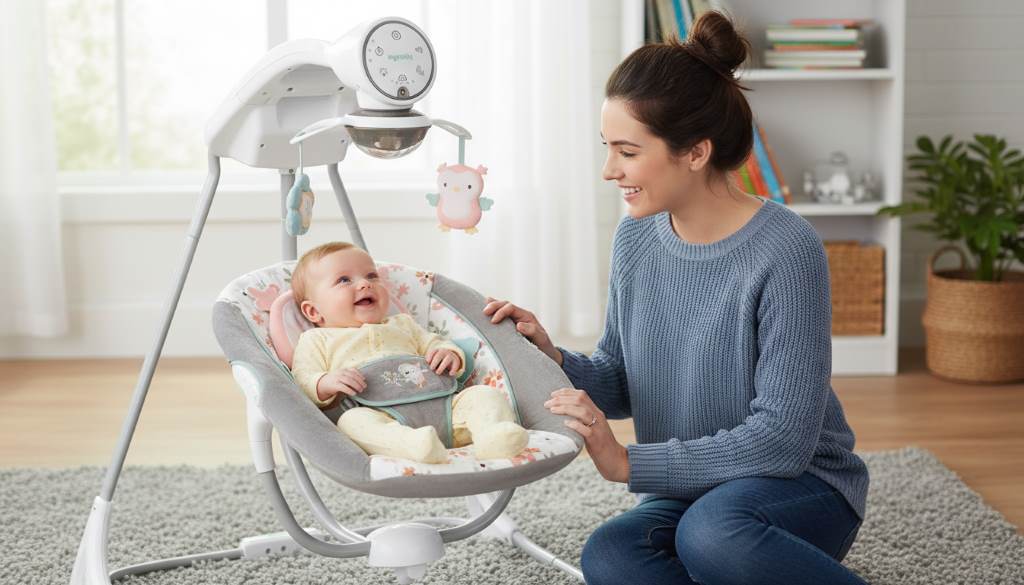
Start with the right model. Look for these essential features.
First, check compliance with current standards. Swings should meet ASTM F2088 requirements, updated regularly by CPSC.
Next, prioritize a sturdy base. Wide, stable frames resist tipping better.
Additionally, opt for a five-point harness. This secures shoulders, waist, and crotch firmly.
Furthermore, choose adjustable recline options. Young infants need the flattest safe position.
Avoid models marketed for overnight sleep. Recent recalls target inclined products violating safe sleep rules.
Finally, read reviews and check recall lists before buying.
Expert Guidelines from AAP and CPSC
Trusted organizations provide clear rules. Follow them closely.
The AAP recommends swings only for awake, supervised babies. If your infant dozes off, move them immediately to a firm, flat crib on their back.
Moreover, AAP advises against any inclined sleep over 10 degrees. Swings often exceed this, raising suffocation risks.
CPSC reinforces these points. They warn against adding blankets, pillows, or toys that pose hazards.
In addition, both groups stress weight and age limits. Never exceed manufacturer guidelines.
For newborns under four months, use the most reclined setting. This supports heads and necks properly.
Proper Setup and Placement
Location and assembly affect safety greatly. Take these steps.
Assemble the swing exactly as instructions describe. Double-check all parts lock securely.
Place it on a flat, hard floor. Avoid carpets that allow shifting or soft surfaces like beds.
Keep swings away from stairs, cords, or windows. Pets and siblings should stay distant too.
Additionally, ensure good lighting for constant supervision. Never put swings on tables or counters.
Test stability before first use. Push gently to confirm no wobbling occurs.
Daily Use Best Practices
Safe habits turn swings into reliable tools. Apply these tips every session.
Always buckle the harness snugly. Straps should fit tight but allow one finger underneath.
Supervise constantly. Stay in the same room and watch actively.
Limit time to 30 minutes maximum per session. Twice daily works well for most babies.
Start at lowest speed. Increase gradually if your baby enjoys it.
Furthermore, position babies on their backs. Never place them prone or sideways.
Check comfort regularly. Adjust recline as your infant grows.
Signs to Stop Using the Swing
Babies outgrow swings quickly. Watch for these cues.
Stop immediately if your baby reaches the weight limit. Exceeding it risks structural failure.
Additionally, retire the swing when infants sit unaided. They attempt climbing out at this stage.
Moreover, discontinue use if babies roll over independently. Mobility increases fall dangers.
Most manufacturers suggest stopping around six to nine months. Follow your model’s specifics.
Transition smoothly to floor play or other activities. This supports development naturally.
Common Mistakes Parents Make
Avoid these frequent errors. They lead to preventable incidents.
Many leave babies unattended “just for a minute.” However, accidents happen fast.
Others use swings for routine naps. This violates expert advice completely.
Adding soft bedding seems cozy. Yet it creates suffocation risks.
Ignoring recalls proves dangerous too. Check CPSC monthly.
Overloading with toys blocks movement. Keep the seat clear.
Finally, placing on elevated surfaces invites falls. Always choose the floor.
Maintenance for Long-Term Safety
Regular care keeps swings reliable. Build these habits.
Inspect daily for wear. Look at straps, frame, and screws closely.
Clean according to instructions. Removable covers usually machine-wash well.
Tighten loose parts promptly. Vibration can loosen connections over time.
Store properly when not in use. Avoid damp areas that cause rust.
Register your product with the manufacturer. This ensures recall notifications arrive quickly.
Real Parent Stories and Lessons
Sarah thought her swing was perfect for quick showers. One day, her baby slumped dangerously while napping. Luckily, she caught it in time. Now she moves sleeping babies immediately.
Another parent, Mike, ignored the weight limit. The swing tipped, causing a scary fall. Fortunately, no serious injury occurred. He learned to follow guidelines strictly.
These experiences show rules exist for reasons. Learn from others to protect your child.
Building Safe Habits from Day One
Start right and maintain consistency. Educate caregivers and family members too.
Discuss rules with babysitters. Show proper buckling and placement.
Moreover, combine swing time with tummy time and interaction. Balance prevents over-reliance.
Track your baby’s milestones. Adjust or retire equipment accordingly.
Finally, trust your instincts. If something feels off, stop use and consult experts.
Related:
Secure Baby Monitors: How Babysense Protects Your Baby’s Privacy
Why Baby Needs Tummy Time: Essential for Development
Conclusion
Baby swings offer wonderful soothing when parents use them correctly. Always supervise, buckle properly, and follow AAP and CPSC guidelines. Choose compliant models, limit sessions, and avoid sleep use entirely.
These steps dramatically reduce risks. Your vigilance keeps precious moments safe and joyful.
Take action today. Review your swing setup, check for recalls, and commit to these practices. Your baby’s safety depends on informed choices you make daily.
Frequently Asked Questions
Can babies sleep in a swing safely?
No. Experts strongly advise against it. If your baby falls asleep, move them immediately to a firm, flat surface on their back. Inclined positions risk suffocation.
How long can I leave my baby in a swing?
Limit sessions to 30 minutes at most. Use twice daily maximum. Longer periods strain necks and delay development.
Are all baby swings safe if used correctly?
Compliant models meeting current standards prove safest. However, no swing substitutes for supervision or safe sleep practices.
What should I do if my swing is recalled?
Stop use immediately. Follow CPSC instructions for remedy or disposal. Check their website regularly for updates.
When should babies stop using swings?
Typically around six to nine months, or when they sit unaided, roll, or reach weight limits. Watch milestones closely.
References
- American Academy of Pediatrics Safe Sleep Guidelines: https://www.healthychildren.org/English/ages-stages/baby/sleep/Pages/a-parents-guide-to-safe-sleep.aspx
- CPSC Nursery Products Annual Report 2024: https://www.cpsc.gov/s3fs-public/Nursery-Products-Annual-Report-2024.pdf
- CPSC Infant Swings Business Guidance: https://www.cpsc.gov/Business–Manufacturing/Business-Education/Business-Guidance/Infant-Swings
- AAP Safe Sleep Resources: https://www.aap.org/en/patient-care/safe-sleep/