

New parents often feel a mix of joy and worry. You watch your little one sleep peacefully, yet concerns about safety linger in the back of your mind. In today’s digital world, baby monitors help ease those fears, but not all offer the same level of protection. Privacy risks with some monitors have made headlines over the years. However, brands like Babysense prioritize security to give families true peace of mind.
Many parents seek a reliable encrypted baby monitor that keeps footage private. For instance, the Babysense 5 HD Baby Monitor uses advanced technology to shield your baby’s moments from outsiders. Moreover, studies show that internet-connected devices face vulnerabilities. Reports from cybersecurity firms highlight incidents where hackers accessed WiFi-enabled monitors, sometimes causing distress to families. These cases, though not widespread, underscore the need for careful choices.
Fortunately, non-WiFi options provide a safe baby monitoring system. Babysense focuses on direct, secure connections that avoid internet risks altogether.
Why Baby Monitor Privacy Matters More Than Ever
Parents deserve monitors that protect, not expose, their families. Privacy breaches can turn a helpful tool into a source of anxiety.
First, consider the risks with connected devices. Hackers have targeted WiFi baby monitors in documented cases. For example, families reported strangers speaking through the device or moving the camera remotely. These events, reported by sources like ESET and NPR, often stem from weak passwords or outdated firmware. Additionally, some monitors transmit data without strong safeguards, leaving feeds open to interception.
On the other hand, privacy goes beyond hacking. You want assurance that no one else views your nursery. Cloud storage in some models raises questions about data handling. In contrast, local transmission keeps everything in your home.
Babysense addresses these concerns head-on. Their monitors use closed-loop systems, ensuring only you access the feed. This approach builds trust and lets you focus on parenting.
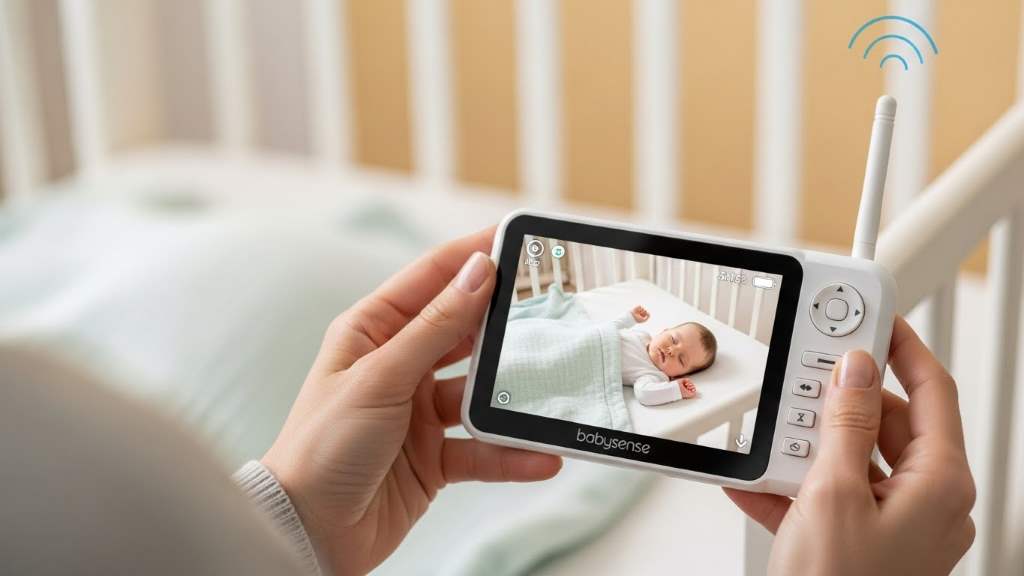
The Hidden Dangers of WiFi-Enabled Baby Monitors
WiFi monitors offer convenience, like remote viewing from your phone. Yet, this connectivity introduces vulnerabilities.
Hackers exploit weak networks or default settings. Once inside, they can watch live feeds or even control the camera. Real incidents include strangers broadcasting messages to children, as noted in security reports. Furthermore, compromised monitors sometimes serve as entry points to broader home networks.
Many WiFi models rely on apps and cloud servers. If those servers face breaches, personal footage could leak. Parents then worry about long-term data storage.
However, not all connected monitors carry the same risks. Strong encryption and regular updates help. Still, experts often recommend avoiding internet links for maximum privacy.
Babysense takes a different path. Their non-WiFi designs eliminate these online threats entirely.
How Non-WiFi Monitors Like Babysense Enhance Security
Non-WiFi monitors operate on dedicated radio frequencies. This setup creates a private link between camera and parent unit.
Babysense employs 2.4GHz FHSS technology. Frequency Hopping Spread Spectrum rapidly switches channels, making interception extremely difficult. Signals stay encrypted point-to-point, so outsiders cannot tune in.
Unlike WiFi, these systems need no internet. No apps, no cloud, no remote access risks. You enjoy clear video and audio without exposing your home network.
Parents appreciate this simplicity. Setup takes minutes, and the connection remains stable. Moreover, FHSS reduces interference from other devices, delivering reliable performance.
Babysense models, such as the 5 HD series, combine this security with user-friendly features. You get a safe baby monitoring system that prioritizes protection.
Key Advantages of FHSS in Babysense Monitors
- Hack-Resistant Design: Rapid channel changes block unauthorized access.
- No Internet Required: Eliminates online vulnerabilities completely.
- Direct Encryption: Data travels securely only between your units.
- Stable Signal: Avoids WiFi outages or buffering issues.
These elements make Babysense a top choice for privacy-focused families.
Related:
Why Baby Needs Tummy Time: Essential for Development
Comfortable Shoes for Wide Foot Toddlers: Reviews and Buying Tips
What Sets Babysense Apart in Baby Privacy Protection
Babysense has built a reputation for reliable, secure monitoring since 1991. Their expertise shows in every design decision.
The brand avoids WiFi in core video monitors. Instead, they use enhanced FHSS for unbreakable privacy. Parents know their baby’s sleep stays visible only to them.
High-definition displays deliver crisp images. Night vision works seamlessly, and two-way talk lets you soothe from afar. Lullabies and temperature sensors add comfort without compromising security.
Babysense also offers expandable systems. Add cameras as your family grows, all under the same secure connection.
In short, Babysense delivers a safe baby monitoring system. You gain essential features while keeping risks minimal.
Real Parent Experiences with Babysense Security
Many families share stories of relief after switching to Babysense. One parent noted how the non-WiFi setup ended worries about hacking. Another praised the clear, private feed during nighttime checks.
These anecdotes align with expert views. Security researchers favor local monitors for reducing attack surfaces.
Tips for Choosing and Using a Secure Baby Monitor
Select a monitor that matches your privacy needs. Follow these steps for the best protection.
- Prioritize Non-WiFi Options: Choose FHSS or similar for inherent security.
- Check Encryption Claims: Look for point-to-point digital safeguards.
- Read Reviews and Specs: Confirm no cloud requirements.
- Update When Needed: Even non-WiFi models may have firmware improvements.
- Position Wisely: Keep cameras away from sensitive areas.
Babysense checks these boxes naturally. Their monitors arrive ready for secure use.
Additionally, combine with home habits. Use strong router passwords and separate guest networks for any connected devices.
Comparing Babysense to Other Monitor Types
Different monitors serve varied needs. Here’s how Babysense stacks up.
- WiFi Monitors: Offer app access but risk hacking and data leaks.
- Analog Monitors: Cheap but prone to interference and eavesdropping.
- Digital Non-WiFi: Secure like Babysense, with clear signals.
Babysense excels in the digital non-WiFi category. Superior display quality and features set it apart.
For families wanting occasional remote view, some brands offer hybrids. Yet pure non-WiFi remains safest.
The Future of Secure Baby Monitoring
Technology evolves, but privacy remains paramount. Brands like Babysense lead by focusing on essentials.
Future monitors may blend better security with selective connectivity. Until then, non-WiFi options provide the gold standard.
Parents increasingly demand hack-proof designs. This trend pushes innovation toward safer systems.
Babysense continues refining their approach. They ensure families enjoy monitoring without worry.
Conclusion
Protecting your baby’s privacy starts with the right monitor. Babysense delivers secure, reliable performance through smart non-WiFi technology.
You avoid WiFi risks while gaining clear views and helpful features. FHSS encryption and direct connections keep everything private.
Choose Babysense for a safe baby monitoring system. Explore their range today and sleep easier knowing your little one stays protected.
FAQs
What makes Babysense monitors more private than WiFi ones?
Babysense uses non-WiFi FHSS technology. This creates a direct, encrypted link with no internet exposure, blocking remote hacks.
Can non-WiFi baby monitors like Babysense be hacked?
Hacking proves extremely difficult. FHSS hops frequencies rapidly, and no online connection means no remote access points.
Does Babysense use any form of encryption?
Yes, Babysense employs digital point-to-point encryption. Signals stay secure between camera and parent unit only.
Are there any privacy risks with Babysense monitors?
No significant risks exist. Local transmission keeps data in your home, away from clouds or networks.
Why choose a non-WiFi monitor for baby privacy?
Non-WiFi eliminates internet vulnerabilities. You get peace of mind without sacrificing essential monitoring features.
References


