
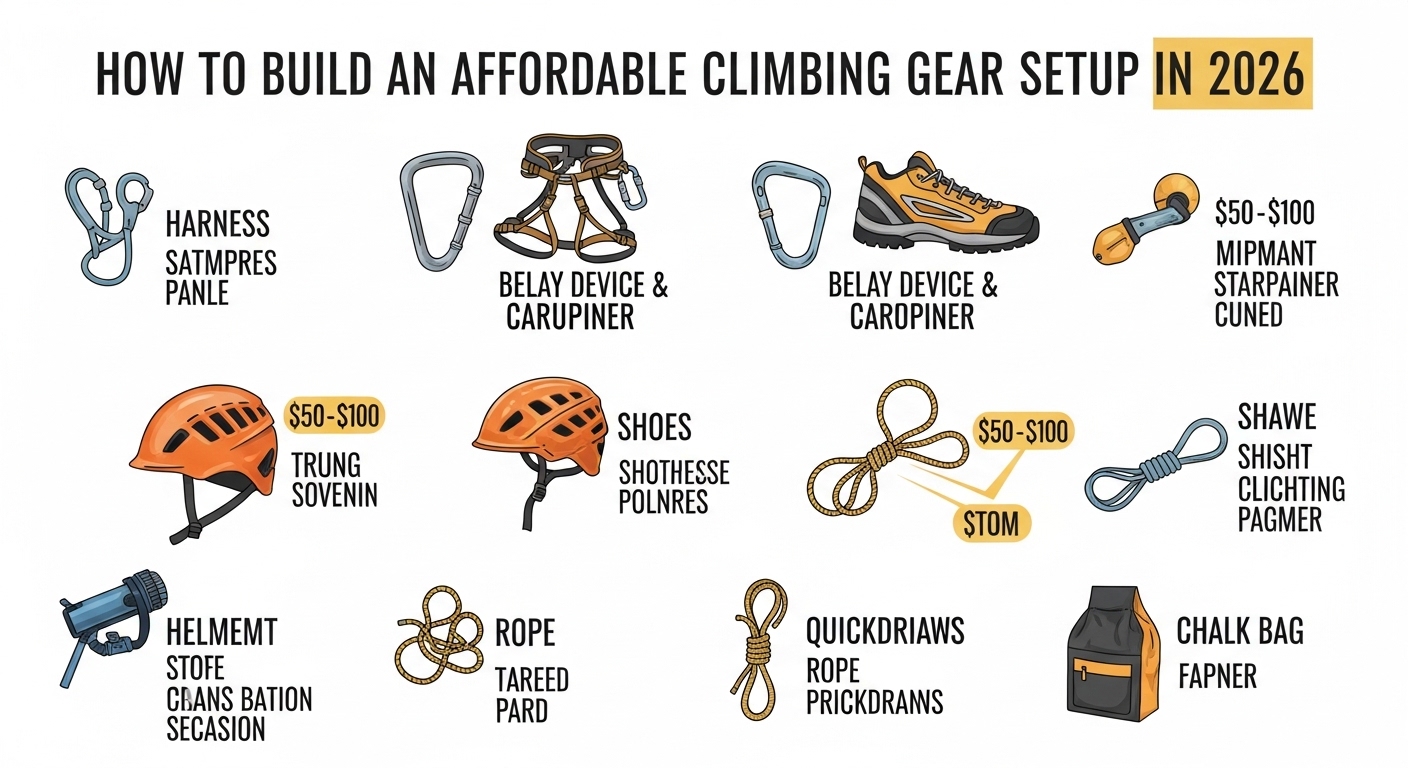
An affordable climbing gear setup in 2026 means building a safe, functional kit using budget climbing equipment without compromising on certified safety standards. It focuses on essential gear only, prioritizes UIAA and CE-certified products, and avoids unnecessary upgrades in the early stages.
Climbing is not a cheap sport. A complete new setup can cost $800 to $2,000 depending on discipline. That price stops many beginners before they even start. The problem is real. You want to climb, but you don’t want to drain your savings on gear you may not fully understand yet.
Here’s the good news: you can build a safe and practical setup for under $500–$700 if you buy smart, prioritize essentials, and understand where to save — and where not to.
This guide follows a clear framework. We’ll identify the common mistakes climbers make, show the financial impact of poor decisions, and then break down exactly how to build a reliable kit using cheap mountaineering gear that still meets international safety standards.
Why Is Climbing Gear So Expensive — And Can You Really Go Budget?
Short answer: Climbing gear is expensive because it must meet strict safety certifications (UIAA, CE), withstand extreme loads, and pass dynamic impact testing. However, many brands charge premiums for marketing, not performance.
According to industry reports from outdoor retail associations, safety testing and liability insurance significantly increase production costs. A dynamic climbing rope, for example, must withstand multiple standardized fall tests before certification.
The issue is not price alone. The issue is paying for features you don’t need yet.
Case example: A beginner climber purchasing a $280 triple-rated rope, a $200 ultralight harness, and a $150 premium belay device for indoor gym use is overspending by 40–60% compared to a practical starter setup.
Budget climbing equipment works if it meets:
- UIAA certification
- CE marking
- Manufacturer load ratings
- Reputable brand track record
Cheap does not mean unsafe. It means strategic.
What Are the Essential Pieces of Cheap Mountaineering Gear You Actually Need?
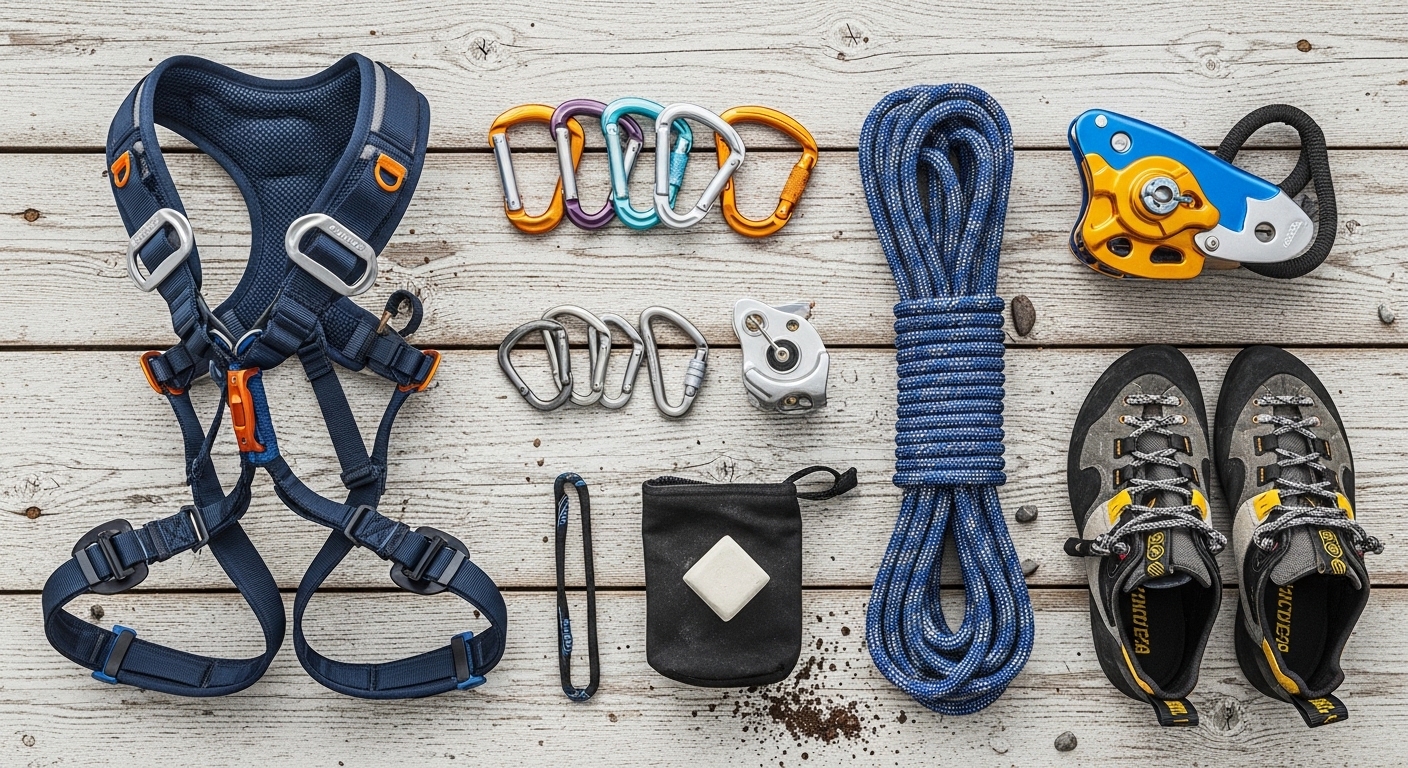
Short answer: You need a certified dynamic rope, harness, helmet, belay device, locking carabiners, and climbing shoes. Everything else can wait.
1. Climbing Rope (Top Priority)
The rope is your lifeline. Never compromise on certification. In 2026, the most cost-effective choice for beginners is a single dynamic rope (9.5mm–10.2mm diameter, 60m length).
Expected price range: $90–$150.
If you are searching for reliable budget climbing equipment, review this resource on
budget climbing equipment
to compare specifications before purchasing.
Key factors to evaluate:
- Impact force rating
- Number of UIAA falls
- Dry treatment (optional for beginners)
- Weight per meter
2. Climbing Harness
Look for adjustable leg loops and CE certification. Avoid ultralight models early on.
Budget range: $45–$80.
3. Belay Device + Locking Carabiner
An ATC-style device is affordable and reliable.
Budget range: $25–$50 combined.
4. Helmet
Rockfall happens. Indoor gyms also require helmets in some regions.
Budget range: $50–$90.
5. Climbing Shoes
Neutral shoes are best for beginners.
Budget range: $60–$120.
How Much Does a Full Budget Climbing Setup Cost in 2026?
Short answer: A safe beginner setup costs approximately $400–$700 depending on rope length and shoe selection.
| Gear Item | Budget Range (USD) |
|---|---|
| Dynamic Rope (60m) | $90 – $150 |
| Harness | $45 – $80 |
| Belay Device + Carabiner | $25 – $50 |
| Helmet | $50 – $90 |
| Climbing Shoes | $60 – $120 |
| Total Estimated Cost | $400 – $700 |
Compare that with high-end setups exceeding $1,200. The savings are clear.
Where Should You Never Cut Corners?
Short answer: Never compromise on rope quality, certification standards, or visible structural integrity.
Problem: Some climbers purchase used ropes online to save money.
Agitation: Rope history is unknown. UV exposure, internal sheath damage, or previous heavy falls may not be visible.
Solution: Buy new ropes. Save money elsewhere.
Also avoid:
- Uncertified hardware
- No-brand locking carabiners without load ratings
- Expired helmets
Can You Buy Used Climbing Gear Safely?
Short answer: Yes — but only for non-life-critical equipment.
Safe to buy used:
- Chalk bags
- Quickdraws (if inspected carefully)
- Backpacks
Do not buy used:
- Ropes
- Harnesses
- Helmets
According to climbing accident case analyses published by alpine safety organizations, equipment failure is rare when gear is certified and properly maintained. Most incidents involve user error, not material defects.
How Can Beginners Save Money Without Sacrificing Safety?
Short answer: Rent first. Buy during off-season. Avoid marketing hype.
1. Rent Before Buying
Test shoes and harness fit at a gym.
2. Buy Off-Season
Outdoor retailers discount gear by 20–40% during winter clearance sales.
3. Avoid “Pro-Level” Marketing
You don’t need triple-rated alpine ropes for gym climbing.
4. Join Climbing Communities
Group purchases often reduce costs.
What Does a Real-World Budget Case Study Look Like?
Short answer: A beginner climber built a full setup for $512 using mid-range certified gear.
Case Study Snapshot:
- 9.8mm 60m dynamic rope – $110
- Adjustable harness – $65
- ATC device + HMS carabiner – $38
- ABS helmet – $70
- Neutral climbing shoes – $129
- Chalk bag + chalk – $20
Total: $432 before tax. With tax: $512.
No premium branding. All CE certified. Two years later, the rope remains within safe usage limits with proper storage and inspection.
What Is the Smart Buying Checklist for 2026?
Short answer: Verify certification, check manufacturing date, inspect stitching, and compare fall ratings.
- Check UIAA label on rope packaging
- Verify manufacturing year (avoid old stock)
- Inspect harness stitching consistency
- Confirm carabiner gate action
- Review product recall history online
Is Cheap Mountaineering Gear Reliable for Outdoor Climbing?
Short answer: Yes, if certified and properly maintained.
Mountaineering equipment follows load testing protocols. A certified locking carabiner must typically withstand at least 20kN along the major axis.
The difference between premium and budget gear often involves:
- Weight reduction
- Finish quality
- Brand positioning
Not basic safety compliance.
Conclusion: Can You Climb Smart Without Overspending?
Yes. And you should.
The climbing industry markets performance upgrades aggressively. Beginners often overspend due to fear. The real risk is not budget gear. The real risk is uninformed buying.
Start with essentials. Focus on certification. Avoid unnecessary features. Inspect regularly.
A safe, affordable climbing gear setup in 2026 is realistic. You can build it for under $700 without compromising safety.
Ready to compare certified ropes and reduce costs without sacrificing performance? Start with trusted specifications and make an informed choice today.
Frequently Asked Questions (FAQs)
1. What is the safest budget climbing rope?
A safe budget rope must be UIAA and CE certified, rated for multiple falls, and appropriate for your climbing style. A 9.8mm single dynamic rope is ideal for beginners.
2. Is cheap mountaineering gear dangerous?
No. Certified cheap mountaineering gear meets international safety standards. The risk increases only when gear lacks certification or is improperly maintained.
3. How long does a budget climbing rope last?
With moderate use (1–2 times per week), a rope can last 2–5 years. Heavy falls or improper storage reduce lifespan.
4. Can I use gym gear for outdoor climbing?
Yes, but ensure your rope length matches outdoor route requirements. A 60m rope is standard for many sport routes.
5. What is the most expensive piece of climbing gear?
The rope is typically the most expensive essential item in a beginner setup.
6. Should beginners buy dry-treated ropes?
Not necessarily. Dry treatment is beneficial for alpine or wet conditions but increases cost.
Related Topic: How to Use a Nursery Heater with Thermostat for Safe Overnight Heating
Read Next: How to Reduce Aquarium Pump Noise and Make Your Tank Ultra Quiet


