
Preventing toddler heat rash in Miami, FL starts with keeping your child cool, dry, and lightly dressed. Air conditioned spaces, breathable fabrics, and frequent hydration significantly reduce the risk of heat rash during hot, humid days.
Miami’s tropical climate creates ideal conditions for heat rash, especially among active toddlers. According to health experts, young children regulate body temperature less efficiently than adults, making them more vulnerable during prolonged heat exposure. Parents who understand prevention strategies can reduce discomfort and avoid unnecessary skin irritation. While planning outdoor family activities, many parents also review an all terrain stroller buying guide to support safer travel during warm weather.
Why Heat Rash Is Common in Miami Toddlers
Heat rash develops when sweat becomes trapped beneath the skin. Consequently, tiny red bumps appear in areas where moisture collects.
Miami experiences high humidity throughout much of the year. Therefore, sweat evaporates slowly and increases skin irritation risks.
Toddlers spend time running, climbing, and exploring outdoors. As a result, their bodies produce more sweat during daily activities.
Parents should also maintain the perfect nursery temperature because cooler indoor environments support healthier skin conditions.
Recognizing Early Signs of Toddler Heat Rash
Early detection helps prevent worsening symptoms and discomfort. Moreover, prompt action often clears mild cases quickly.
Common Symptoms
- Small red or pink bumps
- Clusters of tiny blisters
- Mild itching or irritation
- Skin redness in folds
- Increased fussiness during warm weather
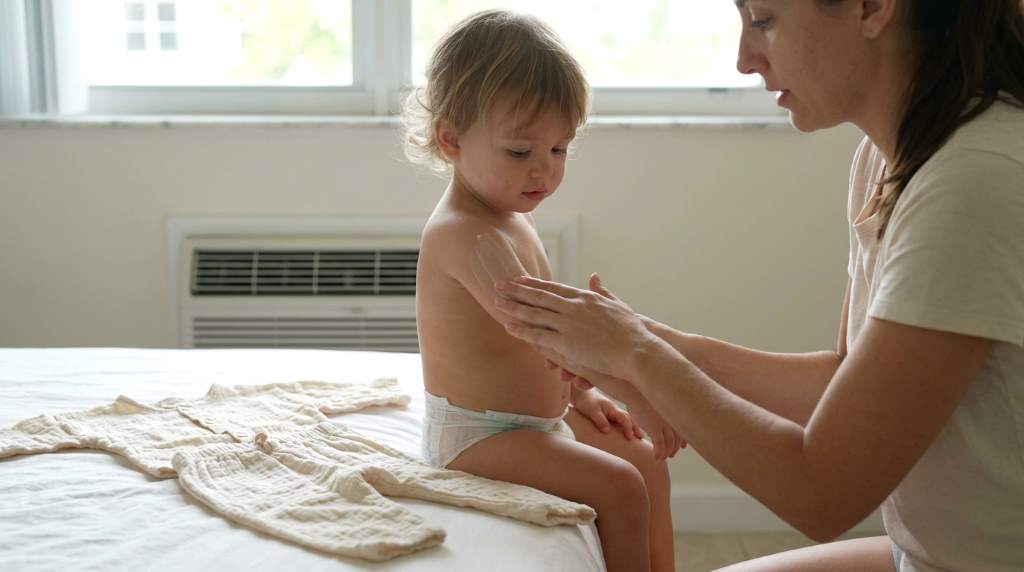
Heat rash often appears on the neck, chest, back, and diaper area. Additionally, skin folds commonly trap moisture and sweat.
When Symptoms Become More Serious
If bumps become swollen, painful, or infected, consult a healthcare provider. Likewise, seek medical attention for fever or unusual symptoms.
Dress Your Toddler for Miami’s Climate
Clothing choices directly affect body temperature and sweat production. Therefore, lightweight materials remain essential throughout the year.
Choose cotton fabrics because they allow better airflow around sensitive skin. Furthermore, loose fitting clothes reduce friction and trapped moisture.
Avoid heavy synthetic materials during outdoor activities. Instead, select breathable garments designed for warm conditions.
Family gatherings often involve creative activities and celebrations. Similarly, parents planning events may enjoy learning DIY baby shower games while maintaining child friendly indoor environments.
Best Clothing Choices
- Lightweight cotton shirts
- Loose shorts and pants
- Breathable sleepwear
- Wide brim sun hats
- Moisture wicking socks
Create a Cooler Daily Routine
Timing outdoor activities can dramatically reduce heat exposure. Consequently, toddlers stay more comfortable throughout the day.
Schedule playground visits during early morning hours whenever possible. Likewise, evening outings often provide cooler temperatures.
Between late morning and midafternoon, keep activities indoors. Therefore, your child avoids the hottest part of the day.
Bath time safety also supports overall skin health. Parents can improve comfort using anti slip infant tub solutions during cooling baths.
Recommended Daily Schedule
| Time | Suggested Activity |
|---|---|
| 7 AM to 10 AM | Outdoor play |
| 10 AM to 4 PM | Indoor activities |
| 4 PM to 7 PM | Outdoor walks |
| After 7 PM | Cooling bedtime routine |
Keep Skin Dry Throughout the Day
Moisture management remains one of the most effective prevention methods. Therefore, parents should monitor sweaty areas regularly.
Gently pat damp skin with a soft towel after active play. Additionally, change clothing whenever it becomes noticeably wet.
Pay special attention to the neck and diaper region. These locations frequently collect sweat during hot weather.
Helpful Moisture Control Habits
- Change clothes after outdoor play
- Use lightweight towels
- Dry skin folds carefully
- Keep spare outfits available
- Check for sweating regularly
Support Hydration During Hot Weather
Proper hydration helps regulate body temperature more efficiently. Consequently, sweating functions more effectively without excessive overheating.
Offer water frequently throughout the day rather than waiting for thirst. Moreover, active toddlers may need extra fluids outdoors.
Fresh fruits with high water content can also help. For example, watermelon and strawberries provide additional hydration support.
Signs Your Toddler Needs More Fluids
- Dry lips or mouth
- Reduced urine output
- Dark colored urine
- Low energy levels
- Increased irritability
Use Cooling Strategies During Outdoor Activities
Outdoor play remains important for toddler development and physical health. However, smart cooling techniques reduce heat related risks.
Bring portable shade whenever visiting parks or beaches. Additionally, encourage frequent rest breaks in shaded locations.
Cooling towels can help lower skin temperature during extended outings. Therefore, many parents keep them available during summer months.
Essential Outdoor Heat Protection Items
- Wide brim hat
- Water bottle
- Portable fan
- Extra clothing
- Cooling towel
What to Do If Heat Rash Appears
Even careful parents may occasionally notice mild heat rash symptoms. Fortunately, most cases improve with simple home care.
Move your child into a cooler environment immediately. Then allow affected skin to remain uncovered whenever practical.
Avoid applying heavy creams that trap additional moisture. Instead, focus on cooling and drying the irritated area.
Most mild cases improve within a few days. However, worsening symptoms require professional medical evaluation.
Long Term Prevention Habits for Miami Families
Consistent daily habits provide the strongest protection against recurring heat rash. Therefore, prevention should become part of routine childcare.
Monitor weather conditions before planning outdoor activities. Likewise, adjust schedules when humidity levels become unusually high.
Create cool indoor spaces where toddlers can play comfortably. As a result, children remain active without excessive heat exposure.
Parents who combine proper clothing, hydration, and temperature management often experience fewer skin related concerns. Consequently, toddlers stay happier and more comfortable year round.
Conclusion
Toddler heat rash prevention in Miami depends on controlling heat, humidity, and moisture exposure. Simple daily actions such as lightweight clothing, regular hydration, and cooler activity schedules make a meaningful difference.
Start implementing these strategies today and observe your child’s comfort closely. Consistent prevention habits can help keep sensitive skin healthy throughout Miami’s warm climate.
FAQs
How quickly does toddler heat rash disappear?
Mild heat rash usually improves within a few days after cooling and drying the skin.
Can air conditioning help prevent heat rash?
Yes, air conditioning reduces heat and humidity that contribute to heat rash.
Should toddlers wear sunscreen during hot weather?
Yes, sunscreen helps protect skin but should not replace cooling measures.
Does humidity increase heat rash risk?
Yes, high humidity slows sweat evaporation and increases rash development.
Can heat rash become infected?
Yes, scratching or prolonged irritation can sometimes lead to infection.