
Picture this. You settle into your hot tub after a long day. Bubbles start, but something feels off. The pump hums strangely. You wonder about its type. Identifying 1-speed versus 2-speed spa pump wiring helps solve such mysteries. This process reveals how your pump operates. It guides maintenance and upgrades. Experts note that proper identification prevents common issues. For instance, Pool and Spa News reports voltage drops over 5 percent signal wiring problems. Additionally, studies show 2-speed pumps cut electricity use by nearly 50 percent compared to single-speed models. Therefore, knowing your setup boosts efficiency and safety. Let’s explore step by step. We suggest visiting the laser hair removal in midtown Manhattan.
Understanding Spa Pump Basics
Spa pumps power your hot tub experience. They move water through jets and filters. Without them, relaxation stops. First, grasp what makes these devices tick. Manufacturers design pumps for specific tasks. Some handle circulation quietly. Others push strong jets for massage. Consequently, types vary based on speed options. Visit the best anti aging facial in midtown Manhattan to get the best care for anti aging.
Moreover, speed refers to how fast the motor spins. This affects water flow and energy use. Single-speed pumps run at one constant rate. They suit basic needs. Two-speed versions offer low and high settings. Low handles filtration. High delivers powerful jets. As a result, owners choose based on usage.
Furthermore, wiring connects everything. It carries power from the control panel to the motor. Incorrect setups cause failures. So, learning basics builds confidence. You avoid costly mistakes. Now, dive deeper into differences.
What Is a Spa Pump?
A spa pump acts as the heart of your hot tub. It circulates water to keep things clean and warm. Components include the motor and wet end. The motor spins an impeller. This creates suction and pressure. Water flows in from the tub. It exits through jets.
In addition, pumps come in various horsepower ratings. Higher power means stronger flow. But efficiency matters too. Older models waste energy. Newer ones save it. For example, circulation pumps run continuously at low power. Jet pumps activate on demand.
Besides that, seals prevent leaks. Bearings reduce friction. Regular checks spot wear. If noise increases, investigate. Pumps last years with care. Understanding this foundation helps identify speed types.
Key Differences Between 1-Speed and 2-Speed Pumps
Single-speed pumps simplify operations. They turn on full blast or off. This suits small spas. Energy bills might rise though. Two-speed pumps add flexibility. Low speed filters water efficiently. High speed boosts jet power.
Additionally, noise levels differ. Single-speed units roar constantly. Two-speed ones whisper on low. Owners appreciate quiet times. Performance varies too. Two-speed models handle multiple tasks better. They extend equipment life.
Furthermore, installation impacts choice. Single-speed needs less wiring. Two-speed requires extra connections. But benefits outweigh complexity. Research shows two-speed options reduce overall consumption. Choose wisely for your setup.

Why Identify Your Spa Pump Speed?
Knowing your pump speed prevents surprises. It informs repairs. For instance, mismatched parts fail quickly. Identification guides upgrades too. You might switch to efficient models.
Moreover, safety plays a role. Wrong wiring risks shocks. Proper knowledge avoids hazards. Electricians stress this point. Additionally, efficiency improves. Two-speed pumps save power during filtration.
Furthermore, troubleshooting becomes easier. Strange sounds point to issues. Speed type narrows causes. Owners fix problems faster. As a result, downtime decreases. Relaxation resumes sooner.
In addition, resale value rises. Well-maintained spas attract buyers. Documentation helps. Show you understand the system. Buyers trust informed sellers. Therefore, identification pays off long term.
Visual Clues to Spot Pump Speed
Look at the motor first. Labels reveal details. Single-speed shows one RPM value. Two-speed lists two. For example, 3450 RPM alone means single. 1725/3450 indicates dual.
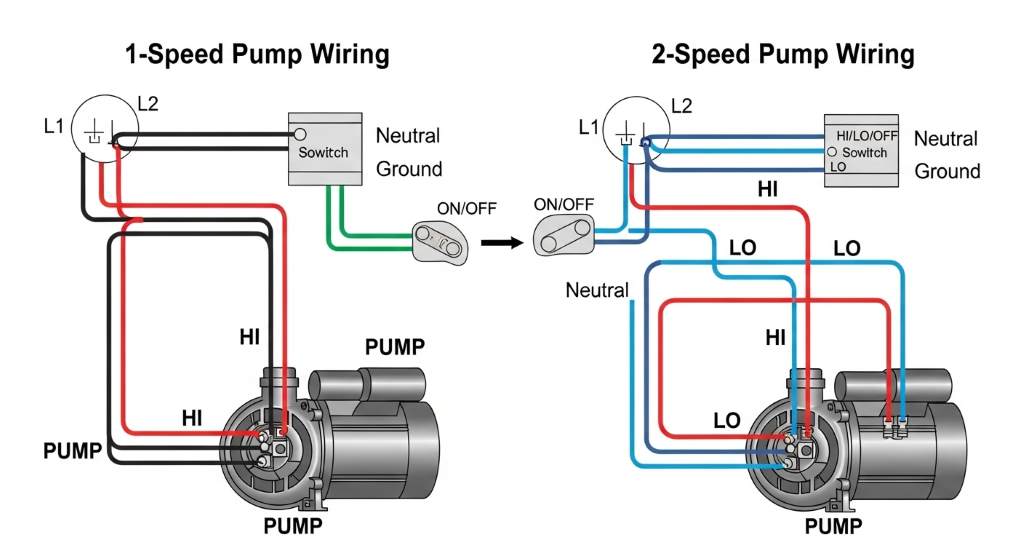
Additionally, count wires. Single-speed typically has three: black, white, green. Black carries hot. White handles neutral. Green grounds. Two-speed adds red for low speed.
Moreover, check connectors. Three-pin plugs suit single-speed. Four-pin versions fit dual. Manufacturers standardize this. Pull the cover gently. Inspect without power.
Furthermore, observe operation. Single-speed runs full throttle always. Two-speed switches modes. Listen for changes. Jets weaken on low. This confirms type.
Besides that, examine the control panel. Buttons label speeds. “High” and “Low” suggest dual. Single has one jet button. Note these signs.
Decoding Wiring Diagrams
Wiring diagrams map connections. Find them on motor covers. Symbols show terminals. Lines represent wires. Study carefully.
First, locate the legend. It explains colors. Black often means high speed. Red signals low. White is common. Green grounds.
Additionally, compare to your setup. Match wires to posts. Single-speed diagrams are simple. Two-speed show branches.
Moreover, manufacturers provide manuals. Download from sites. For example, AO Smith details terminals. Follow their guides.
Furthermore, trace from panel to pump. Ensure consistency. Loose wires cause issues. Tighten as needed.
In addition, photograph before changes. Reference helps. Diagrams prevent errors. Use them always.
Common Wiring Configurations Explained
Single-speed setups use basic wiring. Power enters through black. Neutral via white. Ground secures safety.
For two-speed, add low-speed line. Red connects to specific terminal. Control switches activate it.
Additionally, 120-volt systems differ from 240-volt. Check voltage first. Most spas use 240.
Moreover, relays control speeds. They direct power flow. Understand their role.
Furthermore, ground fault interrupters protect. Install on all circuits. They trip on imbalances.
Besides that, color codes standardize. But verify with multimeter. Safety first. Explore How to Do a Spa Pedicure at Home.
Safety Precautions Before Handling Wiring
Turn off power always. Flip the breaker. Lock it out. Prevent accidental starts.
Additionally, wear gloves. Insulated types protect. Avoid wet hands.
Moreover, use proper tools. Screwdrivers fit terminals. Multimeters test voltage.
Furthermore, work in dry areas. Water increases risks. Dry spills first.
In addition, read manuals. They warn specifics. Follow guidelines.
Besides that, call pros if unsure. Experience matters. Safety ensures enjoyment.
Step-by-Step Guide to Identify Wiring
Start by shutting power. Confirm with tester. No voltage means safe.
Next, remove pump cover. Screws hold it. Set aside carefully.
Then, inspect label. Note RPMs. One or two?
Additionally, count wires. Three or four?
Moreover, check diagram. Match colors.
Furthermore, test continuity. Multimeter beeps on connections.
Finally, reassemble. Power on. Observe function.
Using a Multimeter for Accurate Testing
Multimeters measure voltage and continuity. Set to ohms first. Touch probes.
For continuity, connect to terminals. Beep confirms path.
Additionally, switch to volts. Power on safely. Read across wires.
Moreover, compare readings. High speed shows full voltage. Low differs.
Furthermore, ground checks zero to earth. Ensures safety.
In addition, practice on known devices. Build skill. Testing confirms type.
Troubleshooting Common Wiring Issues
Pumps hum but don’t spin. Check connections. Loose wires fail.
Additionally, breakers trip often. Overloads cause this. Inspect for shorts.
Moreover, no power at all. Trace back to panel. Fuses might blow.
Furthermore, unusual noises. Bearings wear. But wiring affects too.
In addition, voltage drops. Measure along path. Fix high resistance.
Besides that, consult forums. Users share fixes. Learn from experiences.
Upgrading from 1-Speed to 2-Speed
Consider benefits first. Efficiency rises. Bills drop.
Additionally, check compatibility. Control panel must support.
Moreover, gather parts. New pump, wires.
Furthermore, follow wiring guide. Connect red for low.
In addition, test thoroughly. Ensure smooth switch.
Besides that, enjoy savings. Upgrades pay back.
Energy Efficiency Comparison
Single-speed pumps consume steadily. They run full power.
Two-speed adjust. Low uses less.
Research confirms savings. Up to 50 percent.
Additionally, calculate usage. Track hours.
Moreover, states mandate efficient models. Comply for rebates.
Furthermore, pair with timers. Optimize runs.
In addition, monitor bills. See differences.
Real-Life Examples and Case Studies
John faced pump failure. He counted wires. Found four. Identified two-speed.
Additionally, swapped red and black. Fixed weak jets.
Moreover, Sarah upgraded. Saved 40 percent monthly.
Furthermore, a study showed pools with two-speed last longer.
In addition, forums detail stories. Learn pitfalls.
Besides that, pros share tips. Avoid common errors.
Maintaining Your Spa Pump Wiring
Inspect regularly. Look for corrosion.
Additionally, clean terminals. Use brushes.
Moreover, tighten screws. Vibration loosens.
Furthermore, replace worn wires. Prevent failures.
In addition, schedule checks. Yearly ideal.
Besides that, document changes. Reference future.
Professional Help vs DIY
DIY saves time. But risks exist.
Additionally, pros bring tools. Expertise shines.
Moreover, complex issues need them. Wiring codes vary.
Furthermore, warranties require certified work. But topic avoids that.
In addition, learn basics yourself. Handle simple tasks.
Besides that, combine approaches. Consult when stuck.
Advanced Tips for Spa Owners
Integrate smart controls. Apps switch speeds.
Additionally, monitor remotely. Apps alert issues.
Moreover, add surge protectors. Guard electronics.
Furthermore, learn codes. NEC guides wiring.
In addition, join communities. Share knowledge.
Besides that, experiment safely. Test efficiencies.
Conclusion
We covered spa pump basics thoroughly. You learned visual clues and testing methods. Safety stayed key throughout. Differences between speeds became clear. Wiring diagrams guided you. Troubleshooting prepared you for issues. Upgrades offered future options. Efficiency comparisons showed savings. Examples brought concepts alive. Maintenance ensures longevity. Now, apply this knowledge. Grab your tools and inspect your pump today. Enjoy a smoother hot tub experience.
Finally, we recommended the best facials in midtown Manhattan and the best manicure in midtown Manhattan to know more details.