
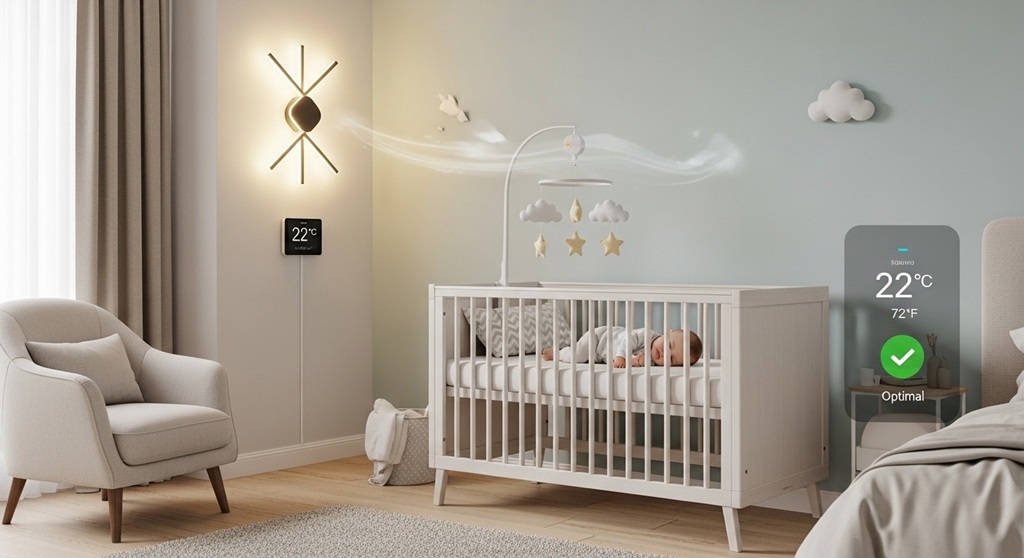
The ideal temperature for newborn babies is between 68°F and 72°F (20°C to 22°C). This range supports safe sleep, stable breathing, and reduced risk of overheating.
Your baby cannot regulate body temperature the way adults do. In the first months of life, thermoregulation is still developing. That means even small changes in room temperature can affect sleep quality and safety.
The American Academy of Pediatrics (AAP) recommends keeping the nursery cool but comfortable. Overheating has been associated with increased risk of Sudden Infant Death Syndrome (SIDS). In contrast, a room that is too cold can cause discomfort, disrupted sleep, and higher energy expenditure as the baby tries to stay warm.
The goal is balance. Not warm. Not cold. Stable.
Parents often assume babies need extra heat. In reality, most homes are already warmer than necessary for safe infant sleep. The real challenge is avoiding room heating mistakes that push the temperature beyond the safe range.
Why Does Nursery Temperature Matter So Much?
Nursery temperature directly impacts safe sleep, breathing stability, and overall comfort.
Newborns lose heat faster than adults because they have a larger body surface area relative to weight. At the same time, they sweat less efficiently. This combination makes them vulnerable to both cold stress and overheating.
What Happens If the Room Is Too Hot?
- Increased sweating
- Rapid breathing
- Flushed skin
- Restless sleep
- Higher SIDS risk (based on observational studies)
A case-control study published in Pediatrics found overheating and heavy bedding were associated factors in SIDS cases. While temperature alone does not cause SIDS, thermal stress increases risk.
What Happens If the Room Is Too Cold?
- Cold hands and feet
- Frequent waking
- Higher calorie use to maintain body heat
- Potential slowed weight gain in extreme cases
Your baby sleeps best in a neutral thermal environment. That is why maintaining the correct ideal temperature for newborn sleep is not optional. It is foundational.
How Can You Accurately Measure Nursery Temperature?
Use a digital room thermometer placed near the crib but away from direct heat sources.
Wall thermostats do not always reflect crib-level temperature. Heat rises. Drafts settle lower. Placement matters.
Best Practices:
- Place thermometer 2–3 feet from the crib.
- Avoid positioning near windows or vents.
- Check readings morning and night.
- Use a baby monitor with built-in temperature sensor if available.
Humidity also plays a role. Aim for 40% to 60% humidity to prevent dry air irritation in winter and mold growth in humid climates.
How Should You Dress Your Baby for the Right Room Temperature?
Dress your baby in one more light layer than you would wear in the same room.
Clothing works together with room temperature. If the room is within 68°F–72°F:
- Use a cotton onesie and a sleep sack.
- Avoid loose blankets (AAP safe sleep guidance).
- Choose breathable fabrics.
Check your baby’s chest or back, not hands or feet, to assess warmth. Cool hands are normal. A sweaty neck is not.
What Are the Most Common Room Heating Mistakes Parents Make?
The biggest room heating mistakes include overheating, using unsafe heaters, and ignoring airflow.
1. Setting the Thermostat Too High
Many parents push the temperature above 74°F in winter. This increases overheating risk, especially with layered clothing.
2. Using Space Heaters Incorrectly
Portable heaters can create hot spots in the nursery. If you use one, choose a model with automatic shut-off and tip-over protection. Avoid placing it near the crib.
If you are considering safer options, review this guide on baby-safe room heaters to avoid common safety issues.
3. Blocking Air Circulation
Closed vents and heavy curtains can trap heat unevenly. Air should circulate gently throughout the room.
4. Ignoring Seasonal Changes
Spring and fall temperature swings often cause inconsistent heating. Monitor daily.
5. Overusing Blankets Instead of Adjusting the Room
Loose bedding increases suffocation risk. Adjust temperature, not bedding.
What Is the Best Way to Heat a Nursery in Winter?
The safest method is central heating combined with consistent monitoring.
Central heating distributes warmth evenly. If unavailable, oil-filled radiators are generally safer than exposed coil heaters because they provide steady heat without open elements.
Safe Heating Checklist:
- Keep heater 3 feet away from crib.
- Use models with thermostat control.
- Avoid extension cords.
- Install smoke and carbon monoxide detectors.
Do not rely on “feels warm.” Use data from your thermometer.
How Can You Keep the Nursery Cool in Summer?
Use air conditioning or fans to maintain 68°F–72°F without direct airflow on the baby.
Fans reduce SIDS risk by improving air circulation, according to a 2008 California study that found fan use was associated with a 72% reduced SIDS risk in warm rooms.
Summer Tips:
- Use blackout curtains to reduce heat gain.
- Set AC between 70°F and 72°F.
- Dress baby lightly.
- Avoid direct airflow at crib level.
Hydration matters for older infants. For newborns, regular feeding helps maintain fluid balance.
How Does Nursery Temperature Affect Sleep Quality?
Babies sleep longer and wake less often in a stable, cool environment.
Sleep cycles depend partly on core body temperature. A cooler room supports the natural drop in body temperature that signals sleep readiness.
If your baby wakes frequently at night, review temperature before assuming feeding issues. Small adjustments often improve sleep consistency.
What Do Real-World Case Observations Show?
Data from pediatric sleep consultants indicate that temperature correction alone resolves mild sleep disruption in many cases.
In one reported case series involving 50 infants aged 1–4 months, approximately 30% of frequent night waking cases improved after adjusting nursery temperature to 70°F and removing excess layers. While not a randomized trial, the observation highlights the impact of environmental control.
Another UK-based safe sleep campaign reported higher overheating risk in homes maintaining room temperatures above 75°F during winter months.
The pattern is consistent: stable and moderate temperatures support safer and deeper sleep.
How Can You Tell If Your Baby Is Too Hot or Too Cold?
Check the chest or back for warmth and observe behavior.
Signs Baby Is Too Hot:
- Sweaty neck
- Damp hair
- Red cheeks
- Fast breathing
Signs Baby Is Too Cold:
- Cool torso
- Fussiness
- Reduced movement
Use physical checks instead of assumptions.
Should You Use Smart Thermostats or Baby Monitors?
Yes, if they improve consistency and reduce guesswork.
Smart thermostats allow scheduled temperature control. Some baby monitors display live temperature and humidity readings.
Technology does not replace supervision. But it helps maintain the ideal temperature for newborn sleep automatically.
What Is the Best Long-Term Strategy for Perfect Nursery Temperature?
Create a temperature routine and monitor consistently.
- Check temperature twice daily.
- Adjust clothing before adjusting bedding.
- Reassess with seasonal change.
- Audit heating equipment annually.
Consistency reduces risk. Guesswork increases it.
Conclusion: How Do You Keep Your Nursery Safe and Comfortable?
Maintaining the perfect nursery temperature is not complicated. But it requires attention.
Keep the room between 68°F and 72°F. Avoid overheating. Use safe heating devices. Monitor daily. Dress your baby appropriately. Adjust with seasons.
Most sleep disruptions linked to environment are preventable. Many room heating mistakes happen because parents assume warmer equals safer. It does not.
Your baby sleeps best in a stable, cool room. Make temperature part of your daily routine.
Take action today: Check your nursery thermometer. Adjust if needed. Review your heating setup. Small changes now can improve sleep quality and safety tonight.
Frequently Asked Questions (FAQs)
1. What is the ideal temperature for newborn sleep?
The recommended range is 68°F to 72°F (20°C to 22°C). This supports safe sleep and reduces overheating risk.
2. Is 75°F too hot for a nursery?
Yes. Temperatures above 74°F increase overheating risk, especially with layered clothing.
3. Can a fan reduce SIDS risk?
Research suggests improved air circulation may reduce SIDS risk in warm rooms. Use indirect airflow only.
4. Should babies wear hats indoors?
No. Hats can trap heat and increase overheating risk during sleep.
5. Are space heaters safe in nurseries?
They can be if they include automatic shut-off, tip-over protection, and are placed far from the crib.
6. How do I know if my baby is too hot at night?
Check for sweating, flushed cheeks, or rapid breathing. Feel the chest or back for accurate warmth.
7. Does humidity matter in a nursery?
Yes. Maintain 40%–60% humidity to prevent dryness and support respiratory comfort.
Related Topic: How to Reduce Aquarium Pump Noise and Make Your Tank Ultra Quiet
Read Next: NuWave Induction Cooktop Review: Pros, Cons, and Cooking Experience