
Fast-growing floating plants are aquatic species that rest on the water surface and multiply rapidly under the right light and nutrient conditions. These floating plants that grow quickly can double in size within days, forming a dense canopy that blocks light and affects water circulation.
They are popular in freshwater aquariums because they absorb excess nutrients, reduce algae, and provide shelter for fish. However, without control, they can overtake the tank. Common examples include duckweed, Amazon frogbit, water lettuce, and Salvinia.
Floating plants are often recommended for beginners due to their low maintenance. Yet, their rapid growth rate can create imbalance. In this guide, you’ll learn practical methods to manage growth without harming fish or disrupting your aquascape.
Why Do Floating Plants Grow So Fast?
Short Answer: Floating plants grow quickly because they have direct access to atmospheric CO₂, strong surface light, and dissolved nutrients in the water.
Unlike rooted plants, floating species absorb nutrients directly through their roots and leaves from the water column. They are efficient nutrient consumers. When nitrate and phosphate levels rise due to fish waste or overfeeding, these plants respond with accelerated growth.
- High light intensity
- Elevated nitrate levels (10–40 ppm)
- Phosphate availability
- Warm temperatures (22–28°C)
- Low surface agitation
A documented home aquarium case study from a planted tank forum showed that duckweed biomass increased by 40% in just 7 days under 8 hours of LED lighting and nitrate levels of 20 ppm. That rate explains why tanks become covered quickly.
What Problems Do Fast-Growing Floating Plants Cause?
Short Answer: Overgrowth blocks light, reduces oxygen exchange, and can harm submerged plants.
While floating plants help control nutrients, excessive growth can create these issues:
- Reduced light penetration to stem and carpet plants
- Lower oxygen exchange at night
- Clogged filters and intake pipes
- Uneven temperature distribution
- Increased organic waste when plants decay
In heavily planted tanks, surface coverage above 70% can reduce PAR (Photosynthetically Active Radiation) reaching the substrate by more than 50%. This affects growth of rooted plants like Amazon swords and dwarf hairgrass.
How Can You Manually Control Floating Plant Growth?
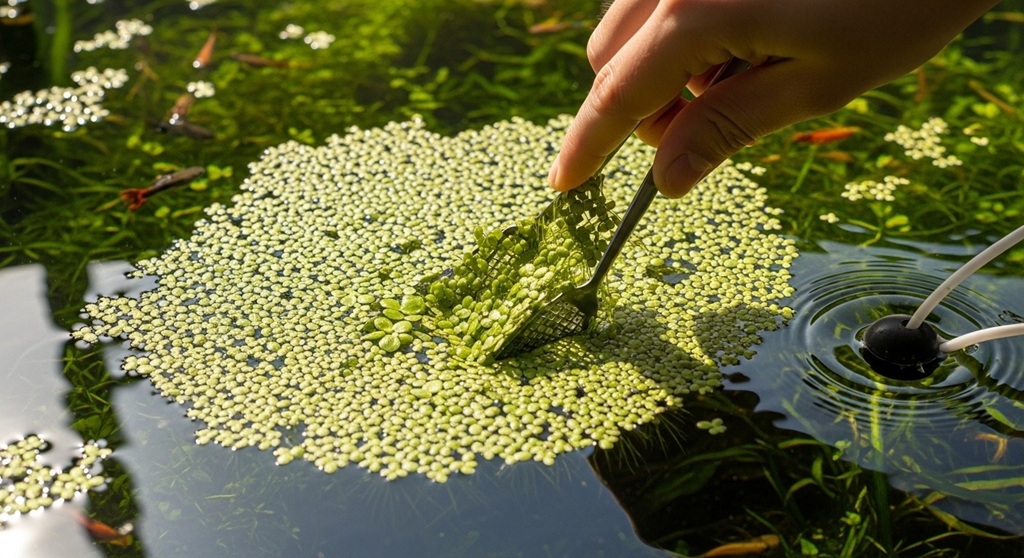
Short Answer: Remove excess plants weekly using a net or cup to maintain 30–50% surface coverage.
Manual removal is the simplest and safest control method. Use a fine mesh net to scoop plants from the surface. Dispose of excess responsibly. Never flush them into natural waterways.
Best Practice Routine
- Check surface coverage every 5–7 days
- Remove half of the visible mass
- Maintain open feeding zones for fish
- Clear filter inlets
This approach keeps nutrient balance stable while preventing full coverage.
Should You Reduce Lighting to Slow Growth?
Short Answer: Yes, lowering light intensity or duration reduces plant growth rate.
Floating plants thrive under strong lighting. Reducing daily light exposure from 8 hours to 6 hours can slow reproduction without harming fish. However, ensure rooted plants still receive adequate light.
If using LED fixtures, adjust brightness settings instead of shortening photoperiod drastically. Sudden light reduction can cause yellowing leaves.
Can Nutrient Control Help Manage Floating Plants?
Short Answer: Yes, lowering nitrate and phosphate levels reduces excessive growth.
Since floating plants feed directly from the water column, nutrient management is effective. Strategies include:
- Reducing overfeeding
- Increasing water changes (20–30% weekly)
- Adding more rooted plants
- Improving filtration efficiency
In one planted tank observation, reducing nitrate from 30 ppm to 10 ppm decreased floating plant spread by nearly 35% over two weeks.
Are There Natural Predators That Control Floating Plants?
Short Answer: Some fish species nibble floating plants, but results vary.
Fish like goldfish and certain cichlids may consume duckweed and water lettuce roots. However, relying solely on fish for control is unreliable.
Goldfish tanks often see reduced duckweed due to constant grazing. But tropical community tanks rarely achieve full control this way.
How Do You Prevent Floating Plants from Taking Over the Entire Surface?
Short Answer: Use floating plant rings or barriers to restrict spread.
Floating plant rings create controlled zones. They keep plants away from filter outputs and feeding areas.
- DIY airline tubing rings
- Commercial floating plant corral systems
- Surface dividers made from acrylic
This method maintains aesthetics while controlling distribution.
Which Floating Plants Grow the Fastest?
Short Answer: Duckweed, Salvinia minima, and water lettuce are among the fastest growers.
If you’re researching floating plants that grow quickly, these species often top the list:
- Duckweed (Lemna minor)
- Salvinia minima
- Water lettuce (Pistia stratiotes)
- Amazon frogbit
Duckweed can double its population in 48–72 hours under ideal conditions.
Is Complete Removal Ever Necessary?
Short Answer: Yes, in severe overgrowth cases.
If plants cover 90–100% of the surface and block filtration, a full reset may be required:
- Remove all floating plants
- Perform 30–50% water change
- Clean filter media
- Reintroduce a small controlled portion
This resets balance without harming beneficial bacteria.
What Is the Best Long-Term Strategy?
Short Answer: Combine manual removal, light management, and nutrient control.
Consistency matters. Avoid reactive maintenance. Instead:
- Track nitrate levels weekly
- Maintain stable photoperiod
- Perform routine pruning
- Monitor fish feeding habits
A balanced tank rarely experiences uncontrollable floating plant growth.
Conclusion: How Do You Keep Floating Plants Under Control Without Losing Their Benefits?
Fast-growing floating plants offer real benefits. They absorb excess nutrients, reduce algae, and provide cover for fish. But unmanaged growth leads to light blockage and oxygen issues.
The solution is simple. Remove excess weekly. Adjust lighting carefully. Control nutrient levels. Use barriers when needed. Monitor surface coverage. Stay consistent.
If you’re choosing new species, study growth rates before adding them. Research responsibly and compare options to find species suited to your tank size and maintenance routine.
Control growth early. Maintain balance. Build a healthier aquarium.
Frequently Asked Questions (FAQs)
How often should I remove floating plants?
Remove excess plants weekly or whenever surface coverage exceeds 50%.
Can floating plants kill fish?
Indirectly, yes. Dense coverage can reduce oxygen levels at night, stressing fish.
Do floating plants reduce algae?
Yes. They absorb nitrates and phosphates, limiting algae growth.
Is duckweed hard to control?
Yes. Duckweed spreads rapidly and requires frequent manual removal.
Should I fertilize if I have floating plants?
Only if nutrient deficiency appears in rooted plants. Excess fertilization increases floating plant growth.
Can I compost removed floating plants?
Yes. They decompose quickly and add nutrients to compost.
Related Topic: How to Maintain a Metal Roof Properly
Read Next: How to Use a Nursery Heater with Thermostat for Safe Overnight Heating