
Choosing the right baby swing can feel overwhelming with so many options available today. Parents want equipment that soothes their baby effectively while fitting their lifestyle and budget. One of the most important decisions you’ll face is whether to choose a battery-powered model or one that plugs into the wall.
This choice affects everything from where you can place the swing to your ongoing costs and convenience. Understanding the differences between these power sources will help you make an informed decision that works best for your family. This guide breaks down everything you need to know about both options so you can choose confidently.
Understanding How Baby Swings Work
Before comparing power sources, it’s helpful to understand what makes these devices work. Baby swings use motors to create gentle, rhythmic motion that mimics the movement babies experience in the womb. This motion helps calm fussy infants and can give tired parents much-needed relief.
The motor is the heart of any swing. It controls the speed, smoothness, and consistency of the swinging motion. Different models offer various swing patterns, including side-to-side, front-to-back, or combination movements. The quality of the motor directly impacts how well the swing performs.
Power source affects motor performance significantly. Consistent power delivery ensures smooth, reliable motion that doesn’t slow down or become jerky. This consistency matters because babies often notice changes in motion and may wake up or become fussy when the swing’s rhythm changes.
Most modern swings also include additional features like music, nature sounds, vibration, and hanging toys. These extras require power too, though they typically use less energy than the motor itself. However, running multiple features simultaneously will drain batteries faster or increase electricity usage.
Battery-Powered Swings: Flexibility and Portability
Battery-operated swings offer unmatched portability. You can place them anywhere in your home without worrying about outlet locations. This flexibility lets you keep your baby nearby whether you’re in the living room, bedroom, or kitchen.
Moving a battery-powered swing between rooms is simple. There are no cords to unplug or manage. This makes them ideal for families who want to easily relocate the swing throughout the day. You can also take them outdoors to your patio or yard without any hassle.
Travel-friendly design is another major advantage. If you visit grandparents or go on vacation, battery swings transport easily. You won’t need to search for outlets or deal with extension cords in unfamiliar locations. Just pack batteries and you’re ready to go.
The lack of cords provides added safety benefits. There’s no risk of tripping over wires or having curious toddlers pull on cables. This cord-free environment gives many parents peace of mind, especially in households with multiple young children.
However, battery swings have some notable drawbacks. The most significant is the ongoing cost of replacement batteries. Depending on how often you use the swing and which features you run, you might replace batteries every few days or weeks. This expense adds up quickly over months of use.
Battery power also tends to weaken gradually. As batteries drain, the swing motor features may become less consistent. The motion might slow down or become uneven, potentially disturbing your baby’s sleep. You’ll need to monitor battery levels regularly to maintain optimal performance.
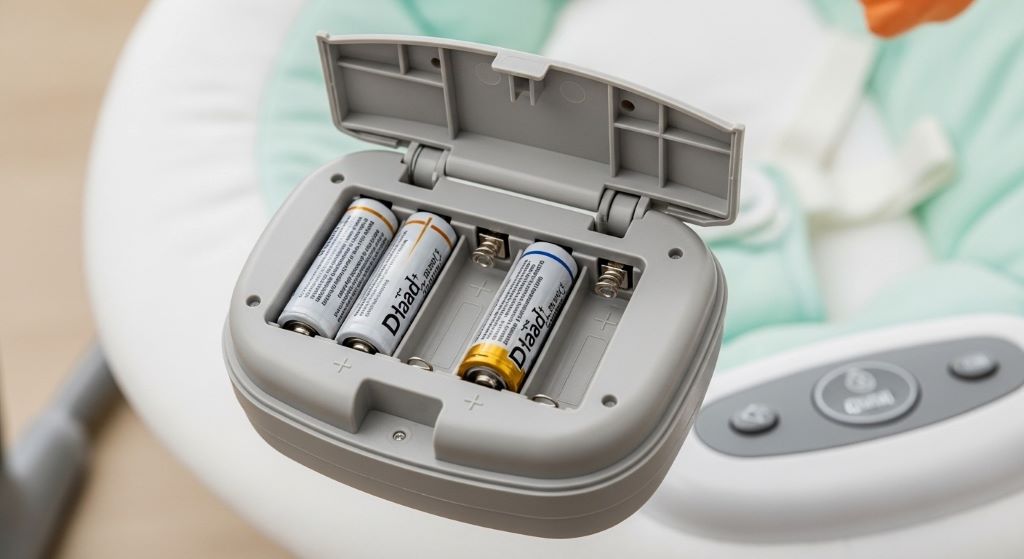
Additionally, batteries add weight to the swing. Four D batteries, which many models require, weigh about two pounds. This extra weight makes the swing heavier to move and can be noticeable when carrying it between rooms or during travel.
Plug-In Swings: Consistent Power and Long-Term Savings
Plug-in swings solve the battery replacement problem entirely. Once you’ve purchased the swing, you won’t have ongoing costs for power. The electricity used by an electric baby swing is minimal, adding just pennies to your monthly utility bill.
Consistent power delivery is perhaps the biggest advantage. Plug-in models maintain steady swing speed and smooth motion regardless of how long you use them. This reliability means your baby experiences the same soothing rhythm every time, which can help establish better sleep patterns.
You’ll never worry about the swing dying unexpectedly. There’s no need to keep spare batteries on hand or replace them at inconvenient times. This convenience factor appeals to busy parents who have enough to remember without tracking battery levels.
Many plug-in swings also offer stronger motors because they’re not constrained by battery limitations. This can translate to better swing motion, especially as your baby grows heavier. The motor can maintain consistent performance even with a larger infant.
Environmental considerations matter to many families. Plug-in swings eliminate the waste associated with disposable batteries. Even if you use rechargeable batteries in a battery-powered swing, you’re still consuming resources for charging. Plug-in models have a smaller environmental footprint over their lifetime.
The main disadvantage is obvious: you need to be near an outlet. This limits placement options and can be frustrating if your preferred location lacks convenient electrical access. You might need to rearrange furniture or use extension cords to position the swing where you want it.
Cords present potential safety hazards. You’ll need to ensure the cord is secured and out of reach of other children and pets. Proper cord management requires extra attention and can affect room aesthetics. Some parents find visible cords unsightly or stressful to manage.
Portability suffers with plug-in models. While you can move them between rooms, it requires unplugging and finding new outlets. Taking them to other locations is more complicated. You’ll need to ensure power availability wherever you go, limiting spontaneous moves to the backyard or visits to homes without convenient outlets.
Evaluating Your Home Layout and Lifestyle
Your living situation plays a crucial role in determining which power source works best. Consider where you spend most of your time during the day. If you move frequently between rooms, battery power offers clear advantages.
Outlet availability and location matter significantly. Walk through your home and note where outlets are positioned. Are they conveniently located where you’d want to place a swing? Or would you need long extension cords that create trip hazards?
Think about your daily routine. Do you stay primarily in one room during the day, or do you move around frequently? Parents who work from home might keep the swing in their office. Those who spend time cooking might want it in the kitchen. Your movement patterns should influence your decision.
Consider whether you’ll use the swing outdoors. If you enjoy spending time on a porch or patio with your baby, battery power becomes much more appealing. Outdoor outlets are less common, and running extension cords outside creates complications.
Travel frequency matters too. Families who regularly visit relatives or take trips might prioritize portability. If you’ll frequently transport the swing, battery operation eliminates one source of hassle during already stressful travel preparation.
Analyzing Long-Term Costs
Initial purchase price often differs between power types. Battery-powered swings sometimes cost less upfront. However, this lower entry price can be misleading when you factor in ongoing expenses.
Calculate battery costs over the swing’s useful life. If you replace four D batteries weekly at approximately eight dollars per pack, you’ll spend over 400 dollars in one year. Most babies use swings for six to twelve months, making total battery costs substantial.
Plug-in swings cost more initially in some cases, but have virtually no ongoing power expenses. The electricity used by a typical swing running several hours daily costs less than five dollars annually. Therefore, plug-in models usually prove more economical over time.
Some manufacturers offer dual-power options. These swings can run on either batteries or AC power through an adapter. This flexibility costs extra upfront but provides both convenience and long-term savings. You can use batteries when you need portability and plug in when you’re staying put.
Consider resale value as well. Well-maintained swings retain good resale value. Plug-in models may appeal more to secondhand buyers because they don’t require battery investment. However, battery swings’ portability also attracts buyers, so both types sell well used.
Comparing Motor Performance and Features
Motor quality varies more between individual models than between power types. Both battery and plug-in swings can have excellent motors. However, power source does affect some performance aspects.
Battery-powered motors must balance performance with power consumption. Manufacturers design them to maximize battery life while still providing effective motion. This sometimes means slightly less powerful motors compared to plug-in equivalents in the same price range.
Plug-in motors can prioritize performance without worrying about draining batteries. They often deliver stronger, more consistent swings. This difference becomes more noticeable as your baby grows. A heavier six-month-old might experience reduced swing speed in battery models, while plug-in versions maintain consistent motion.
Speed settings matter for all swing motor features. Most swings offer multiple speed options to accommodate different baby preferences. Battery swings may have fewer speed choices to conserve power. Plug-in models frequently provide more speed variety and finer adjustments.
Swing patterns add another consideration. Some swings offer multiple motion patterns beyond simple back-and-forth movement. Complex patterns require more power. Battery models with multiple pattern options will drain batteries faster, making plug-in power more practical for these advanced features.
Noise levels relate to motor quality and power consistency. High-quality motors in both power types should operate quietly. However, as batteries weaken, motors may become noisier or produce grinding sounds. Plug-in motors maintain consistent quiet operation throughout use.
Safety Considerations for Both Options
Safety should always be your top priority. Both power types meet safety standards, but each presents unique considerations. Understanding these helps you use either type safely.
Battery compartments must be completely secure. Loose battery covers could allow children to access batteries, which pose serious choking and chemical hazards. Always verify that battery compartments lock firmly and check them regularly for damage.
Cord management is crucial for plug-in swings. Keep cords behind furniture when possible. Use cord clips or covers to prevent tripping. Never place cords where they could be pulled by children or caught under furniture or swing legs.
Stability matters regardless of power source. Ensure the swing sits on level ground and all legs make firm contact with the floor. Never place swings on elevated surfaces like tables or countertops, even briefly.
Regularly inspect your swing for wear. Check that all parts function correctly. Look for fraying on any fabric, cracks in plastic, or unusual motor sounds. Address any issues immediately, regardless of whether you use batteries or plug-in power.
Follow weight and age limits strictly. These limits exist for safety reasons. Exceeding them can cause motor failure, tipping, or collapse. Weight limits typically range from 25 to 35 pounds, though specific limits vary by model.
Making the Decision: Key Questions to Ask
Several questions can help clarify which option suits your needs best. Start by asking where you’ll use the swing most often. If the answer is “multiple places throughout the day,” battery power provides clear benefits.
Consider your budget honestly. Can you comfortably afford ongoing battery purchases? If money is tight, plug-in options save significantly over time despite potentially higher upfront costs.
Think about convenience factors. What frustrates you more: dealing with cords or replacing batteries? Neither is inherently better; the right answer depends on your personal preferences and tolerance for different types of inconvenience.
Evaluate your plans for additional children. If you might have more babies, investing in a higher-quality plug-in swing that saves money long-term makes sense. The savings multiply across multiple children.
Ask about your tolerance for environmental waste. If sustainability matters to you, plug-in swings align better with those values. The battery waste from months of daily use is considerable.
Alternative Solutions and Compromises
If you’re truly torn between options, several alternatives might help. Hybrid swings that accept both power sources offer maximum flexibility. You can plug in at home for daily use and switch to batteries for travel or outdoor time.
Rechargeable battery systems present another compromise. Some swings accommodate rechargeable batteries, reducing both cost and environmental impact. You’ll need to plan charging time, but this option combines portability with lower ongoing expenses.
Consider buying an AC adapter separately. Some battery-powered swings can work with optional AC adapters. This upgrade path lets you start with battery power and add plug-in capability later if needed. Check whether adapters are available for models you’re considering.
Extension cords can solve outlet placement problems. Heavy-duty extension cords rated for continuous use safely extend your reach. However, ensure cords meet safety standards and don’t create trip hazards. Never overload outlets or run cords under rugs.
Manual swings provide yet another option. While they require your effort to create motion, they need no power at all. Some parents use manual swings as backups or for short periods when battery or plug-in swings aren’t practical.
Real-World Experiences and Practical Tips
Parents who’ve used both types often develop strong preferences based on experience. Many appreciate battery swings during the newborn phase when they move frequently between rooms. The ability to keep baby nearby while maintaining their routine is invaluable during those challenging early weeks.
However, these same parents sometimes switch to plug-in models after a few months. Once they establish routines and baby spends time in fewer locations, the convenience of not replacing batteries becomes more important. This progression suggests buying used could let you try both types affordably.
Some families keep both types. They use a plug-in swing in the main living area for daily use and a battery-powered model in the bedroom or for travel. This two-swing strategy works well for families with space and budget to accommodate both.
Battery-powered swing users emphasize the importance of buying batteries in bulk. Shopping at warehouse stores or buying online in large quantities significantly reduces per-battery costs. Some parents also find rechargeable D batteries work well, though they must monitor charge levels carefully.
Plug-in swing owners stress cord management solutions. Cord covers that match baseboards, cable clips, and cord shorteners all help create safer, neater environments. Taking time to properly manage cords makes plug-in swings much more livable.
Conclusion
Choosing between battery-powered and plug-in baby swings depends on your specific circumstances and priorities. Battery swings excel in portability and flexibility, letting you easily move them anywhere and making travel simple. They work perfectly for families who value freedom of placement over long-term costs.
Conversely, plug-in options provide consistent performance and eliminate ongoing battery expenses. They suit families who use the swing primarily in one location and want reliable, maintenance-free operation. The environmental benefits and long-term savings make them economical choices.
Consider your home layout, lifestyle, budget, and preferences carefully. Neither option is universally superior. The best choice aligns with how you’ll actually use the swing in daily life. Many parents find success with either type by understanding the trade-offs and working within each system’s strengths.
Remember that the power source is just one factor in choosing a swing. Motor quality, safety features, comfort, and overall design matter tremendously. Focus on finding a well-made swing that fits your needs, whether it runs on batteries or plugs into the wall.
Frequently Asked Questions
How long do batteries typically last in a baby swing?
Battery life varies based on usage intensity and features used. With moderate use of the motor alone, four D batteries might last one to two weeks. However, running vibration, lights, and music simultaneously can drain batteries in just a few days. Higher swing speeds also consume more power, reducing battery life.
Can I use rechargeable batteries in a battery-powered swing?
Yes, most battery-powered swings work with rechargeable D batteries. However, rechargeable batteries have slightly lower voltage than alkaline batteries, which may result in somewhat reduced swing speed. Ensure you have a second set of charged batteries ready to swap when the first set drains to avoid interruptions.
Do plug-in swings use a lot of electricity?
No, plug-in vs battery swing electricity usage is minimal. A typical electric baby swing uses approximately 10 to 25 watts when operating, similar to a nightlight. Running it several hours daily adds only a few dollars to your annual electricity bill, making it very economical compared to battery costs.
Are there swings that work with both batteries and AC power?
Yes, several manufacturers offer dual-power swings or sell AC adapters separately for battery models. These hybrid options provide flexibility to use batteries when needed for portability and plug in for daily home use. This combination offers the best of both worlds, though at a higher initial cost.
Which type is better for twins or frequent use?
Plug-in swings are generally better for intensive use situations like twins or multiple daily users. The consistent power ensures reliable performance regardless of usage frequency. Battery costs would become prohibitive with two swings running simultaneously for extended periods each day, making plug-in models much more economical.
Related Topics:
Comfortable Shoes for Wide Foot Toddlers: Reviews and Buying Tips
Hidden Drivers Behind Falling Cap Rates and Rising Asset Values