A reef aquarium is one of the most rewarding things you can have in your home. The colors are vivid. The life inside is fascinating. However, keeping a reef tank healthy takes real commitment. Without a consistent care schedule, water quality drops quickly and your corals and fish suffer.
The good news is that building a solid home aquarium routine does not have to be complicated. Once you understand what needs to happen daily, weekly, and monthly, the whole process becomes second nature. This article walks you through everything you need to know to keep your reef tank thriving for years to come.
Why a Consistent Routine Makes All the Difference
Reef ecosystems are sensitive. Small changes in water chemistry can stress corals and fish within hours. Therefore, staying on top of your tank’s needs is not optional — it is essential.
A routine removes guesswork. Instead of reacting to problems after they appear, you prevent them from starting in the first place. Additionally, a good routine helps you notice early warning signs. When you check your tank regularly, you spot issues before they become emergencies.
Consistency also builds a stable environment. Corals thrive when conditions stay predictable. Sudden swings in temperature, salinity, or nutrients cause bleaching and disease. A reliable schedule keeps those swings from happening.
Understanding What Your Reef Tank Needs
Before building your schedule, it helps to know what you are maintaining. A reef tank is not just water and rocks. It is a living system with many moving parts.
Corals need stable water parameters, proper lighting, and adequate flow. Fish need clean water, regular feeding, and good oxygen levels. Beneficial bacteria process waste and keep the nitrogen cycle running. Skimmers, filters, and pumps all require attention to keep working properly.
Each of these elements connects to the others. When one falls out of balance, the rest follow. Therefore, your routine must address all of them, not just the most obvious ones.
Daily Tasks to Keep Your Tank Stable
Daily care does not take long. In most cases, fifteen minutes is enough. However, skipping these tasks even for a day or two can allow problems to creep in.
Start each day by observing your tank. Look at your fish and corals closely. Are all your fish present and active? Do your corals look open and healthy? Are there any unusual spots, film, or algae you did not notice yesterday? This quick visual check is one of the most valuable tank cleaning tips you can follow, because your eyes are your first line of defense.
Next, check your equipment. Make sure your return pump, powerheads, and protein skimmer are all running. Look at your heater and confirm the temperature is within range. Most reef tanks do best between 75 and 80 degrees Fahrenheit.
Feed your fish once or twice a day with an appropriate amount of food. Overfeeding adds excess nutrients to the water, which fuels algae growth and disrupts water chemistry. Feed only what your fish can consume in two to three minutes.
Finally, top off evaporated freshwater with an auto top-off system or manually. Evaporation raises salinity, which stresses corals. Keeping the water level steady is a simple but critical daily task.
Weekly Tasks That Protect Water Quality
Weekly tasks go deeper than daily checks. They address the gradual buildup of waste, nutrients, and chemical imbalances that daily maintenance alone cannot catch.
Water changes are the cornerstone of any home aquarium routine. Changing ten percent of your tank’s water each week removes nitrates, phosphates, and other dissolved waste. It also replenishes trace elements that corals consume over time. Use a quality salt mix and pre-mix your saltwater at least twenty-four hours before adding it to the tank. This allows the salt to dissolve fully and the water to reach the right temperature.
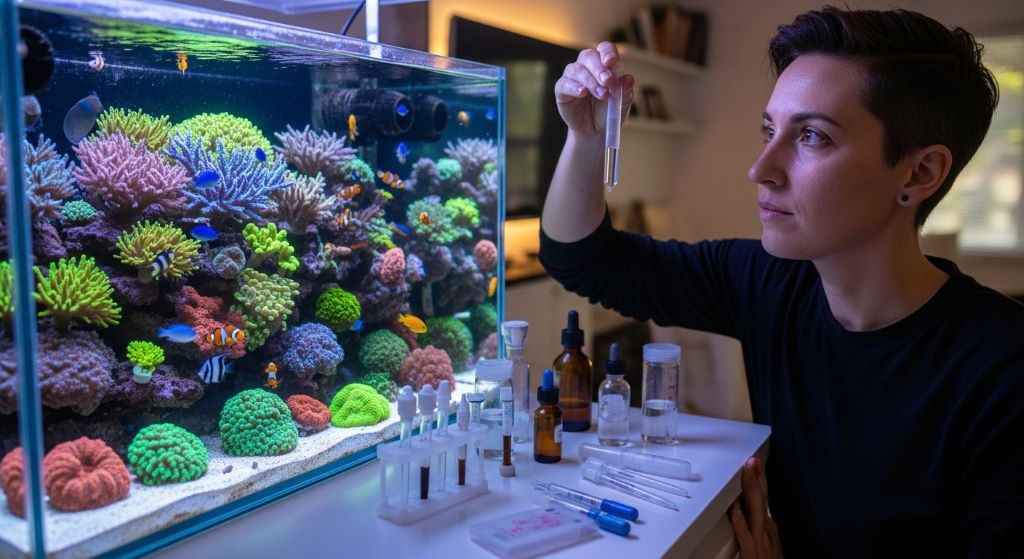
Test your water parameters every week. At a minimum, check salinity, temperature, pH, ammonia, nitrite, nitrate, alkalinity, calcium, and magnesium. These are the core values that determine whether your reef can thrive. Keep a written log of your readings so you can track trends over time.
Clean the glass or acrylic walls of your tank weekly. Algae builds up quickly on surfaces. A magnetic scraper makes this job fast and easy. Removing algae from the glass improves visibility and prevents it from spreading to your rock work.
Empty and rinse your protein skimmer collection cup. A full or dirty cup reduces skimmer efficiency. Rinse it with fresh water and return it to the sump. This one step makes a noticeable difference in how well your skimmer removes waste from the water.
Monthly Maintenance for Long-Term Tank Health
Monthly tasks address the parts of your system that do not need constant attention but still require regular care. Skipping these leads to slow, hidden problems that are harder to fix later.
Inspect and clean your return pump and powerheads. Remove them from the tank and soak them in a diluted vinegar solution to dissolve calcium buildup. Rinse thoroughly before placing them back. Clogged pumps reduce flow and put strain on motors, shortening their lifespan.
Change your filter socks or filter pads if your system uses them. These media trap fine particles from the water but become breeding grounds for bacteria if left too long. Replace or clean them at least once a month, or more often in heavily stocked tanks.
Check your lighting system. Clean the lenses or glass on your light fixtures with a damp cloth. Dust and salt creep reduce light output over time. Additionally, check your light schedule and make sure it is consistent. Most reef tanks do well with eight to ten hours of light per day.
Inspect your rock work and substrate for dead spots or pockets of waste. Use a turkey baster or small powerhead to blow debris out of crevices. This prevents the buildup of hydrogen sulfide, which is toxic to corals and fish.
Test your alkalinity more carefully this month. Many reef keepers also adjust their calcium and magnesium levels monthly to bring them back into the ideal range. These three parameters work together and must stay balanced for coral growth.
Quarterly and Annual Care Tasks
A few tasks only need attention every few months or once a year. However, they are just as important as your daily and weekly work.
Every three months, consider doing a deep clean of your sump. Remove any accumulated sludge from the bottom and clean the walls. This reduces the organic load in your system and improves water clarity.
Once a year, replace the bulbs in your lighting system if you use T5 or metal halide fixtures. Even when these bulbs look bright to the human eye, their spectrum shifts over time in ways that affect coral health. LED systems generally do not require bulb replacement but benefit from occasional inspection.
Review your maintenance log at least annually. Look for patterns in your water parameters. If certain values are consistently drifting, it may be time to adjust your feeding routine, stocking levels, or dosing schedule.
Keeping a Maintenance Log
A maintenance log is one of the simplest and most effective tank cleaning tips available. Writing down your parameter readings, water change dates, equipment checks, and observations creates a record you can refer back to when something goes wrong.
You do not need anything complicated. A notebook or a simple spreadsheet works perfectly. Date each entry and note anything unusual you observed. Over time, this log becomes a valuable tool for understanding your tank’s unique patterns and needs.
Common Mistakes to Avoid
Even experienced reef keepers fall into habits that work against their tank’s health. Knowing these pitfalls helps you avoid them from the start.
- Skipping water changes when the tank looks fine is one of the most common errors. Parameters can be off even when the tank looks healthy to the eye.
- Changing too much water at once can shock the system. Stick to small, regular changes rather than large, infrequent ones.
- Ignoring equipment maintenance allows pumps and skimmers to degrade slowly without obvious signs.
- Overfeeding is a leading cause of high nutrient levels in reef tanks. Less is almost always more.
- Adding new livestock without quarantining first introduces disease into an otherwise healthy system.
Conclusion
Building a reef aquarium maintenance routine is about working smarter, not harder. Daily observations keep you aware of your tank’s condition. Weekly water changes and parameter tests protect water quality. Monthly equipment care keeps your system running efficiently. Together, these habits form a reliable home aquarium routine that gives your corals and fish the stable environment they need to flourish.
Following consistent tank cleaning tips and staying organized with a maintenance log puts you ahead of most problems before they start. A healthy reef tank is not the result of luck. It is the result of steady, thoughtful care repeated week after week. With the right routine in place, your reef will reward you with color, life, and beauty for many years.
Frequently Asked Questions
How often should I do water changes in a reef tank?
Weekly water changes of around ten percent are ideal for most reef tanks. This keeps nutrient levels in check and replenishes trace elements without shocking the system.
What parameters should I test every week?
At a minimum, test salinity, temperature, pH, nitrate, alkalinity, calcium, and magnesium weekly. These values most directly affect coral health and overall tank stability.
How do I know if my protein skimmer is working correctly?
A well-tuned skimmer produces a thick, dark brown liquid in the collection cup. If the cup stays empty or fills with clear water, the skimmer needs adjustment or cleaning.
Can I use tap water for top-offs and water changes?
No. Tap water contains chlorine, chloramine, and other chemicals harmful to reef life. Always use water processed through a reverse osmosis and deionization system.
How long does a reef aquarium take to establish?
A reef tank typically takes three to six months to fully cycle and stabilize. During this time, beneficial bacteria establish themselves and water parameters gradually settle into a consistent range.
Related Topics:
How to Choose the Best Reef Aquarium Starter Kits for Beginners
How to Reduce Aquarium Pump Noise and Make Your Tank Ultra Quiet