Choosing toys for toddlers may seem simple, but safety is a serious concern. Many parents assume that all toys sold in stores are safe. Unfortunately, that is not always true. Some toys may contain harmful chemicals such as BPA, phthalates, or lead-based paint. These substances can affect a child’s health, especially during early development when toddlers frequently touch and chew toys.
According to the U.S. Consumer Product Safety Commission (CPSC), thousands of toy-related injuries are reported every year. While most injuries involve choking hazards or sharp parts, chemical exposure is another growing concern. That is why many parents are actively searching for non-toxic toddler toys, BPA-free toddler toys, and safe baby toys that support healthy play.
This guide explains how to identify safe toys for toddlers using simple checks and verified safety standards. You will learn how to read toy labels, understand safety certifications, avoid toxic materials, and choose toys made from safer alternatives. If you want to protect your child while still encouraging creative play, the information below will help you make better buying decisions.
What Are Non-Toxic Toddler Toys?
Non-toxic toddler toys are toys made without harmful chemicals such as BPA, phthalates, lead, and toxic paints. They are designed to meet safety standards that reduce the risk of chemical exposure during play.
Toddlers explore the world through touch and taste. It is common for children between 1 and 3 years old to chew or mouth toys. If a toy contains unsafe materials, small amounts of chemicals can enter the body through saliva or skin contact.
Safe baby toys usually follow strict safety regulations such as:
- CPSC toy safety standards in the United States
- ASTM F963 toy safety specification
- EN71 European toy safety standards
These standards limit toxic substances and ensure toys are tested for safety risks.
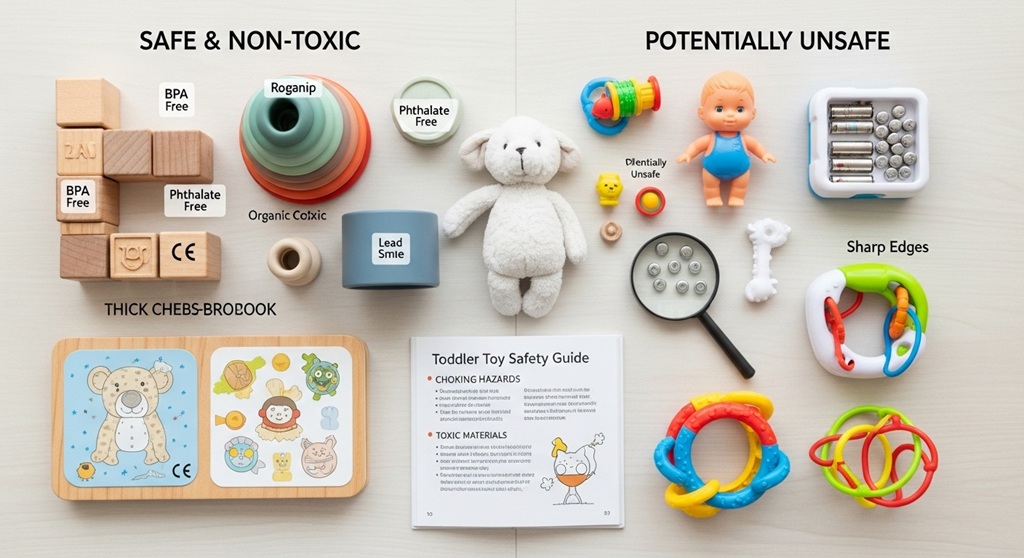
Common characteristics of safe toddler toys include:
- Made from natural wood, silicone, or food-grade plastic
- Painted with water-based or non-toxic paints
- No sharp edges or small detachable parts
- Free from BPA and phthalates
When you see terms like BPA-free toddler toys or chemical-free baby toys, it means the manufacturer claims to avoid harmful plastics. However, it is still important to check safety certifications and materials before purchasing.
Why Are Toxic Chemicals in Toys Dangerous for Toddlers?
Toxic chemicals in toys can affect brain development, hormones, and overall health in young children.
Toddlers are more vulnerable to chemical exposure than adults because their bodies are still developing. Even small amounts of harmful substances can cause long-term health effects.
Common Chemicals Found in Unsafe Toys
| Chemical | Where It Is Found | Possible Health Risk |
|---|---|---|
| BPA | Plastic toys | Hormone disruption |
| Phthalates | Soft plastic toys | Developmental issues |
| Lead | Paint or metal parts | Brain and nervous system damage |
| Formaldehyde | Some wooden toys | Respiratory irritation |
A 2019 study published in Environmental Health Perspectives linked phthalate exposure to behavioral and learning problems in children. Because toddlers frequently chew toys, avoiding these materials is an important safety step.
How Can Parents Identify Safe Baby Toys Before Buying?
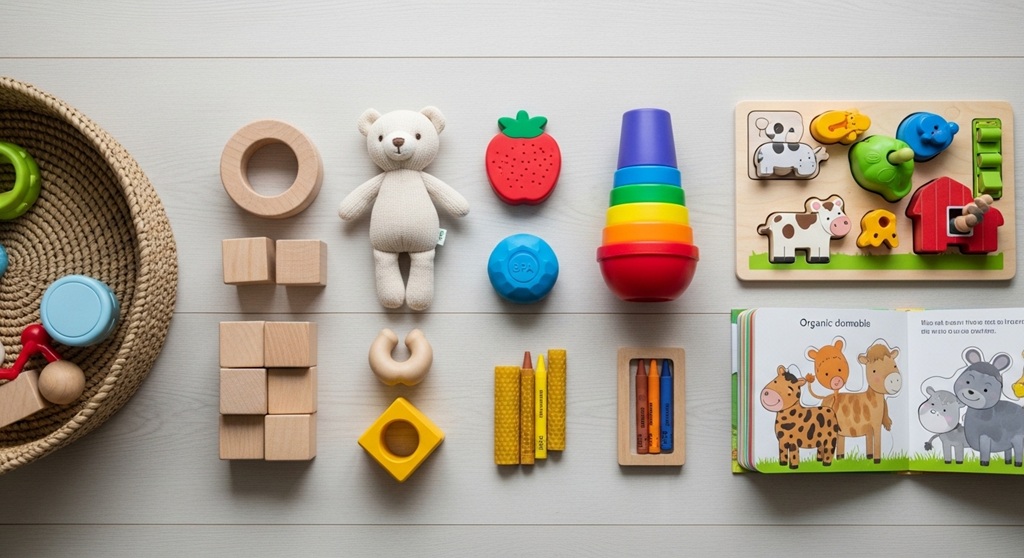
Parents can identify safe baby toys by checking safety certifications, reviewing materials, inspecting labels, and avoiding toys with strong chemical odors.
Here are simple steps to evaluate toy safety.
1. Check Safety Certifications
Reliable toys usually display safety testing labels. Look for certifications such as:
- ASTM F963 safety standard
- CE mark for European safety compliance
- CPSC compliance label
- ISO safety testing
These certifications indicate the product has passed chemical and mechanical safety tests.
2. Look for BPA-Free Labels
BPA-free toddler toys are made without bisphenol-A, a chemical used in plastics. BPA can mimic hormones and affect development.
Choose toys labeled:
- BPA-free
- Phthalate-free
- Non-toxic materials
3. Read the Material Description
The safest toddler toys are usually made from:
- Natural wood with non-toxic finishes
- Food-grade silicone
- Organic cotton fabrics
- High-quality ABS plastic
Avoid toys made from low-quality plastics without clear labeling.
4. Inspect the Toy Design
Even if a toy is non-toxic, it should also be physically safe.
- No small detachable parts
- No sharp edges
- Durable construction
- Age-appropriate size
Toddlers under 3 years old are especially vulnerable to choking hazards.
What Materials Are Best for Non-Toxic Toddler Toys?
The safest materials for toddler toys include untreated wood, food-grade silicone, organic fabrics, and BPA-free plastics.
1. Natural Wood Toys
Wooden toys are often safer than plastic alternatives when they use water-based paint or natural oils. They are durable and usually free from harmful chemicals.
Examples include:
- Wooden stacking toys
- Wooden puzzles
- Wooden blocks
2. Food-Grade Silicone Toys
Silicone toys are popular for teething and sensory play because they are flexible, durable, and chemical-resistant.
High-quality silicone toys are:
- BPA-free
- Heat-resistant
- Dishwasher-safe
3. Organic Cotton Toys
Stuffed animals or soft toys made from organic cotton reduce the risk of chemical exposure from dyes or synthetic fabrics.
4. BPA-Free Plastic Toys
Not all plastic toys are unsafe. High-quality plastics such as ABS or polypropylene can be safe when properly tested.
However, always verify the toy is labeled BPA-free toddler toys and phthalate-free.
Which Labels Indicate a Toy Is Safe for Toddlers?
Safety labels help parents identify tested and certified toys that meet strict chemical and manufacturing standards.
Here are common toy safety labels to recognize:
- ASTM F963 – U.S. toy safety standard
- CE Mark – European safety certification
- CPSIA compliant – Child safety testing requirement
- Greenguard certification – low chemical emissions
These labels indicate the manufacturer has followed regulated safety testing procedures.
How Do Cheap Toys Increase Safety Risks?
Very low-cost toys often skip proper testing or use cheaper materials that may contain harmful chemicals.
A case study from the U.S. PIRG Education Fund tested children’s products and found several toys containing high levels of lead and phthalates. Many of these products were imported items sold through unverified sellers.
Common risks with cheap toys include:
- Toxic paint coatings
- Low-grade plastics
- Weak construction
- Missing safety certification
This does not mean all affordable toys are unsafe. But extremely cheap toys without proper labeling should be avoided.
What Are the Safest Types of Toys for Toddlers?
The safest toys for toddlers are simple, durable, and made from tested non-toxic materials.
Recommended Safe Toy Types
- Wooden stacking toys
- Silicone teething toys
- Large building blocks
- Soft cloth books
- Shape sorting toys
- Musical toys without detachable parts
These toys support motor skill development, sensory learning, and creativity while reducing safety risks.
How Should Parents Clean and Maintain Toddler Toys?
Regular cleaning removes bacteria and prevents toddlers from being exposed to germs or chemical residues.
Safe cleaning methods include:
- Warm water and mild soap
- White vinegar solution for disinfecting
- Dishwasher cleaning for silicone toys
- Surface wiping with child-safe cleaners
Avoid harsh chemical cleaners because toddlers may place toys in their mouths soon after cleaning.
Conclusion: Choosing Safe Toys Protects Your Child’s Health
Toys play a major role in early childhood development, but safety should always come first. Because toddlers explore their environment through touch and taste, choosing non-toxic toddler toys and BPA-free toddler toys can significantly reduce health risks.
Parents can make safer choices by checking materials, reading labels, and verifying safety certifications. Look for toys made from natural wood, food-grade silicone, organic fabrics, or tested plastics. Avoid products with strong chemical smells or missing safety information.
Remember, the safest toys are not always the most complex ones. Simple toys that encourage creativity and motor skill development are often the best choice.
If you want to protect your toddler while supporting healthy learning and play, start reviewing the materials and safety labels on every toy you buy.
Safe toys lead to safer playtime and peace of mind for parents.
Frequently Asked Questions (FAQs)
Are wooden toys safer than plastic toys?
Wooden toys can be safer when made from untreated wood or finished with non-toxic paint. However, plastic toys can also be safe if they are BPA-free and meet safety standards such as ASTM F963.
What does BPA-free mean in toddler toys?
BPA-free means the toy does not contain bisphenol-A, a chemical used in some plastics that may disrupt hormones and affect development.
How can I tell if a toy is non-toxic?
Check product labels, safety certifications, and material descriptions. Toys labeled BPA-free, phthalate-free, and ASTM certified are generally safer choices.
Are silicone toys safe for toddlers?
Yes. Food-grade silicone toys are considered safe because they are durable, heat-resistant, and free from BPA and phthalates.
Should toddlers play with second-hand toys?
Second-hand toys can be safe if they are undamaged and meet current safety standards. Avoid old toys with peeling paint or unknown materials.
Why do toddlers chew toys?
Toddlers explore objects using their mouths, especially during teething stages. This behavior makes it important to choose safe baby toys made from non-toxic materials.
How often should toddler toys be cleaned?
High-contact toys should be cleaned at least once a week. Toys used during teething should be cleaned more frequently.
Related Topic: How to Use a Nursery Heater with Thermostat for Safe Overnight Heating
Read Next: How to Maintain a Metal Roof Properly