

Florida’s weather doesn’t ask permission. One minute you’re driving with the windows down, and the next, a wall of warm, torrential rain is hammering your windshield. For anyone who works outdoors, fishes the flats, or simply commutes through the Sunshine State, staying dry isn’t a luxury—it’s a daily necessity. Yet, many people automatically assume that “waterproof” means spending a small fortune on high-end technical gear. That’s simply not the truth. The real challenge isn’t just finding a rain suit; it’s finding one that stands up to Florida’s unique combination of intense heat, humidity, and sudden downpours without breaking your bank account. The market is flooded with options, but not all of them are created equal, and many cheap options turn into sweaty, leaky disasters. This guide will show you exactly how to navigate the noise and find the best value, focusing on materials, breathability, and fit, so you can stay dry and comfortable regardless of what the sky throws at you.
Why Is Choosing the Right Rain Suit in Florida Different?
Choosing a rain suit in Florida is fundamentally different than choosing one for Seattle or the Rocky Mountains. The primary adversary here isn’t just cold water; it’s the oppressive combination of heat and humidity that occurs before, during, and after the storm. A heavy PVC suit that works great in a Pacific Northwest drizzle becomes a portable sauna in the Everglades.
The “Boil-in-the-Bag” Effect
If you wear a non-breathable suit in 90°F heat, the rain won’t soak you—your own sweat will. This condensation buildup is the #1 complaint among Florida anglers and outdoor workers. You need a suit that manages moisture vapor, not just liquid water.
UVA/UVB Intensity
Florida sun is brutal even when the clouds roll in. Cheap suits often degrade quickly under intense UV exposure. The fabric can become brittle, and waterproof coatings will peel off after a few months of summer use.
Sudden Downpours vs. Drizzle
Florida storms are often short, violent cell bursts. In 30 minutes, you can get an inch of rain. Your suit needs to handle high water pressure from heavy droplets, not just light spray, which means demanding taped seams and a good waterproof rating (measured in mm).
What Materials Offer the Best Value for Florida’s Climate?
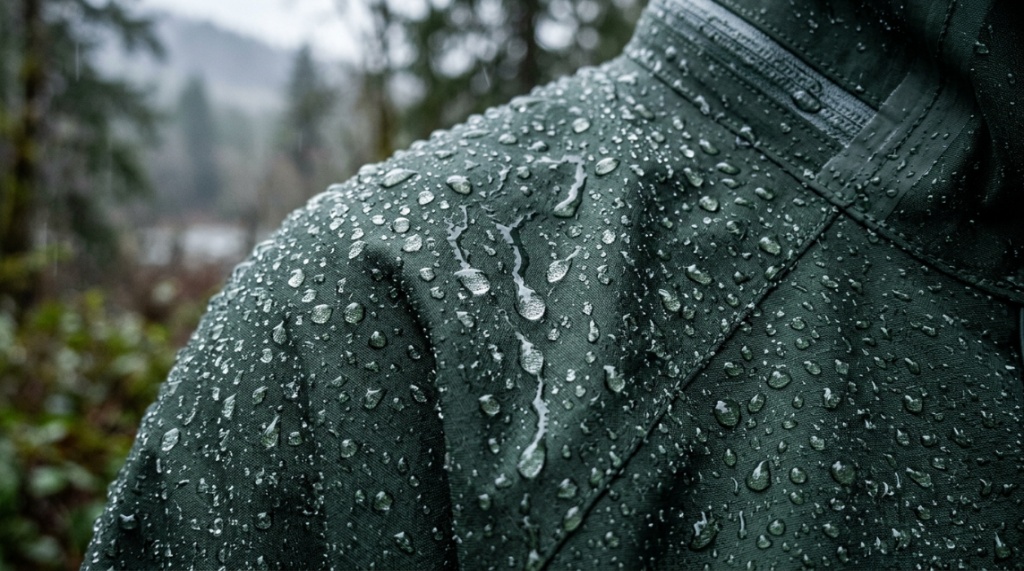
For the most affordable yet functional protection, you must look for specific fabrics. The best value in Florida is not the cheapest plastic, but rather a 2.5-layer or 3-layer laminate that prioritizes breathability. If you find a suit rated at 5,000mm waterproof and 5,000g/m²/24h breathability, you have hit the sweet spot for tropical downpours.
PVC (Polyvinyl Chloride)
Cost: Very Low. Pros: 100% waterproof. Cons: Zero breathability. Avoid this for full suits unless you are standing still in a downpour. It is unsuitable for walking or fishing.
PU (Polyurethane) Coated Nylon
Cost: Low to Medium. This is the most common budget option. Look for a “Tricot” backing (knit) which helps wick sweat away from your skin slightly. It’s flexible and decent for light activity but will eventually wet-out from the inside if you are active.
Polyester with TPU Lamination
Cost: Medium. This is the sweet spot for affordability and performance. TPU laminates are thinner, more flexible, and significantly more breathable than PVC or heavy PU coatings. They pack down small, which is ideal for a boat bag.
Eco-Friendly Options
Some brands are now using recycled nylon with PFC-free DWR (Durable Water Repellent) treatments. While slightly more expensive, they often last longer than cheap PU options, making them a better long-term value.
Which Waterproof Rating (mm) Do You Actually Need?
For Florida’s heavy rain, you need a minimum waterproof rating of 5,000mm. However, for a durable jacket that won’t wet-out after repeated use, look for 8,000mm to 10,000mm. Anything above 15,000mm is considered professional-grade and is likely overkill for budgeting.
Understanding the Numbers
Waterproof ratings refer to the height of a water column the fabric can withstand before leaking. 5,000mm handles moderate rain. 10,000mm handles heavy downpours. Since our storms are intense, do not settle for “showerproof” suits that live below the 5,000mm mark.
Don’t Forget the Seams
Even the best fabric will leak at the needle holes if the seams are not sealed. Ensure that any suit you buy has either Fully Taped Seams or Critically Taped Seams. Bare seams are a dealbreaker for Florida rain, no matter the price,Along with choosing the right waterproof gear, you should also Buy a Golf Umbrella That Survives Heavy Rain to ensure complete protection during sudden coastal downpours.
How Vents and Design Features Prevent Overheating?
Design elements are just as important as the fabric. A well-designed, affordable suit uses mechanical venting to dump heat. The best design features you can look for are underarm pit zips and a mesh lining that keeps the fabric off your skin.
Pit Zips: The Game Changer
These are heavy-duty zippers under the arms that open up to allow heat to escape. When you are hiking to a fishing spot or walking a dock, unzip these to let cool air in. This feature can make a $60 suit feel as comfortable as a $200 suit.
Adjustable Hoods and Cuffs
Look for a hood that can be cinched down with a drawcord to follow your head movements—a loose hood blocks your vision. Adjustable hook-and-loop cuffs are critical. They must be snug enough to prevent water from running down your sleeve but loose enough to allow air to flow out.
Back and Sleeve Venting
Some budget models feature vented capes (a flap on the back) or zip-off sleeves. While the cape can catch the wind, pit zips are usually more effective. Prioritize pit zips above all other vent types.
When Is the Best Time to Buy a Rain Suit to Save Money?
The best time to buy is during the transition seasons: Late Spring (May) or Early Fall (September). These are the “shoulder” seasons for outdoor gear, where retailers clear out inventory to make room for winter or summer-specific items. In Florida, these periods also align with the beginning and end of hurricane season.
Off-Season Shopping (Summer/Fall)
Since Florida doesn’t have a “winter,” many national chains mark down rain gear in July to make space for fall hunting gear or back-to-school apparel. Check clearance racks in big box stores during these months.
Online vs. Local Retail
Local stores are great for trying on the suit, but online shops usually have better prices. However, if you need a suit immediately because a storm is coming, local is your only option. Look for online deals that allow free returns so you can try on the suit at home in your own AC.
Can a Cheap Rain Suit Be Repaired Easily?
Yes, and this is a critical skill for Florida residents. A $40 suit that leaks at the collar can be fixed for $5, extending its life by years. Understanding basic repair makes a cheaper suit a much better investment.
Fixing Leaks with Seam Sealer
If your seams leak, buy a small bottle of seam sealant (like Seam Grip or Gear Aid). Apply it to the inside of the seams and let it dry flat for 24 hours. This is a simple DIY job that can turn a decent suit into a great one.
Patch Kits for Punctures
If you hook yourself with a fishing lure or snag the suit on a nail, use a patch kit. Most budget suits come with a small patch, but you can also use “Tenacious Tape” which works on nylon and polyester. Apply it to the inside and outside of the tear for a durable fix.
Re-Waterproofing the DWR
The outer face of your suit has a DWR coating (Durable Water Repellent). When water no longer beads up and just soaks the outer layer, it’s called “wetting out.” You can fix this by washing the suit with a tech wash and then applying a spray-on DWR treatment (like Nikwax). This costs about $10 but saves you from buying a new suit every season.
What Is the Ideal Fit for a Heavy Rain Suit?
In Florida, the fit must be generous but not baggy. You need room to layer a t-shirt or light fleece underneath, but you also don’t want excess fabric that catches the wind and creates a parachute effect in a storm. Focus on “active” fit rather than “relaxed” fit.
Arm Mobility (Raglan Sleeves)
Look for raglan sleeves (where the sleeve extends in one piece to the collar). This design allows for greater arm movement, which is crucial for casting a rod or using tools, without pulling the whole jacket up around your neck.
The Trunk Space
For pants, look for an elastic waistband or suspenders. The pants need to be loose enough to pull over work boots or wading shoes. A two-way zipper on the jacket or a longer drop-tail hem (covering your backside) is essential.
Which Budget Brands Offer the Most Reliable Quality?
While we don’t endorse specific brands, there are standout categories of manufacturers known for value. Brands like Frog Toggs (specifically the Pro-lite line), Grundens (which is high-price but offers durable options), and Galeton are reliable. However, the best advice is loyalty to features, not labels.
Frog Toggs: The Budget Standard
They are lightweight, packable, and use a breathable laminate. They are not built for heavy industrial brushing against rough wood, but for fishing and commuting, they are hard to beat. Their jackets often feature full-length storm flaps over the zippers, which is a must-have.
Rigid Work Brands (Helly Hansen)
While they have high-end lines, their basic workwear jackets are sturdy. They use a 3-layer fabric that is louder (crunches when you walk) but incredibly durable. If you are a construction worker or a deckhand, this may be better than a thin packable jacket.
Boat Specific Brands
Brands that cater to the maritime industry often have a “Sou’wester” style jacket. These are designed to stand up to saltwater and constant wear. They can be heavier, so check the weight. If you’re in the affordable rain suits Florida market, focus on models that one can deploy quickly.
How to Maintain Your Rain Suit to Extend Its Lifespan?
Proper care is the single most impactful way to ensure your budget suit survives multiple Florida summers. Most people do one thing wrong: they leave the suit soaked in a ball in the trunk of the car. This leads to mildew and delamination.
Drying Techniques
Never store a wet rain suit in a sealed bag. Hang it up in a well-ventilated space, away from direct sunlight, until completely dry. Sunlight degrades the waterproof membrane. If you are on a boat, rinse the saltwater off the fabric before storing it.
Washing Instructions
You should wash your rain suit occasionally. Salt, dirt, and sunscreen residue reduce its performance. Use a specialized cleaner (not standard laundry detergent) as regular soap clogs the pores of the breathable membrane. Wash on a gentle cycle, cold water, and line dry.
The “No-Fold” Rule
For long-term storage, do not fold a technical rain suit into a cube. This creates creases that crack the waterproof coating. Instead, roll it loosely or hang it on a heavy-duty hanger in your garage. This keeps the fabric flexible.
Are There Specific Laws or Regulations for Rain Gear in Florida?
While there are no laws requiring you to wear a specific type of rain gear for civilians, there are regulations for boating. If you are on a vessel, your rain gear is not an acceptable replacement for a wearable PFD. However, you must consider “visibility” during storms.
High-Visibility Colors (Safety)
In Florida’s heavy storm clouds, it gets dark. If you are commuting along a roadside or paddling a kayak, you need a rain suit with high-visibility neon yellow or orange panels. The dark green “camo” suits are dangerous in low-light conditions. This isn’t a law, but a practical safety measure.
Hypothermia Risks
Even though Florida is hot, if you are soaked in a cold front, you can get hypothermia. A rain suit provides buoyancy and wind resistance. It protects you from the 50°F overnight temperatures that occur in North Florida during winter storms. Always keep a suit in the car.
Comparing the Price: Is a $30 Rain Suit Worth It?
A $30 suit will often fail within one or two heavy storms. The zippers bust, the seams split, or the coating peels. While a $100 suit seems expensive, it usually offers three times the lifespan, making it better value per use.
Cost per Use Analysis
Let’s assume you fish 20 times a year. A $30 suit lasting 5 trips costs $6 per trip. A $80 suit lasting 40 trips costs $2 per trip. The math favors quality up-front. Always calculate cost-per-use, not just sticker price.
The Hidden Costs of Cheap Gear
If your suit leaks and you get soaked, you might catch a cold or miss a day of work. The time lost and discomfort caused by a low-quality suit far outweigh the $20 you saved. Also, cheap suits often shed microplastics quickly due to breakdown, which is not good for our waterways.
Can You Wear Rain Pants Over Work Boots?
Yes, but you need to look for specific features. The leg opening needs to be wide enough to fit over a work boot, and it must have an adjustable ankle cuff with a zipper or snap buttons to seal tightly over the boot.
The “Boot-Cut” Leg
Most budget pants have a simple elastic cuff. These do not fit over boots well; they ride up. Look for pants with a gusseted ankle that features a 12-inch zipper and a flap covering the zipper to prevent water ingress.
Wearing Them Over the Boots vs. Inside
If you are fishing from a pier, you can wear them over your shoes. If you are wading, you must wear them under your waders. For everyday commuting, put the pants *over* your boots to keep the water from running down into your footwear. Ensure the ankle seal is snug.
The Essential Packing Guide for Car and Boat Storage
You must have a dedicated rain suit ready to go. In Florida, the sky can change from clear to black in 20 minutes. Here is what your emergency kit needs to look like:
The “Go-Bag” Essentials
Besides your rain suit, include a small chamois towel, a dry bag for your phone, and a change of socks. Keep them in a dedicated waterproof duffle in the trunk of your car.
Storage Type Matters
Avoid storing the suit in a compression sack. This reduces breathability over time. Use a simple string-backpack (a sil-nylon stuff sack) so the garment can “breathe” while stored. If it’s damp, hang it out to dry immediately.
Frequently Asked Questions
Is a poncho better than a rain suit in Florida?
A poncho offers better airflow (ventilation) but is terrible in high winds and when walking. A rain suit with pit zips provides similar airflow but better mobility and stays in place during active tasks. For most Florida utility, the suit wins.
How do I stop my rain jacket from sticking to my skin?
Look for a suit with a “drop-liner” mesh inside. If it doesn’t have that, wear a thin base layer underneath (like a polyester t-shirt). This wicks moisture away and prevents the jacket from clinging to your skin when you sweat.
Are bright colors better for Florida rain gear?
Yes. Bright yellow or orange is safer for roadside emergencies, hunting, and boating. They also reflect heat slightly better than dark colors in direct sunlight post-storm. Dark colors are purely aesthetic but less safe.
Can I use a rain suit for motorcycle riding in Florida?
Yes, but you need a suit that is loose enough to fit over your riding gear. Ensure the cuffs are wide enough to go over your gauntlets. Also check for a floating collar to prevent water dripping down your neck. High-speed durability is a must.
Why does my rain suit smell after a few uses?
That is likely from bacteria growth. If you store it damp, mold and mildew will grow. Wash it with a diluted vinegar solution or a specialized tech wash to kill the odor. Always ensure it is bone-dry before folding.
Can I put my rain suit in the dryer?
No. High heat will destroy the waterproof membrane and the taped seams. Always air dry. If you need to speed up the process, hang it in front of a fan, but never use a tumble dryer.
How often should I re-waterproof my rain suit?
If you use it weekly, apply a DWR spray every 2-3 months. If you notice the outer layer soaking up water instead of beading, then it’s time. This is a simple air-dry-on treatment.
What is the difference between “water-resistant” and “waterproof”?
Water-resistant simply means the fabric repels light moisture and will wet-out quickly. Waterproof means it has a laminated membrane (like PU or TPU) that blocks water entirely. For Florida, always look for the “waterproof” label, not “resistant.”
Conclusion: Stay Dry Without Going Broke
Finding the right rain gear in Florida doesn’t require spending a month’s rent. It requires a bit of knowledge about materials, breathability, and fit. It’s understanding that a suit with pit zips at $70 performs better than a non-zip suit at $120. The key takeaway is to prioritize features that combat Florida’s heat: mechanical vents, mesh lining, and high water ratings. By focusing on sealed seams and packable construction, you’ll find a suit that fits your life—whether you’re chasing tarpon in the mangroves or just trying to get to work without showing up looking like you fell in a swimming pool.
Take the time to measure your chest and inseam, check the reflective piping for safety, and above all, skip the tacky plastic suits. A good, affordable rain suit is a long-term investment in your comfort and safety. Get one, keep it in your truck, and you’ll never fear the afternoon thunderstorm again. The sunshine state isn’t going to stop raining, so make sure you’re ready to dance in the drops without a hefty price tag.