
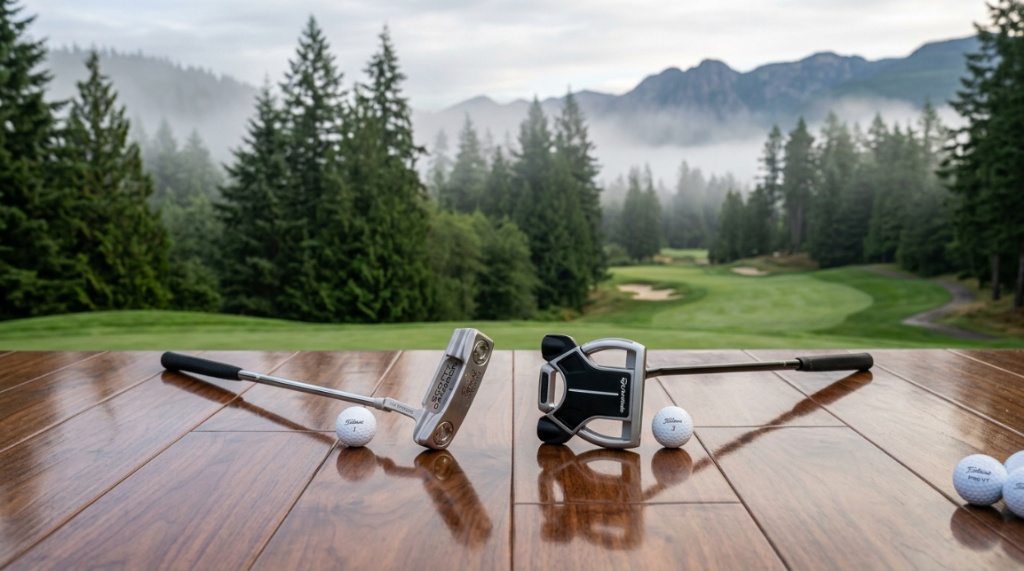
Finding a putter that feels like an extension of your arm is arguably the most personal quest in golf. Yet, for golfers in Washington, the journey comes with a unique twist—playing on poa annua greens that are notorious for their grain, undulation, and unpredictable afternoon bumps. You might have bought a putter online that looked great in the store, only to find it leaves you short on the slick, counterclockwise grain of a Seattle country club. The problem isn’t your stroke; it’s likely the equipment. You need a mallet with high MOI, precise toe hang, and the right insert to navigate the Pacific Northwest’s toughest surfaces. In this guide, we’ll cut through the marketing noise to help you identify the best golf putters Washington golfers trust, focusing on feel, alignment, and forgiveness specifically for our region’s conditions.
Why Do Washington Greens Demand a Specialized Putter?
Golf in Washington is different. From the muni tracks in Spokane to the private links in Tacoma, the common denominator is the grass. Understanding the surface is the first step to selecting the right flatstick. It’s not about brand loyalty; it’s about geometry and weight distribution.
The Poa Annua Factor and Grain Behavior
Poa annua is the predominant grass on Washington greens. Unlike bentgrass found in warmer climates, poa has a distinct grain that grows toward the setting sun and the nearest water source. In the Pacific Northwest, this means putts often break more than the visual slope indicates, especially in the late afternoon when the grain has “fluffed up.”
To combat this, you need a putter that delivers a firm, rolling strike to keep the ball on line. Putters with a heavier head weight (360g+) or a firmer insert help you hit the center of the face more consistently, reducing the “bounce” that poa causes. A soft, mushy insert will grab the ball and push it offline on these bumpy surfaces.
Wet Conditions and Weight Distribution
Washington is famous for rain. When the greens are wet, they are slower and the ball tends to skid rather than roll. A putter with a lower center of gravity (CG) and higher moment of inertia (MOI) is critical. Mallet putters excel here because they get the ball rolling end-over-end faster, preventing the initial skid that gets knocked off course by water droplets,Whether you are hitting the outdoor trails with your audio gear or working on your athletic performance using a Golf Grip Trainer for Beginners to Fix Your Swing Fast , staying equipped with the right gear ensures you reach your goals.
Which Putter Head Shape Works Best for Your Stroke Type?
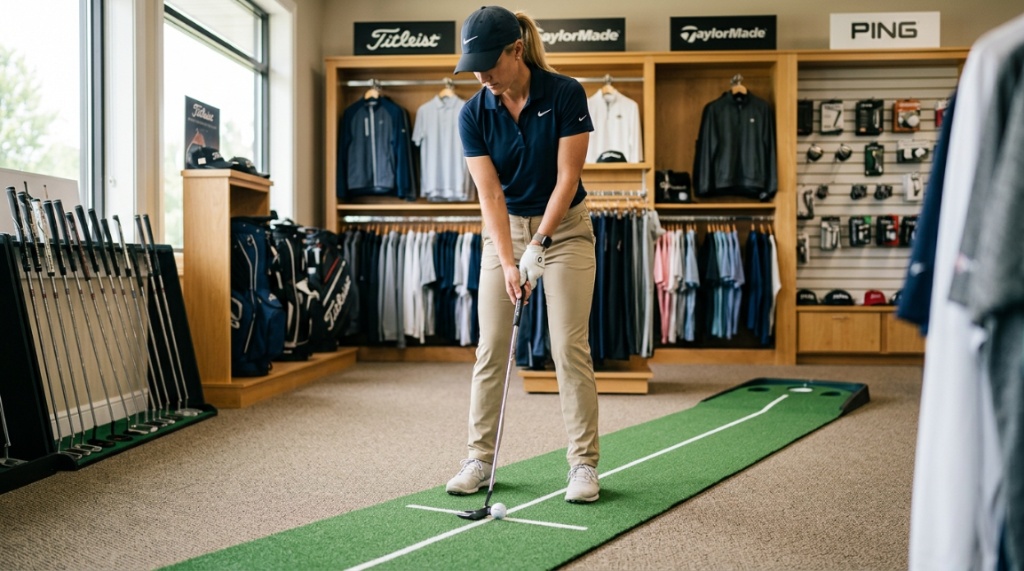
The age-old debate of mallet vs. blade misses the point. The real question is: What is your dominant stroke path? Washington courses often feature severe side-hill lies and undulating greens, which punish mismatched putting styles.
Straight-Back-Straight-Through Strokes: The Mallet Advantage
If your stroke is more of a piston motion—moving directly back and through without much face rotation—you need a face-balanced putter. Mallets, with their high MOI and alignment aids, are perfect for this. They resist twisting on off-center hits, which is vital when you are trying to lag a 40-footer on a wet Tacoma green. Look for putters where the shaft enters the middle of the head or the club balances perfectly on your finger.
Arced Strokes: The Blade Connection
If you have a gated stroke (opening the face on the backswing and closing it on the follow-through), a toe-hang blade is your best friend. The toe-weighting allows the clubface to open and close naturally. While blades are less forgiving, they offer unmatched feel for distance control on poa greens, provided you are striking the center consistently.
| Stroke Type | Best Head Shape | Toe Hang | Best For Washington Conditions |
|---|---|---|---|
| Straight Back & Through | Mallet / High MOI | Face Balanced | Wet, slower greens |
| Strong Arc | Blade / Mid-Mallet | Toe Hang (45-60°) | Firm, fast summer greens |
| Slight Arc | Mid-Mallet / Fang | Plumb Neck (30°) | Versatile, all weather |
What Is the Ideal Putter Weight for Slower Greens?
One of the most common mistakes Washington golfers make is playing with a putter that is too light. Because our greens can feel “dead” in the winter, golfers often over-swing, leading to pushed or pulled putts. A heavier putter solves this by promoting a pendulum swing.
The Benefits of 360g+ Head Weights
The golf industry standard has been around 350g for years, but the new “Washington Standard” is trending toward 365g. Heavier heads require less effort to get the ball to the hole. They smooth out your tempo and keep the putter head stable through impact, minimizing the impact of the rough, gritty surface of poa annua.
Counterbalance Options for Wet Weather
When the grip gets wet, your hands get tense. Counterbalanced putters (where weight is added to the butt end of the grip) encourage a lighter grip pressure. This setup moves the CG point higher, which calms the hands and allows the heavy head to do the work. This is a game-changer for Washington golfers who hate three-putting from 30 feet on soggy afternoons.
How Do You Read the Grain and Slope Effectively?
You can buy the highest-tech putter on the market, but if you don’t factor in the grain, you’ll still suffer. In Washington, reading the putt is a two-step process involving slope and grain direction.
Identifying Shiny vs. Dull Grass
Before you step up to the ball, look at the cup. If the edge of the hole looks shiny and reflective, the grain grows toward you, meaning the putt will be slower. If the edge looks dull or has a “fuzzy” lip, the grain grows away from you, and the putt will be faster and turn more sharply.
Adjusting Your Aim with a High-MOI Putter
With a high-MOI mallet, you can afford to aim slightly higher on the high side of the hole because the heavier head will keep the ball on line even if you don’t strike it perfectly. With a blade, you need precise contact to impart the exact amount of speed to defeat the grain. For beginners in Washington, the high-MOI route is the safest path to lower scores,Proper alignment starts in your hands, so if you are also working on your overall mechanics off the green, check out this guide on the Golf Grip Trainer for Beginners to Fix Your Swing Fast.
Which Insert Material Offers the Best Feel?
The “feel” is subjective, but physics is not. In the cold, wet climate of Washington, the ball feels harder and the face feels dead quicker. The insert material you choose dictates your distance control.
Firm Inserts: The Surlyn Advantage
Surlyn or aluminum inserts (like the Odyssey Stroke Lab) offer a firmer response. This is ideal for wet greens because it minimizes energy loss. The ball jumps off the face hot, which is necessary when the grass is holding the ball back.
Soft Inserts: Microhinge Technology
Newer microhinge inserts (like White Hot) are designed to grip the ball and create immediate forward roll. They work well in dry weather, but in the rain, they can feel too soft, causing you to swing harder and lose accuracy. If you play primarily in the spring, opt for a firmer face to cut through the moisture.
Can Alignment Aids Help with Aim on Complex Putts?
Washington greens are often visually busy, with undulations and inconsistent grass coloring. Your eyes can easily be fooled. This is where technology steps in to save your putting average.
The Rise of Zero-Mils and Rail Systems
Modern putters—like the line of best golf putters Washington retailers recommend—feature high-contrast alignment rails. These aren’t just for show. They create a visual line that extends from the face to the hole, helping you square the face at address. When you are staring down a 15-foot putt with a double break, having a solid reference point is invaluable.
Using the Ball Lines in Conjunction
Many Washington pros recommend drawing a line on your ball and matching it to the alignment line on your putter. This double-checking method ensures that your putter face is square to your intended target line, not just your stance line. It turns putting from a feel-based guess into a mechanical process.
Which Putter Fits the Washington Budget?
You don’t need to spend $500 to putt well on the West Coast. The market is full of fantastic options that perform perfectly on poa annua without breaking the bank. It is wise to compare premium models against budget-friendly alternatives to ensure you get the best value for your specific needs.
Budget-Friendly Favorites vs. Premium Clubs
Brands like Cleveland (Huntington Beach series) and Wilson (Infinite series) offer mallets with precision-milled faces at a fraction of the cost of Scotty Cameron or Toulon. These budget options often use heavier heads and softer steel inserts, which rival the feel of high-end models.
For those looking to upgrade without the retail markup, checking the curated list of discounted premium gear is a smart move. Many golfers find that “gently used” high-end mallets are the secret to conquering Washington’s tricky surfaces without the financial sting.
Where to Test: Local Fittings vs. Big Box Stores
While the big box stores have a wide variety, the lighting and fake turf often misrepresent the actual roll. We recommend visiting a local PGA pro shop (like those at Chambers Bay or The Home Course) where they can fit you outdoors on real greens. This gives you the true data you need for the specific grass you play on.
Is Custom Fitting Worth It in Washington?
Simply put: yes, absolutely. Off-the-rack putters are made for the “average” golfer, but there is no average in Washington. Your posture, eye dominance, and the lie angle of the greens you play all matter.
The Lie Angle and Loft Adjustment
When a putter is too upright, it pulls left; too flat, it pushes right. On the undulating greens of Washington, a proper lie angle fitting ensures the sole sits flush at address. Also, the average loft on a putter is 3-4 degrees. In wet weather, you need slightly more loft (4-5 degrees) to get the ball out of the indentation it makes in the wet grass quickly.
Eye Alignment Specialists
Many fitters will check your eye position during a fitting. If your eyes are inside the ball line, you’ll naturally aim right; if outside, left. A fitting will tell you if you need a putter with offset or a straight shaft to correct this. This is the difference between making 5-footers and missing them.
How Does “Luxury” Convert to Performance?
The allure of a luxury putter isn’t just about the brand name on the sole; it’s about the manufacturing precision. In the Pacific Northwest, where you are hitting the ball on wet, sandy soil, durability and consistency are key.
Precision Milling and Moisture Resistance
High-end putters use 303 stainless steel or aircraft-grade aluminum. These materials don’t rust or corrode from the constant moisture in Washington’s air. The precision milling on the face ensures that even if the insert gets muddy, the roll remains consistent.
Weighting Mechanisms for Adjustability
Luxury putters often come with interchangeable sole weights. This is a boon for seasonal players. You can put 15g weights in the winter for the slow greens and drop to 5g weights in the summer when the greens speed up. This versatility makes the higher initial investment a smart long-term financial choice for the dedicated golfer.
When Should You Replace Your Putter?
Technology in putters moves slower than drivers, but the materials degrade. If you’ve been using the same putter for over 10 years, you are losing strokes.
The Face Wear and Groove Degradation
Putters with milled grooves are designed to channel moisture and debris away from the ball. When these grooves wear down, the ball skids more on wet greens, causing inconsistent speed. If you notice your putter face is shiny and smooth, it’s time to upgrade.
Grip Compression
Most golfers ignore the grip. When it becomes hard and slick from sweat and rain, you grip tighter, killing the pendulum motion. Replacing the grip or the entire putter can lower your score by two or three strokes a round.
How to Maintain Your Putter for Washington Weather
Once you’ve selected your weapon, you must maintain it to survive the wet winters. A little care goes a long way in ensuring your investment performs.
Daily Wiping and Drying
After your round, use a dry towel to wipe the face and shaft immediately. Water sitting on the face will eventually oxidize it, affecting the sound and feel.
Protecting the Face Cover
Always use the headcover, not just in the car, but on the course. When you pull your putter from the bag, the metal can clang against your irons, denting the soft aluminum faces of modern mallets. These dents can cause wild deflection on the poa greens.
Frequently Asked Questions
What is the most forgiving putter for high handicappers?
For high handicappers in Washington, a high-MOI mallet with a face-balanced design is the most forgiving. Models like the Ping Fetch or Odyssey 2-Ball provide massive stability, preventing distance loss on off-center hits, which is crucial on the uneven poa annua greens.
Do I need a softer or firmer putter face?
For Washington’s wet climate, a firmer face is generally better. It prevents the ball from skidding on wet grass and helps it get rolling faster. Surlyn or aluminum inserts are preferable to softer polymer inserts during the rainy season.
Are blade putters a bad choice for beginners?
Beginners often struggle with blades due to the tiny sweet spot. However, if a beginner has a strong arced putting stroke, a blade can feel more natural. It is recommended to start with a mid-mallet to balance forgiveness with feel.
How often should I change my putter grip?
You should change your putter grip at least once a year, or every 40 rounds. In Washington, constant exposure to moisture hardens the rubber. A fresh grip allows for lighter hand pressure and a smoother stroke.
Can a putter fitting help with the yips?
Yes. A fitting can adjust the weight and length to dampen the wrist action that causes the yips. Heavier putters and counterbalanced grips force a shoulder-driven stroke, reducing the hand twitch that ruins putts on fast, undulating greens.

