

A retired couple in Hilton Head spent $14,000 on a golf cart they barely use three times a week — and their neighbor bought a nearly identical model for $6,200. The difference wasn’t quality. It was knowledge. Choosing affordable golf carts that actually meet your needs without draining your savings requires understanding exactly what features matter and which ones are dealer markup traps. An affordable golf cart for adults is a battery-powered or gas-powered low-speed vehicle priced between $4,000 and $9,000 that handles neighborhood driving, golf course use, or short-distance commuting without the premium price tag of luxury models. If you’ve been browsing dealership lots feeling overwhelmed by options and prices, the problem isn’t that good carts are expensive — it’s that most buyers don’t know where the real value sits.
The U.S. golf cart market hit $2.1 billion in 2024, with the “affordable adult” segment growing 23% year-over-year as more retirees, gated community residents, and rural property owners discover that affordable golf carts deliver 90% of the functionality of premium models at half the cost. This golf cart buying guide breaks down exactly how to find that sweet spot between price and performance.
What Makes a Golf Cart “Affordable” Without Sacrificing Quality?
An affordable golf cart delivers reliable daily performance, adequate range, and essential safety features at a price point between $4,000 and $9,000 — without cutting corners on battery life, frame integrity, or motor durability.
The price spectrum for adult golf carts breaks down like this:
- Budget tier ($4,000–$6,000): Basic 36V electric or used gas carts. Functional but limited range and features.
- Mid-range ($6,000–$9,000): 48V electric carts with decent range (25–40 miles), basic lighting, and comfortable seating. The sweet spot for most buyers.
- Premium ($9,000–$15,000+): Lithium batteries, custom bodies, street-legal packages, premium sound systems. Nice but not necessary.
Quality indicators that matter regardless of price:
- Frame material — steel or aluminum (avoid plastic-heavy frames)
- Motor type — AC motors outlast DC motors significantly
- Battery type — lithium lasts 5x longer than lead-acid despite higher upfront cost
- Warranty — minimum 2 years on frame, 1 year on batteries
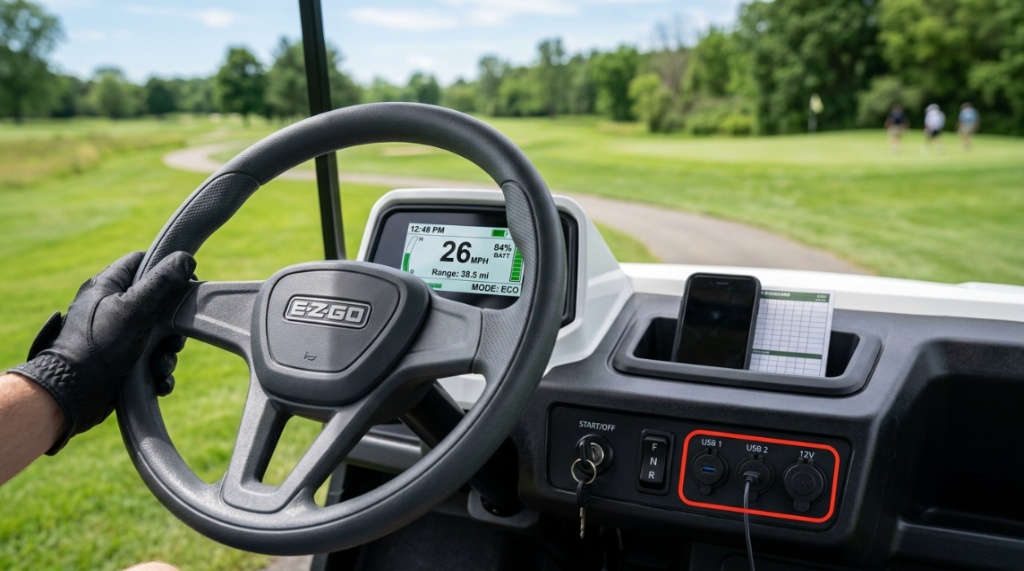
- Brand reputation — established manufacturers (Club Car, E-Z-GO, Yamaha) hold value better
Should You Buy a New or Used Golf Cart to Save Money?
Used golf carts offer 40–60% savings over new models, but only if you inspect battery condition, frame integrity, and motor hours before purchasing.
New vs. used comparison:
| Factor | New Golf Cart | Used Golf Cart (3–5 years old) |
|---|---|---|
| Price Range | $6,000–$15,000 | $2,500–$7,000 |
| Battery Condition | 100% capacity | 60–80% capacity (may need replacement) |
| Warranty | 2–5 years | None or limited |
| Customization | Build to spec | Take what’s available |
| Hidden Costs | Minimal first 3 years | Battery replacement ($800–$2,500) |
| Depreciation | 30–40% in year one | Already depreciated |
The smartest move for budget-conscious buyers: find a 2–3 year old cart from a golf course fleet sale. These carts have documented maintenance histories, consistent usage patterns, and are typically sold at 50% of retail when courses upgrade their fleets.
What Features Are Worth Paying Extra For?
Lithium batteries, LED headlights, and a 48V system are the three upgrades that deliver genuine long-term value. Everything else is optional comfort.
Features ranked by actual value:
- Lithium battery upgrade ($1,500–$2,500 extra): Lasts 8–10 years vs. 3–4 for lead-acid. Lighter weight improves range and hill performance. Pays for itself by year 5.
- 48V system over 36V ($500–$800 extra): More torque, better hill climbing, longer range per charge. Essential if your area has any inclines.
- LED lighting package ($200–$400): Required for street-legal status in most states. Better visibility, lower power draw.
- Rear-facing seat ($300–$600): Doubles passenger capacity. Worth it for families.
- Lifted suspension ($800–$1,500): Only necessary for off-road or rough terrain use. Skip it for pavement-only driving.
Features that are NOT worth premium pricing:
- Bluetooth speakers ($200–$500) — use a portable speaker instead ($30)
- Custom paint jobs ($500–$2,000) — purely cosmetic, zero functional value
- Touchscreen displays ($300–$800) — unnecessary for a vehicle that tops out at 25 mph
How Do You Avoid Getting Ripped Off at a Golf Cart Dealership?
Know the manufacturer’s MSRP before visiting any dealer. Markups of 20–40% above MSRP are common at independent golf cart dealers, especially in retirement communities where demand is high.
Dealer tactics to watch for:
- “Limited time pricing” — golf carts don’t have model years like cars. There’s no urgency.
- Bundled accessories at inflated prices — a $50 side mirror sold as a $150 “safety package”
- Financing with hidden fees — always calculate total cost including interest, not just monthly payment
- “Certified pre-owned” without documentation — ask for actual maintenance records, not just a sticker
- Pressure to buy extended warranties — rarely worth it on simple electric vehicles with few moving parts
Better buying strategies:
- Buy directly from golf course fleet sales (spring and fall)
- Check Facebook Marketplace and Craigslist in retirement-heavy areas
- Compare at least 3 dealers before committing
- Negotiate — dealers have 15–25% margin on most carts
- Buy in winter when demand drops and dealers need to move inventory
What’s the True Cost of Owning an Affordable Golf Cart?
Total annual ownership cost for an affordable electric golf cart runs $300–$800 per year including electricity, maintenance, and insurance — roughly 90% cheaper than owning a car.
Annual cost breakdown:
- Electricity: $100–$200/year (charging a 48V system costs roughly $0.50–$1.00 per full charge)
- Maintenance: $100–$300/year (tire replacement, brake adjustment, battery watering for lead-acid)
- Insurance: $100–$300/year (varies by state and coverage level)
- Registration (if street-legal): $25–$75/year depending on state
- Battery replacement fund: Set aside $200–$400/year to cover eventual replacement
Gas carts cost slightly more to operate ($200–$400/year in fuel) but avoid the eventual battery replacement expense. For most adult buyers driving under 30 miles daily, electric is the more economical long-term choice.
When budgeting for your next course companion, saving money on the vehicle itself allows you to allocate funds toward high-quality accessories that improve your daily rounds. Investing in durable gear, such as the Best Golf Towels, ensures your clubs stay clean and dry without draining your wallet. Striking this balance between a high-value cart and premium court accessories is the ultimate secret to maximizing your time on the fairways while keeping your overall golf hobby highly affordable.
Which Brands Offer the Best Value in Affordable Golf Carts?
Club Car, E-Z-GO, and Yamaha dominate the reliable affordable segment. Chinese manufacturers like Evolution and Epic offer lower prices but with less proven long-term durability.
Brand comparison for budget-conscious buyers:
- Club Car Onward: Excellent build quality, strong resale value, extensive dealer network. Starting around $8,000 new.
- E-Z-GO Freedom TXT: Reliable workhorse, widely available used, easy to find parts. Starting around $7,500 new.
- Yamaha Drive2: Quietest gas engine option, solid electric models, good warranty. Starting around $7,000 new.
- Evolution Classic 4: Chinese-made but feature-rich for the price. Lithium battery standard, street-legal package included. Starting around $6,500 new.
- Icon i40: Budget-friendly with decent features, but limited dealer support. Starting around $5,500 new.
For maximum long-term value: buy a used Club Car or E-Z-GO (3–5 years old) and upgrade the batteries to lithium. You’ll get premium reliability at budget pricing.
How Do You Test Drive a Golf Cart Before Buying?
Always test drive for at least 15–20 minutes covering flat roads, hills, and turns. A 2-minute lot drive reveals nothing about real-world performance.
What to check during a test drive:
- Acceleration: Should be smooth without jerking or hesitation
- Braking: Even stopping without pulling left or right
- Hill performance: Find the steepest nearby incline — the cart should climb without significant speed loss
- Steering: No play or looseness in the wheel
- Noise: Listen for grinding, clicking, or whining from the motor or drivetrain
- Suspension: Drive over bumps — excessive bouncing indicates worn shocks
- Battery gauge: Watch for rapid drops that indicate weak cells
For used carts specifically: ask to see the cart after it’s been sitting overnight without charging. A healthy battery should show 80%+ charge after sitting 12 hours. Rapid overnight drain signals dying batteries — and that’s a $1,000–$2,500 replacement cost you’ll inherit.
Conclusion
Choosing an affordable golf cart doesn’t mean settling for junk. It means understanding where real value lives — in battery quality, motor reliability, and frame durability — and refusing to pay premium prices for cosmetic upgrades that don’t improve your daily experience. The best affordable golf carts for adults deliver 25–40 miles of range, comfortable seating, and years of reliable service for under $8,000.
Start by defining your actual use case: golf course only, neighborhood driving, or mixed use. Then set a firm budget including accessories and potential battery replacement. Compare at least three options, test drive each one thoroughly, and buy in the off-season when dealers negotiate. Follow this golf cart buying guide and you’ll drive away confident that every dollar spent delivers real value.
What’s your primary use case for a golf cart? Share in the comments — I’ll point you toward the best value option for your specific situation.
Frequently Asked Questions
What is the best affordable golf cart brand for adults?
Club Car and E-Z-GO offer the best combination of reliability, resale value, and affordability. Used models from these brands (3–5 years old) provide premium quality at budget prices, typically $3,500–$6,000 with proper maintenance history.
How long do affordable golf cart batteries last?
Lead-acid batteries last 3–5 years with proper maintenance (regular watering, full charge cycles). Lithium batteries last 8–10 years with virtually no maintenance. Despite higher upfront cost, lithium saves money over a 10-year ownership period.
Can I finance an affordable golf cart?
Yes. Most dealers offer financing with terms of 24–60 months. Credit unions typically offer better rates (6–10% APR) than dealer financing (10–18% APR). For carts under $5,000, paying cash avoids interest charges that can add 20–30% to total cost.
Are cheap golf carts from China reliable?
Some Chinese brands (Evolution, Epic) offer decent quality with impressive feature lists at low prices. However, dealer support, parts availability, and long-term durability remain concerns. Stick with brands that have established U.S. dealer networks and minimum 2-year warranties.
What’s the cheapest way to get a golf cart?
Golf course fleet sales offer the lowest prices — courses sell 2–4 year old carts for $2,000–$4,000 when upgrading their fleets. Check local courses in spring and fall. Facebook Marketplace in retirement communities (Florida, Arizona, South Carolina) also offers excellent deals.
Do affordable golf carts hold their value?
Name-brand carts (Club Car, E-Z-GO, Yamaha) retain 50–60% of their value after 5 years. Off-brand or Chinese-made carts depreciate faster, retaining only 30–40% after 5 years. Lithium battery upgrades improve resale value significantly.
How fast do affordable golf carts go?
Standard affordable golf carts reach 19–25 mph. Street-legal models are typically governed at 25 mph to comply with LSV (Low-Speed Vehicle) regulations. Speed upgrades are possible but may void warranties and affect street-legal status.

 Portrait of healthy young woman in sports bra with a skipping rope around her neck. Female athlete taking a break from fitness training at the park.[/caption]