Key Takeaways
- Regular plumbing maintenance prevents costly emergencies and extends system lifespan.
- Monthly, seasonal, and annual tasks each play a different role in upkeep.
- Simple checks catch small issues before they become major repairs.
- Some maintenance tasks require professional expertise for safety and accuracy.
- A consistent routine saves money on water bills and repair costs.
Regular plumbing maintenance prevents many common household problems. However, industry experts at NewHouseProject warn that most homeowners don’t know which tasks matter most or how often to tackle them, leaving their properties vulnerable to preventable, costly damage. Therefore, following a clear checklist simplifies this ongoing responsibility. This guide breaks down plumbing maintenance into monthly, seasonal, and annual tasks, showing you exactly what to check and when.
Why Regular Plumbing Maintenance Matters
Plumbing systems work continuously, often without much thought until something breaks. However, small issues can develop into expensive emergencies without regular attention. Therefore, consistent maintenance protects both your home and your budget.
According to the Environmental Protection Agency, household leaks waste nearly one trillion gallons of water nationwide every year. This statistic highlights how common undetected plumbing issues really are.
Preventive maintenance also extends the lifespan of your plumbing system. Pipes, water heaters, and fixtures all last longer with proper care. Additionally, catching problems early often costs far less than emergency repairs.
Consider these benefits of following a regular maintenance routine:
- Lower water bills from catching leaks before they waste resources.
- Fewer emergency repairs and the higher costs they involve.
- Extended lifespan for pipes, fixtures, and appliances.
- Better water quality and pressure throughout the home.
- Reduced risk of water damage and mold growth.
Building maintenance into your routine also makes each task feel manageable. Therefore, breaking tasks into monthly, seasonal, and annual categories prevents them from feeling overwhelming. This structured approach ensures nothing important gets overlooked.
Homeowners who follow a consistent checklist often catch problems their neighbors miss entirely. Additionally, this awareness helps you communicate more clearly with professionals when repairs are needed. Overall, a proactive approach saves time, money, and stress in the long run.
Monthly Plumbing Maintenance Tasks
Monthly tasks focus on quick checks that catch developing problems early. These tasks take minimal time but offer significant protection. Additionally, performing them consistently builds awareness of your plumbing system’s normal condition.
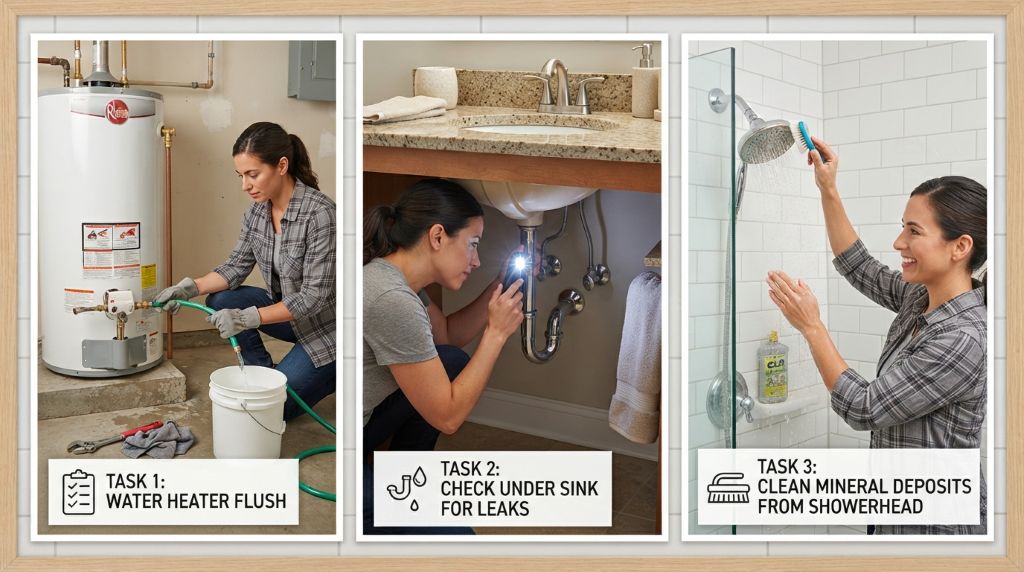
Checking under sinks for moisture should become a regular monthly habit. Small leaks often start here before becoming noticeable elsewhere. Therefore, this quick inspection catches problems while they’re still minor.
Testing water pressure also belongs on your monthly checklist. Significant changes in pressure often signal developing issues. Additionally, this simple test takes only a few minutes to complete.
Include these tasks in your monthly maintenance routine:
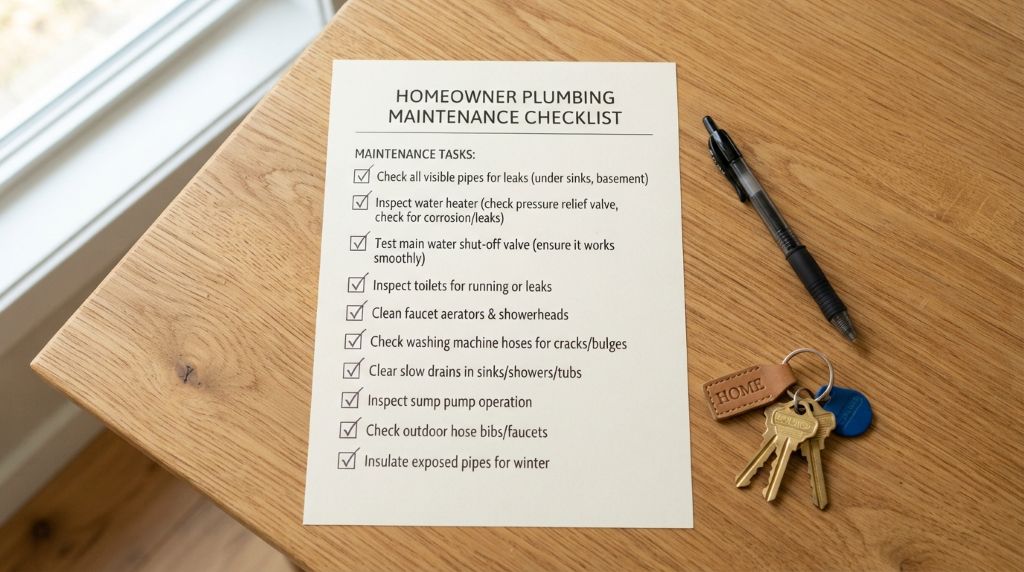
- Inspect under sinks and around toilets for moisture or leaks.
- Test water pressure at various faucets throughout the house.
- Run water in unused fixtures to prevent trap seal evaporation.
- Check visible pipes for signs of corrosion or dripping.
- Clean faucet aerators and showerheads to maintain water flow.
Running water in rarely used fixtures, like guest bathroom sinks, prevents drain traps from drying out. Dry traps allow sewer gases to enter your home. Therefore, this simple habit maintains both function and air quality.
Cleaning aerators and showerheads monthly prevents mineral buildup from restricting water flow. Soaking these parts in vinegar removes deposits effectively. Additionally, this task takes only a few minutes but noticeably improves water pressure.
Consistent monthly checks build familiarity with your plumbing system’s normal condition. Therefore, you’ll notice changes more quickly when something starts going wrong.
Seasonal Plumbing Maintenance Tasks
Seasonal tasks address changes in temperature and usage patterns throughout the year. These checks become especially important during transitions between seasons. Additionally, different seasons bring unique plumbing challenges worth preparing for.
Fall preparation focuses heavily on protecting pipes from upcoming cold weather. Draining outdoor faucets and disconnecting hoses prevents freezing damage. Therefore, completing these tasks before temperatures drop matters significantly.
Spring maintenance often involves checking for winter damage that may have occurred. Additionally, this season is ideal for testing sump pumps before heavy rain arrives. Summer and winter each bring their own specific considerations as well.
Follow these seasonal maintenance tasks throughout the year:
- Fall: Drain and disconnect outdoor hoses before the first freeze.
- Fall: Insulate exposed pipes in basements, attics, and crawl spaces.
- Winter: Keep a trickle of water running during extreme cold snaps.
- Spring: Test your sump pump before heavy rain season begins.
- Spring: Inspect for any pipe damage that occurred during winter.
- Summer: Check outdoor irrigation systems for leaks or damage.
Insulating pipes before winter significantly reduces the risk of freezing and bursting. This simple, affordable task prevents one of the most damaging cold-weather plumbing problems. Additionally, foam pipe insulation is inexpensive and easy to install yourself.
According to the American Red Cross, even a small trickle of water running through pipes during extreme cold can help prevent freezing. This makes it a valuable habit during winter storms.
Spring sump pump testing ensures this critical device works before heavy rains arrive. Therefore, pouring water into the pit and confirming proper function offers peace of mind. This seasonal rhythm keeps your plumbing prepared for whatever weather comes next.
Annual Plumbing Maintenance Tasks
Annual tasks involve more thorough inspections and maintenance that don’t need monthly attention. These checks often benefit from professional expertise and specialized tools. Additionally, scheduling these tasks yearly helps you stay consistent.
Water heater maintenance ranks among the most important annual tasks. Flushing the tank removes sediment that builds up over time. Therefore, this yearly task extends the unit’s lifespan and improves efficiency.
A full home plumbing inspection also belongs on your annual checklist. Professional plumbers can spot issues that aren’t visible during regular homeowner checks. Additionally, this thorough review often catches problems before they become emergencies.
Include these tasks in your annual plumbing maintenance routine:
- Flush your water heater tank to remove sediment buildup.
- Schedule a professional inspection of your entire plumbing system.
- Test your home’s water pressure and check the pressure regulator.
- Inspect and clean gutters to prevent water damage near the foundation.
- Check washing machine hoses and replace if showing signs of wear.
- Have your sewer line inspected, especially in older homes.
Professional sewer line inspections use camera technology to check for tree root intrusion or pipe damage. This proactive check is especially valuable for homes with mature trees nearby. Therefore, older homes benefit significantly from this annual precaution.
Replacing washing machine hoses every few years, even without visible damage, prevents unexpected leaks. Additionally, checking your pressure regulator annually ensures it still functions properly. This device protects your entire system from damage caused by excessive pressure.
Annual tasks require more time and sometimes professional help, but they offer significant long-term protection. Therefore, scheduling these tasks at the same time each year builds a helpful habit.
Building a Maintenance Routine That Works
Creating a sustainable maintenance routine matters more than perfectly following every single task. Therefore, finding a system that fits your lifestyle increases the likelihood of consistency. Additionally, small, regular efforts add up to significant long-term protection.
Setting calendar reminders for monthly, seasonal, and annual tasks removes the guesswork. This approach ensures nothing gets forgotten amid busy schedules. Therefore, automating these reminders makes maintenance feel less like an extra burden.
Keeping a simple maintenance log also helps track completed tasks and upcoming needs. This record proves useful when discussing your home’s history with professionals. Additionally, it helps you notice patterns, like recurring issues in specific areas.
Consider these tips for building a lasting maintenance routine:
- Set phone reminders for monthly and seasonal maintenance tasks.
- Keep a simple log of completed tasks and dates.
- Pair plumbing checks with other household routines you already do.
- Budget annually for professional inspections and minor repairs.
- Involve family members in simple monthly checks when possible.
Pairing plumbing tasks with existing habits, like checking smoke detectors, makes them easier to remember. Additionally, budgeting for annual professional inspections prevents this expense from feeling unexpected. This financial planning supports consistent long-term maintenance.
A well-maintained plumbing system rarely causes sudden, expensive emergencies. Therefore, the time invested in regular checks pays off through fewer surprises and lower costs. Building this routine now protects your home for years to come.
Conclusion
A consistent plumbing maintenance checklist protects your home from costly emergencies and damage. Monthly checks catch small issues early, while seasonal and annual tasks address bigger concerns. Additionally, professional inspections fill gaps that homeowner checks might miss. Therefore, following this structured approach saves money and extends your plumbing system’s lifespan. Knowing the 5 signs you might have a hidden leak in your home can also help you spot problems before they become expensive repairs. Start building these habits today to keep your home’s plumbing running smoothly year-round.
Ready to schedule your annual plumbing inspection? Contact a licensed plumber today to keep your system in top shape.
Frequently Asked Questions
How often should I flush my water heater?
Flush your water heater once a year to remove sediment and improve efficiency.
What plumbing tasks should I do every month?
Check for leaks under sinks, test water pressure, and clean faucet aerators monthly.
Do I need a professional for annual plumbing inspections?
Yes, professionals use specialized tools to catch issues homeowner checks often miss.
Why should I insulate my pipes before winter?
Insulation prevents pipes from freezing and bursting during extreme cold temperatures.
Is a maintenance checklist really necessary for newer homes?
Yes, even new plumbing benefits from regular checks to catch early issues.