
Mastering the perfect ribeye steak requires more than just heat and seasoning. The secret lies in timing, especially when it comes to butter-basting. At Taste of Love Bakery, we understand that cooking a restaurant-quality steak at home involves precision and technique. This guide will help you achieve that golden, buttery crust and tender interior every time.
Butter-basting transforms an ordinary steak into something extraordinary. However, timing is everything. Add butter too early, and it burns. Add it too late, and you miss the flavor infusion. Therefore, understanding when and how to introduce butter during the cooking process makes all the difference.
Understanding Cast Iron Cooking Basics
Cast iron skillets are ideal for cooking steaks because they retain heat exceptionally well. Additionally, they create the high temperatures needed for proper searing. Before diving into butter-basting techniques, it’s important to master how to cook a steak in a cast iron skillet. The foundation starts with preheating your skillet properly.
Preheating takes approximately five to seven minutes over medium-high heat. Your skillet should be smoking slightly before the steak touches the surface. This initial sear locks in juices and creates that coveted crust. Meanwhile, your ribeye should be at room temperature for even cooking.
The Perfect Timing for Butter-Basting
Butter-basting should begin after the initial sear on both sides. Typically, this means adding butter around the four to five-minute mark of total cooking time. For a one-inch thick ribeye, sear each side for two to three minutes first. Then, reduce the heat slightly before introducing butter.
The reason for this timing is simple. Butter contains milk solids that burn at high temperatures. Consequently, adding butter during the initial sear would create bitter, burnt flavors. Instead, wait until you’ve developed a good crust, then lower the heat to medium.
Step-by-Step Butter-Basting Process
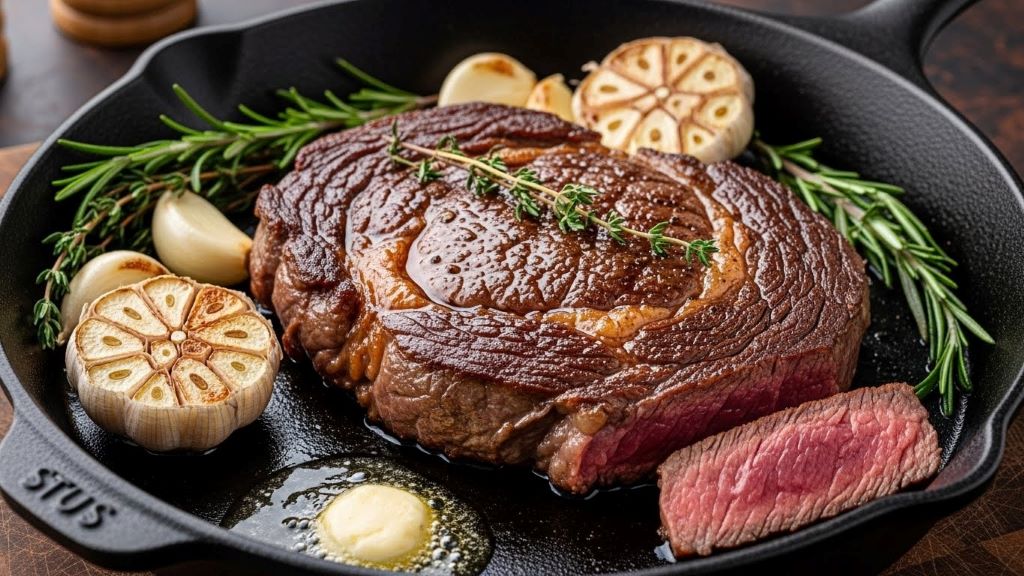
Once you’ve seared both sides of your ribeye, add three to four tablespoons of unsalted butter to the skillet. Additionally, throw in a few smashed garlic cloves and fresh thyme sprigs. These aromatics infuse the butter with incredible flavor.
Tilt the pan slightly toward you. This pools the melted butter on one side. Use a large spoon to continuously baste the steak with hot butter. This process takes approximately two to three minutes. Meanwhile, the butter bastes the top surface while the bottom continues cooking.
According to the Culinary Institute of America, this technique ensures even cooking and adds richness. The hot butter cooks the steak’s top surface gently while adding flavor. Furthermore, it helps achieve an even medium-rare throughout.
Temperature Guidelines and Timing
Internal temperature matters more than time alone. For medium-rare ribeye, aim for 130-135°F. Medium requires 135-145°F. However, remember that carryover cooking raises the temperature by five to ten degrees during resting.
Use an instant-read thermometer for accuracy. Insert it into the thickest part of the steak. When you’re within five degrees of your target temperature, remove the steak from heat. Then, let it rest for five to ten minutes before slicing.
Choosing the Right Butter and Aromatics
Unsalted butter works best because it allows you to control seasoning. Moreover, clarified butter or ghee can withstand slightly higher temperatures. Some chefs prefer compound butters with herbs mixed in beforehand.
Fresh herbs like rosemary, thyme, or sage add wonderful flavor during basting. Similarly, garlic cloves provide aromatic depth. Crush them slightly to release their oils. These aromatics stick to the steak’s surface, creating complex flavor layers.
Common Butter-Basting Mistakes to Avoid
Adding butter too early is the most common error. The butter will burn and smoke excessively. Additionally, using salted butter can make your steak overly salty, especially since you’ve already seasoned the meat.
Another mistake involves inadequate basting frequency. You need to continuously spoon butter over the steak. Otherwise, you won’t achieve even cooking or flavor distribution. Therefore, commit to the basting process for the full two to three minutes.
Overcrowding the pan is equally problematic. Your ribeye needs space for proper heat circulation. If the pan is too crowded, moisture builds up instead of evaporating. Consequently, you’ll steam the steak rather than sear it.
Adapting Timing for Different Steak Thicknesses
Thicker steaks require timing adjustments. For a two-inch ribeye, sear each side for three to four minutes before butter-basting. Then, baste for four to five minutes total. You might even need to finish in a 400°F oven for another five minutes.
Conversely, thinner steaks cook faster. A half-inch ribeye might only need ninety seconds per side before butter-basting. Baste for just one to two minutes to avoid overcooking. Always rely on internal temperature rather than time alone.
The Science Behind Butter-Basting
Butter-basting works through heat transfer and fat absorption. The hot butter transfers heat to the steak’s surface more efficiently than air alone. Meanwhile, the fat carries flavors from aromatics directly onto the meat.
Additionally, butter helps achieve the Maillard reaction’s final stages. This chemical process creates hundreds of flavor compounds. The combination of proteins and sugars browning at high heat produces that distinctive steakhouse taste.
Resting and Serving Your Ribeye
After butter-basting, resist the urge to cut immediately. Resting allows juices to redistribute throughout the meat. During cooking, juices migrate toward the center. Therefore, cutting too soon causes them to run out onto your cutting board.
Place your steak on a warm plate and tent it loosely with foil. This five to ten-minute rest period is crucial. Meanwhile, you can prepare side dishes or make a quick pan sauce from the remaining butter and drippings.
Enhancing Your Technique Further
Practice makes perfect with butter-basting. Each stove and pan behaves slightly differently. Therefore, pay attention to visual and auditory cues. Listen for steady sizzling without excessive popping or smoking.
Additionally, consider your altitude and humidity. These factors affect cooking times. Higher altitudes may require slightly longer cooking times. Similarly, humid environments can affect how quickly moisture evaporates from the steak’s surface.
Professional Tips for Restaurant-Quality Results
Professional chefs often add a small pat of finishing butter on top of the rested steak. This creates an appealing sheen and adds final richness. Furthermore, they sometimes brush additional herb butter on before serving.
Quality matters significantly. Choose prime or choice grade ribeye for best results. Look for good marbling throughout. These internal fat streaks melt during cooking, creating incredible flavor and tenderness.
Conclusion
Butter-basting timing transforms a good ribeye into an exceptional one. Start with a proper sear on both sides, then introduce butter after four to five minutes of total cooking time. Continuously baste for two to three minutes while monitoring internal temperature. Remember to rest your steak before slicing to preserve its juices.
This technique requires practice but delivers consistent, restaurant-quality results. The combination of a screaming-hot cast iron skillet, proper timing, and aromatic butter creates steakhouse perfection at home. Master these fundamentals, and you’ll never want to order steak out again.
Frequently Asked Questions
When should I add butter when cooking ribeye in cast iron?
Add butter after searing both sides of your ribeye, typically around the four to five-minute mark. This prevents the butter from burning during the initial high-heat sear while still allowing enough time for flavor infusion.
How long should I butter-baste a one-inch ribeye?
Baste a one-inch ribeye for approximately two to three minutes continuously. Use a large spoon to pour hot butter over the steak repeatedly while monitoring the internal temperature with a thermometer.
Can I use salted butter for basting steak?
Unsalted butter is preferable because it allows better control over seasoning. Salted butter can make your steak overly salty, especially since you’ve already seasoned the meat before cooking.
What temperature should my cast iron be for ribeye?
Your cast iron should reach approximately 450-500°F before adding the steak. Preheat for five to seven minutes over medium-high heat until the pan just begins to smoke slightly.
Should I finish my ribeye in the oven after butter-basting?
Thicker steaks over 1.5 inches may benefit from finishing in a 400°F oven for five to seven minutes after butter-basting. This ensures even cooking throughout without burning the exterior.
Related Topics:
If Tomatoes Are a Fruit, Is Ketchup a Smoothie? Let’s Settle This
Beyond Fast Food: Quick, Healthy Alternatives for Teen Snackers