

Employee advocacy has become a powerful tool for modern businesses. Companies are turning their workers into brand ambassadors. This approach builds trust and expands reach in ways traditional marketing cannot match. Press Permit offers solutions that help organizations implement these strategies effectively. When employees share company content on their personal networks, the impact multiplies quickly.
The key to success lies in measurement. Without tracking specific metrics, programs fail to show their value. Smart companies focus on data-driven approaches that prove return on investment. They monitor engagement rates, lead generation, and overall brand awareness growth.
Organizations looking to improve their programs can learn from proven examples. The best company in employee advocacy case studies demonstrate how strategic implementation drives measurable results. These real-world examples provide blueprints for building effective programs from the ground up.
Understanding the Foundation of Employee Advocacy
Employee advocacy transforms workers into voluntary brand promoters. This strategy leverages personal networks to spread company messages. Research shows that content shared by employees receives significantly more engagement than corporate posts. Therefore, businesses invest in structured programs that encourage authentic sharing.
The foundation starts with trust. Employees must believe in their company’s mission and values. Additionally, they need easy access to shareable content. Providing pre-approved materials removes barriers to participation. However, authenticity remains crucial throughout the process.
Training plays an essential role in program success. Workers need guidance on professional social media practices. They also require education about company messaging and brand voice. This preparation ensures consistency while maintaining individual personality.
Setting Clear Metrics for Success
Measurement begins with defining specific goals. Companies should identify what success looks like for their organization. Some focus on brand awareness while others prioritize lead generation. Therefore, metrics must align with overall business objectives.
Common metrics include share rates, engagement levels, and reach expansion. Tracking these numbers provides insight into program performance. Additionally, companies monitor website traffic from employee-shared content. Click-through rates reveal how effectively content drives action.
Advanced organizations track conversion metrics. They measure how employee advocacy contributes to sales pipeline growth. This data proves program value to leadership teams. Furthermore, it helps justify continued investment in advocacy initiatives.
Social listening tools provide deeper insights. They track sentiment around shared content and brand mentions. This information helps refine messaging strategies over time. Companies can identify which topics resonate most with audiences.
Creating Compelling Content for Sharing
Content quality determines participation rates. Employees share material that reflects well on them personally. Therefore, companies must produce valuable, interesting content. Generic sales pitches fail to generate enthusiasm or engagement.
Educational content performs exceptionally well. Articles that solve problems or answer questions attract attention. Industry insights and trend analysis also drive high engagement. Workers feel proud sharing content that positions them as knowledgeable professionals.
Visual content increases sharing likelihood significantly. According to Forbes, posts with images receive substantially more engagement than text-only updates. Infographics, videos, and custom graphics make content more shareable. They also improve comprehension and retention rates.
Variety keeps programs fresh and interesting. Mix thought leadership pieces with company news and employee spotlights. This diversity maintains participant interest over time. Additionally, it appeals to different audience preferences and learning styles.
Building a Culture of Participation
Successful programs require cultural buy-in at all levels. Leadership must actively participate and demonstrate commitment. When executives share content regularly, employees follow their example. This top-down approach establishes advocacy as a company priority.
Recognition motivates continued participation. Acknowledging top sharers publicly encourages others to engage. Some companies create leaderboards or reward systems. However, intrinsic motivation ultimately drives sustainable participation.
Making participation easy removes friction from the process. Mobile-friendly platforms allow sharing on the go. Automated suggestions reduce the time employees spend finding content. The easier the process, the higher the participation rates.
Regular communication keeps the program top of mind. Weekly newsletters highlighting available content maintain momentum. They also celebrate successes and share program updates. This consistent touchpoint reinforces the importance of participation.
Leveraging Technology for Scalability
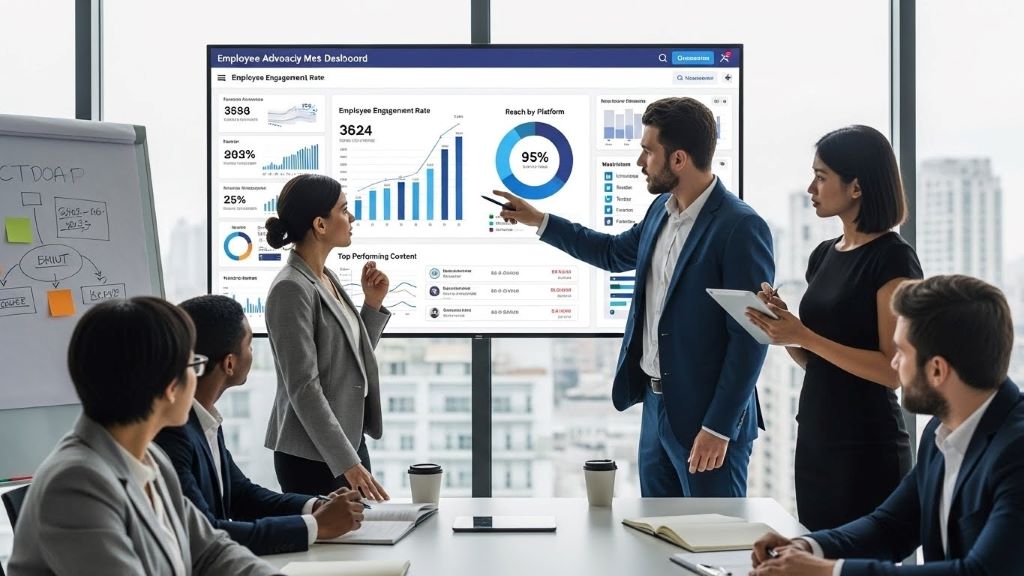
Employee advocacy platforms streamline program management. These tools distribute content and track engagement metrics automatically. They provide dashboards showing program performance in real time. Therefore, program managers can make data-driven decisions quickly.
Integration with existing systems enhances functionality. Connecting advocacy platforms with marketing automation creates powerful workflows. This integration tracks the complete customer journey from employee share to conversion. It provides comprehensive return on investment calculations.
Mobile optimization ensures accessibility for all employees. Workers can participate during commutes or breaks. Push notifications remind them about new content without being intrusive. This convenience increases participation rates significantly.
Gamification features boost engagement levels. Points, badges, and challenges make participation fun. Competition among teams or departments drives friendly rivalry. These elements transform advocacy from obligation to enjoyable activity.
Training and Enablement Strategies
Comprehensive onboarding sets new participants up for success. Initial training covers social media best practices and company guidelines. It also addresses common concerns about personal brand and professional boundaries. This foundation builds confidence in program participants.
Ongoing education maintains skill levels and engagement. Monthly workshops introduce new features or advanced techniques. They also provide opportunities for peer learning and sharing experiences. Continuous development keeps the program evolving and improving.
Creating clear guidelines prevents potential issues. Social media policies outline acceptable behavior and content sharing practices. They protect both employees and the company from reputational risks. However, guidelines should enable rather than restrict authentic expression.
Providing templates and examples simplifies content creation. Sample posts show how to add personal commentary to shared content. Style guides ensure consistency while allowing individual voices. These resources make participation accessible to less confident employees.
Measuring Long-Term Impact and ROI
Demonstrating return on investment justifies program continuation and expansion. Companies track multiple metrics to show comprehensive value. Brand awareness, lead generation, and employee satisfaction all factor into ROI calculations. Therefore, measurement frameworks must capture diverse outcomes.
Attribution modeling connects employee advocacy to business results. It shows which shares contribute to conversions and sales. This data proves program effectiveness to skeptical stakeholders. Additionally, it identifies the most valuable content types and topics.
Long-term trend analysis reveals program trajectory. Comparing year-over-year metrics shows growth or areas needing improvement. This historical perspective guides strategic planning and resource allocation. It also celebrates progress and builds program credibility.
Benchmark comparisons provide context for performance metrics. Industry standards help set realistic expectations and goals. They also identify opportunities for competitive advantage. Companies can see how their programs stack up against peers.
Overcoming Common Challenges
Participation resistance often stems from fear or misunderstanding. Some employees worry about saying something wrong online. Others question whether advocacy benefits their personal brand. Addressing these concerns through education and support increases buy-in.
Time constraints present another significant barrier. Employees juggle multiple responsibilities and deadlines. Making participation quick and easy addresses this challenge. Even five minutes per week can contribute meaningfully to program success.
Content relevance affects participation rates significantly. Generic or overly promotional material fails to inspire sharing. Regular content audits ensure materials align with employee and audience interests. Feedback mechanisms help identify what resonates most effectively.
Measuring individual contribution requires sensitivity. While tracking participation, companies must respect privacy and autonomy. Focusing on overall program metrics rather than individual performance prevents discomfort. This approach maintains voluntary participation spirit.
Expanding Program Reach and Impact
Gradual expansion allows for learning and refinement. Starting with enthusiastic volunteers creates program champions. These early adopters provide feedback and help recruit additional participants. Their success stories motivate broader employee involvement.
Cross-departmental participation enriches content diversity. Sales, customer service, and technical teams offer unique perspectives. This variety appeals to different audience segments and interests. Additionally, it demonstrates company-wide culture and collaboration.
Partner and customer advocacy extends program benefits. Encouraging satisfied customers to share experiences amplifies reach. Industry partners can co-create content that benefits both organizations. These relationships multiply advocacy impact exponentially.
Global programs require cultural sensitivity and localization. Content must resonate across different markets and languages. Regional managers should have autonomy to adapt materials appropriately. This flexibility ensures relevance while maintaining brand consistency.
Conclusion
Employee advocacy delivers measurable results when implemented strategically. Success requires clear goals, quality content, and robust measurement systems. Companies that invest in training, technology, and culture building see significant returns. The programs transform employees into authentic brand ambassadors who drive awareness and growth.
Measurement proves program value and guides continuous improvement. Tracking engagement, reach, and conversion metrics demonstrates return on investment. Organizations can refine strategies based on data-driven insights. This approach ensures programs evolve with changing business needs and market conditions.
Starting small and scaling gradually creates sustainable programs. Learning from successful case studies provides valuable implementation guidance. With proper planning and execution, employee advocacy becomes a powerful growth engine. Companies gain competitive advantage through the authentic voices of their workforce.
Frequently Asked Questions
What is employee advocacy and why does it matter?
Employee advocacy is when workers voluntarily promote their company on social media and other platforms. It matters because people trust recommendations from individuals more than corporate marketing. This approach increases brand reach, builds credibility, and generates leads cost-effectively.
How do you measure employee advocacy success?
Success is measured through engagement rates, content reach, website traffic, and lead generation. Companies track how many employees participate, how often they share, and what results those shares produce. Advanced metrics include conversion rates and direct sales attribution from employee-shared content.
What motivates employees to participate in advocacy programs?
Employees participate when they feel proud of their company and see personal benefits. Recognition, career development opportunities, and ease of participation drive engagement. Intrinsic motivation from believing in the company mission creates the most sustainable participation.
How long does it take to see results from employee advocacy?
Initial engagement metrics appear within the first few weeks of launch. However, meaningful business impact typically emerges after three to six months of consistent activity. Long-term programs show compounding benefits as reach and credibility grow over time.
What content types work best for employee advocacy programs?
Educational content, industry insights, and company culture posts perform exceptionally well. Visual content like infographics and videos generates higher engagement than text alone. Content that helps employees build their personal brand while supporting company goals sees the highest sharing rates.
Related Topics: