
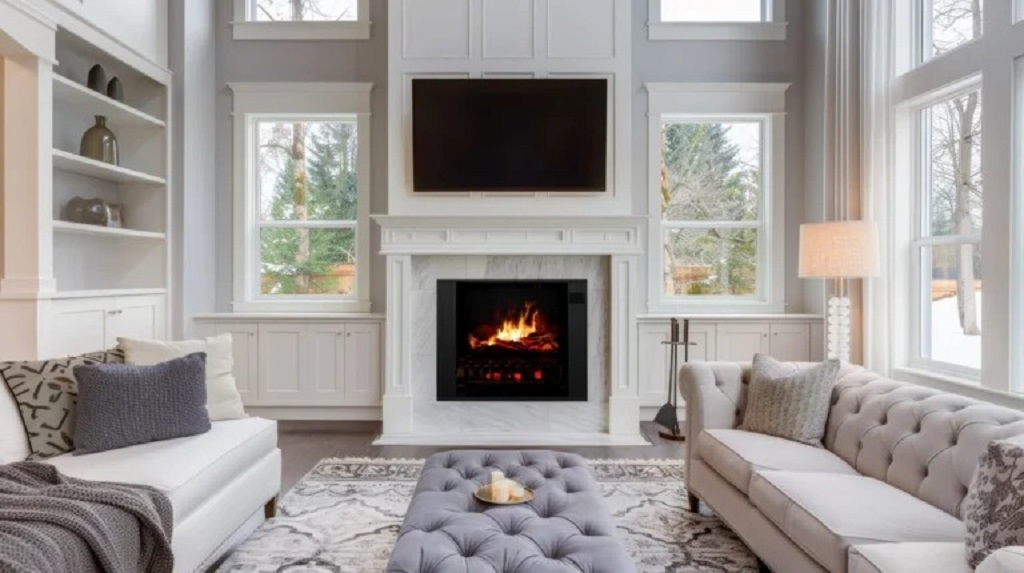
Picture this: It’s a chilly evening, and you’re curling up in your apartment’s snug corner. The air carries a faint chill, but suddenly, a soft glow flickers to life, casting warm shadows across the room. No smoke, no mess—just gentle heat and dancing lights that mimic real flames. That’s the magic of small electric fireplace heaters. These compact wonders blend the charm of a traditional hearth with modern ease, turning any tight space into a haven of comfort.
At their core, these units are portable or semi-permanent heaters dressed up with LED illusions of fire. They plug into a standard outlet, sip electricity like a modest fan, and pump out enough warmth to chase away the cold from rooms up to 1,000 square feet. Unlike bulky wood burners, they skip the ash cleanup and chimney woes. Safety comes built-in: no open flames mean they’re kinder around kids or pets.
Why do they matter now? In our fast-paced world, homes shrink—think urban condos or cozy starter pads. Central heating guzzles energy bills, but these little gems let you heat just where you linger, slashing costs by up to 50% in targeted zones. Plus, they boost mood; studies show fire’s glow eases stress, making evenings feel like retreats. From renters dodging permanent installs to families craving ambiance without hassle, these heaters fit seamlessly. They’re not just tools—they’re quiet companions for hygge nights, movie marathons, or solo reads. Dive deeper, and you’ll see how one tweak can transform your nook into something truly inviting.
How Do Small Electric Fireplace Heaters Work?
Ever wonder what makes that flame dance without a spark? Let’s break it down simply.
At the heart, these heaters use basic electricity to create two effects: visual fire and actual warmth. LEDs—those tiny lights in your TV—project flickering patterns onto a rotating mirror or screen. This tricks your eyes into seeing logs crackling or embers glowing. Add sound options in some models, and it’s almost like a mini theater.
For heat, most rely on coiled elements, much like a toaster. Fan-forced versions blow air over these coils, spreading warmth quickly across a room. Infrared types, though, radiate heat directly, warming objects and people without stirring dust—ideal for allergy-prone folks. A thermostat senses the air and cycles the heat on and off, keeping things steady without waste.
How To Setup
Plug and play. No vents or gas lines needed. Many run on 1,200 to 1,500 watts, costing pennies per hour. But here’s the analytical bit: efficiency shines in small areas. In a 200-square-foot den, one unit can raise temps by 5-10 degrees in minutes, per lab tests from spots like Consumer Reports. Larger spaces? Pair it with your main system for best results.
One quirk: flames and heat operate separately. Crank the glow sans warmth for summer vibes, or dial both for winter bliss. Models vary—some whisper-quiet, others hum softly. Choose based on your silence tolerance; quieter infrared wins for bedrooms.
In short, it’s clever engineering wrapped in nostalgia. No wonder they top sales charts on sites like Amazon, where users rave about the “cozy without chaos” feel. If you’re eyeing one, think about your room’s draftiness—sealed spaces heat faster, maximizing that inviting aura.
Now, imagine integrating this into your routine. Mornings start warmer, evenings wind down softer. It’s not just heat; it’s harmony in a box.
Small electric fireplace heaters
(Snippet answer: Small electric fireplace heaters use LEDs and mirrors for realistic flame effects, paired with coil or infrared elements for targeted warmth, operating independently for year-round use.)
Expanding on the mechanics reveals deeper perks. Take flame realism: Advanced units offer 10+ color modes, from orange classics to blue accents, letting you match moods. Reviews highlight how this customization elevates tiny apartments—think a 20-inch Costway model fitting under a TV, per The Spruce tests.
Heat-wise, BTUs matter. A 5,200 BTU output, like in Duraflame stoves, suits 400-600 square feet, warming evenly without hot spots. Analytical tip: Measure your space’s volume (length x width x height), then aim for 10 BTUs per cubic foot. Overkill wastes power; underpowered leaves chills.
Safety layers add peace. Tip-over switches halt operation if knocked, and cool-touch exteriors prevent burns. UL certifications ensure they’re vetted—skip off-brands to avoid fire risks, as noted in U.S. Fire Administration guides.
Energy math: At $0.15 per kWh, a 1,500-watt unit on low for four hours runs $0.90 daily. Compare to gas logs at double that, and it’s a win for budgets. Users in Reddit threads echo this, calling them “lifesavers for spot heating” in drafty basements.
One unique angle: Pair with smart plugs for voice control via Alexa. Set schedules—flames at dusk, heat at 68°F—and reclaim your remote. It’s this blend of tech and tradition that hooks folks, turning ordinary corners into personal sanctuaries.
What Are the Benefits of Using Small Electric Fireplace Heaters in Tight Areas?
Craving warmth without the sprawl? These heaters deliver big on little footprints.
Top perk: Space smarts. At 20-36 inches wide, they slip into apartments or nooks where full mantels won’t. Freestanding styles, like the Real Flame Foster, mimic stoves without dominating—perfect for renters, as Wayfair reviews gush.
They amp up coziness twofold. The flame show soothes, dropping stress like a therapy session (backed by hygge research). Heat adds literal comfort, raising room temps efficiently. In tests by Better Homes & Gardens, units like Costway warmed 400 square feet in under 15 minutes.
Safety seals the deal. Enclosed elements mean no embers or fumes—safer than candles for pet homes. Overheat protection kicks in automatically, per CSA standards.
Cost? Upfront $100-300, running cheap. Zone heating cuts bills 30-50% versus whole-house systems, per energy audits. Eco-bonus: No emissions, just clean electric warmth.
Versatility shines too. Use flames alone for ambiance, or heat for chills. Portable models move rooms, adapting to life shifts.
Drawbacks?
Minimal for small spots—they excel there. Noise from fans? Opt for infrared quiet ones. Overall, they turn constraints into charm.
(Snippet answer: They save space, enhance ambiance safely, cut energy costs by zoning heat, and offer flexible, eco-friendly warmth for compact homes.)
Delving analytically, consider ambiance’s ROI. A glowing hearth boosts property appeal—Zillow data shows fire features hike values 6%. In tight quarters, this visual pop distracts from walls, making 300 square feet feel expansive.
Health angles: Infrared models maintain humidity, unlike dry forced-air, easing winter sinuses. Families note fewer allergy flares in user forums.
Installation ease? Zero hassle. Plug in, arrange faux logs, done. Contrast with gas retrofits at $2,000+; these are renter-proof, movable joys.
Longevity: 5-10 years typical, with LEDs lasting 50,000 hours. Maintenance? Wipe dust quarterly. One twist: Integrate with room fans for circulation, extending reach in oddly shaped spaces.
From my view, they’re unsung heroes for hybrid living—work-from-home nooks warm body and soul. A client once shared how hers sparked family game nights anew. That’s the real heat: connections kindled.
What Are the Drawbacks of Small Electric Fireplace Heaters?
Not all rosy—let’s weigh the shadows fairly.
Prime con: Heat limits. They top at 5,200 BTUs, fine for 400-600 square feet but fading in drafts or bigger zones. Consumer Reports notes inconsistent output in open layouts.
Upfront cost bites for basics—$150+—though cheaper than installs. Running? 8-12 cents hourly, but constant use adds up in cold snaps.
Flame fakeness irks purists. LED effects impress but lack wood’s crackle unless audio-equipped. Some models hum, disrupting quiet nights.
Power draw: 1,500 watts strains old circuits—check breakers. Not for off-grid life; they need reliable juice.
Still, for small setups, pros eclipse these. Mitigate with timers, smart controls.
(Snippet answer: Limited to small rooms, potential flame inauthenticity, fan noise, and circuit demands, though mitigated by smart use.)
Analytically, compare efficiencies. Versus oil radiators, they heat faster but retain less—good for bursts, not marathons. Reddit users gripe about “toaster vibes” in vast basements.
Environmental nuance: Electric, yes, but grid-dependent. Solar homes thrive; coal-heavy areas less so. Opt for Energy Star-rated for greener runs.
Durability varies—budget units falter after two winters, per Amazon reviews. Invest $200+ for reliability.
Unique fix: Layer with blankets or rugs to trap heat, stretching coverage. One user hack: Mount high for downward radiation. Turns flaw to feature.
Bottom line? They’re tools, not miracles. Pair wisely with insulation for peak performance.
How Do I Pick the Right Small Electric Fireplace Heater?
Overwhelmed by options? Focus on fit, function, flair.
Start with size: Measure space—20-28 inches for corners, 36 for walls. Room square footage? 400 max for most.
Heat type: Fan-forced for quick blasts, infrared for even, dry-free warmth. BTUs: 4,000+ for coziness.
Features: Remote? Thermostat? Flame colors? Essentials for ease.
Safety: UL-listed, tip-over shutoff. Style: Stove-like or sleek linear?
Budget: $100-400. Read reviews—realism, noise key.
Test in-store if possible; visualize your spot.
(Snippet answer: Assess room size, heat needs, safety certifications, features like remotes, and style within budget, prioritizing reviews for realism.)
Deeper dive: Calculate needs. Cubic feet x 4 BTUs per foot for baseline. Add 20% for windows.
Brands: Duraflame for portables, Touchstone for smart. Family Handyman praises Bloxom’s affordability.
Installation: Freestanding easiest; recessed for permanence—but check walls.
Pro tip: Energy audits via apps predict savings. One analytical edge: Track runtime with plugs to optimize.
Uniqueness: Seek app-integrated for routines—like flames syncing to lights. Elevates from heater to hub.
Endgame? It should feel like an extension of you—warm, not work.
What Are the Top Small Electric Fireplace Heaters in 2025?
Curated from tests, here’s the cream.
Best Overall: Costway 20-Inch Freestanding—$120, heats 400 sq ft, realistic tri-view flames. Spruce labs love its balance.
Portable Pick: Duraflame Infrared Stove—$180, 1,000 sq ft reach, retro charm. Packs light for moves.
Budget Gem: Bloxom Mini—$80, 400 sq ft, mid-century vibe. Quick warm-up wows.
Smart Choice: Touchstone Sideline 50-Inch—$300, WiFi, 30 flame modes. Alexa-ready luxury.
Insert Star: Giantex 28.5-Inch—$150, versatile mount, sleek lines. Office-friendly.
Each shines uniquely—pick per priority.
(Snippet answer: Top picks include Costway for value, Duraflame for portability, and Touchstone for smart features, based on 2025 reviews.)
Reviews unpack more. Costway: “Instant cozy,” but no remote. Duraflame: “Realistic logs,” minor assembly fuss.
Table of comparisons:
| Model | Size (inches) | Heat Area (sq ft) | Price | Key Feature |
|---|---|---|---|---|
| Costway 20-Inch | 20x18x24 | 400 | $120 | Tri-view flames |
| Duraflame Stove | 24x24x20 | 1,000 | $180 | Infrared efficiency |
| Bloxom Mini | 23x13x20 | 400 | $80 | Portable design |
| Touchstone Sideline | 50x5x20 | 400 | $300 | App control |
| Giantex Insert | 28.5x9x18 | 400 | $150 | Multi-mount |
Analytical lens: Costway edges for small spaces per BTU-to-price ratio. Trends show infrared rising—quieter, healthier.
User stories: One Amazon reviewer turned a dorm cozy; another’s basement nook revived. Add yours—start with trials via returns.
Wrapping Up: Ignite Your Space with a Small Electric Fireplace Heater
We’ve unpacked the glow—from mechanics to must-haves. These heaters aren’t fads; they’re smart fixes for modern squeezes, blending safety, savings, and that irreplaceable fire feel. In tight spots, they punch above weight, turning “meh” rooms into “ahh” retreats. Remember, the right one fits your flow: portable for flux, fixed for forever.
Why wait for winter’s bite? Scout models now—measure, mull reviews, match your vibe. Your next cozy night starts with one plug. Ready to warm up? Head to trusted spots like Amazon or Home Depot, snag a deal, and let the flames flicker. Share your setup in comments; let’s swap tips. Here’s to spaces that hug back.
Related Topic: How Thick Should Rubber Flooring
FAQ
Are small electric fireplace heaters safe for homes with kids?
Absolutely, with caveats. No real fire means low burn risk, and cool exteriors keep curious hands safe. Look for tip-over and overheat shutoffs—standard in UL models. Keep cords tucked, and supervise. Per U.S. Fire Admin, they’re safer than candles, but treat as any heater: 3 feet from flammables.
How much does it cost to run one daily?
Budget-friendly—about $0.50-1.50 for 4-6 hours on medium. At average U.S. rates, a 1,500-watt unit sips like a light bulb on steroids. Zone use trims bills; turn off when out. Track with apps for surprises.
Can they heat a whole apartment?
For studios under 400 square feet, yes—supplementally. Larger? Pair with central. Infrared evens better than fans. Insulate first for max output; drafts eat efficiency.
What’s the difference between fan-forced and infrared?
Fan-forced blasts quick, circulates wide, but can dry air and hum. Infrared soaks in gently, humidity-friendly, silent—great for sleep spaces. Both 1,500 watts; choose by quiet needs.
Do flames look real?
Modern ones? Eerily so. LEDs plus mirrors fool most; add logs for depth. Colors tweak realism—orange for classic, multi for fun. Videos beat pics; test in-store.
How do I install one?
Freestanding: Unbox, plug, place. Wall-mount: Drill per manual, secure studs. Inserts fit existing hearths snugly. Tools? Basic—level, screwdriver. 30 minutes tops; no pro needed.
Are they worth the investment?
For ambiance addicts, yes—$100-300 buys years of joy, plus savings. Not for whole-home heat, but spot magic? Game-changer. Returns make low-risk; try, thrive.