
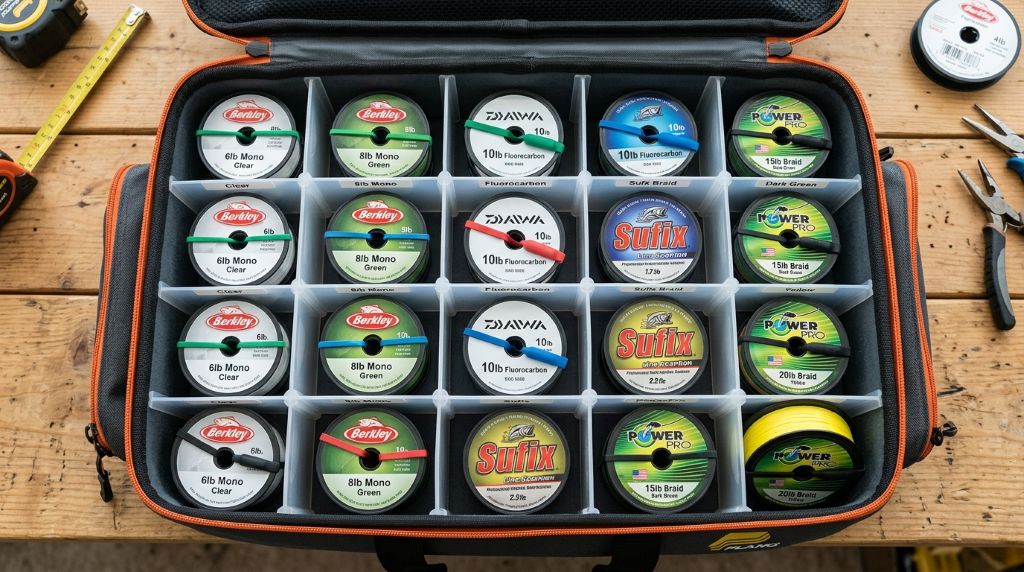
Nothing ruins a fishing morning faster than a tangled line. You arrive at the water with light hearts, then spend the first hour fighting loops and knots. However, as the field specialists at CrazyFishingGear often warn, most tangles are not bad luck—they are storage problems. Line has memory, and it remembers every bad habit you let it keep. Therefore, how you store your line between trips decides how it behaves at the water. In this post, you will learn why line tangles, how to store each type properly, and the small habits that keep spools smooth all season. Read on, because a few storage rules will save you more fishing time than any new lure ever will.
Key Takeaways
- Store line spools upright on a peg or dowel, never loose in a bag.
- Keep mono and fluoro away from heat, because heat resets their memory.
- Braided line tangles less but still needs even tension when wound.
- Close the bail by hand after every cast to prevent twist on the spool.
- Use line spoolers or rubber bands to keep tension on partial spools.
- Store line in a cool, dark, dry place away from sunlight.
Why Fishing Line Tangles in the First Place
Understanding the enemy is half the fix. Therefore, start with what line actually is. Monofilament is a single strand of nylon. Fluorocarbon is a denser single strand. Braid is several woven strands. Each type holds a memory of its shape. Additionally, that memory is set by heat, tension, and time. Consequently, storing line wrong trains it to tangle.
Line twist is the biggest troublemaker. Twist happens when line takes on turns that it cannot release. The classic cause is reeling against a slipping drag or closing the bail by cranking the handle. However, twist also builds when a lure spins in the current during retrieval. Therefore, twisted line jumps off the spool in loose loops the moment you cast. Those loops are the tangles you curse later.
Memory comes next. Mono and fluoro coils around a small spool and keeps those coils when you cast. That is why fresh line comes off in loops and stiff spirals. However, heat softens line and resets its memory. Therefore, a spool left in a hot car or sunny window takes a tight set. Consequently, heat is a memory problem that becomes a tangle problem.
Spool fill level matters too. An overfilled reel spool sheds loops with every cast, because the line stack sits above the rim. However, an underfilled spool makes the line work harder at a smaller diameter, which adds twist and friction. Additionally, loose line on a spool, meaning line wound without tension, slides and crosses itself. Therefore, tension during winding is as important as level.
Finally, age plays its part. All line degrades over time from UV light, heat, and flex cycles. The Berkley Pure Fishing company, one of the largest line manufacturers, recommends replacing mono and fluoro every one to two seasons for best performance. Consequently, old line tangles more because it has lost flexibility. Therefore, fresh line plus smart storage equals smooth casting.
How to Store Line Spools Between Trips
Loose spools rolling around a tackle bag create most storage tangles. Therefore, give your spare line a proper home. The fix is cheap and takes ten minutes.
- Keep spare spools on their original plastic holders, never unwound.
- Mount spools on a dowel or peg system in your tackle storage.
- Secure loose line ends with rubber bands or line clips.
- Store spools upright and separated by type and pound test.
- Keep them in a dark, cool drawer or box away from sunlight.
The rubber band trick matters more than it sounds. A spool without a secured end unwinds slightly with every movement. Those loose wraps then slip over each other and cross. However, a rubber band holds the outer wrap tight against the stack. Additionally, commercial spool clips and foam plugs do the same job. Consequently, tension on the spool equals order on the spool.
Organization saves time as well as tangles. Label each spool with type and pound test, either on the original label or masking tape. Additionally, store your most used lines in front. Therefore, restocking your reel takes minutes instead of a scavenger hunt. Consequently, an organized line drawer is a speed tool.
Temperature control is the real long-term protection. Store line indoors at room temperature, away from attics, garages in summer, and car trunks. Heat above roughly 49°C degrades nylon over time, according to manufacturer storage guidance from major producers like Berkley and Stren. Therefore, a closet shelf beats a tackle bag in a hot shed every time. Additionally, UV light breaks down line polymers, so dark storage is a rule, not a suggestion.
For partial spools with line already removed, wind the remaining line back under light tension and band it. However, note the pound test on the spool, because mystery line gets wasted later. Additionally, keep partially used spools for leader material before buying fresh bulk. Consequently, every yard of line you own stays usable.
Finally, protect line from chemical fumes. Gasoline, solvents, and some garage chemicals soften nylon. Therefore, never store tackle bags next to fuel cans or workshop chemicals. A clean, dry, indoor shelf solves the whole problem at once.
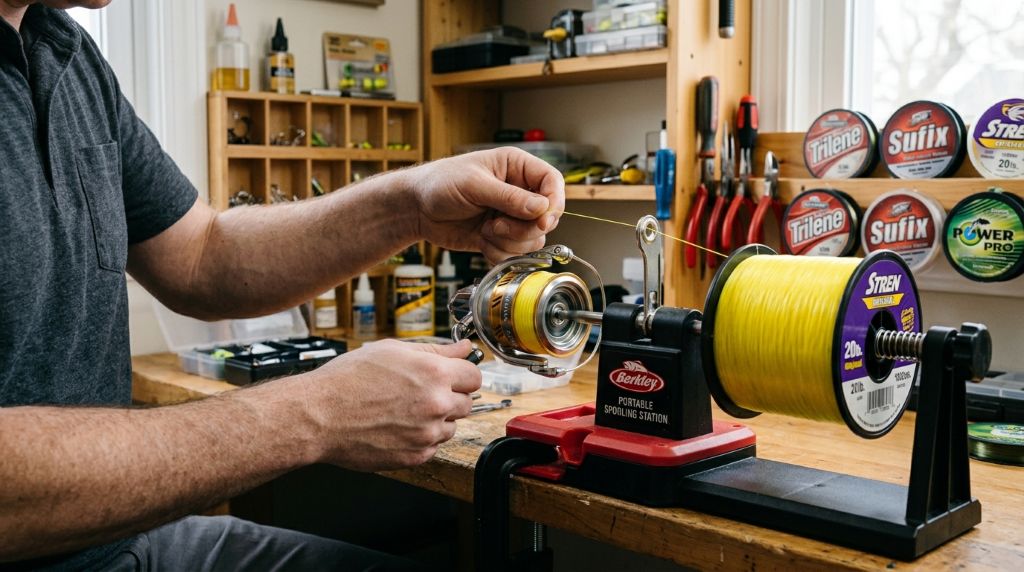
Keep Your Reel Spool Trouble-Free
Spare spools are one thing. However, the line on your reel causes most on-water tangles. Therefore, maintenance of the reel spool itself is the bigger half of storage care.
Start with the wind. Line must go onto the reel under light, steady tension. Therefore, respool with a friend holding the line through a cloth, or use a line spooling station. Additionally, keep the line guide moving evenly. Consequently, tight, level wraps never slide or cross on the spool.
Watch the direction of the wind relative to the spool. Line should come off the filler spool in the same rotation as the reel takes it up. If your line twists badly after respooling, flip the filler spool over and try again. However, braid is far less picky here, because it has almost no memory. Therefore, the flip test applies mostly to mono and fluoro.
Fill level is the second key rule. Fill your reel spool to about one-eighth inch below the rim. An overfilled spinning reel throws loops on every cast. However, underfilling shortens casting distance and stresses the line. Additionally, check the fill after a few fishing trips, because line settles into the spool. Consequently, top it up as needed through the season.
Bail habits matter during the trip, and they carry into storage. Always close the bail by hand after casting, never by cranking the handle. Cranking the handle closes the bail and lays a loop of slack line on the spool at the same time. That loop becomes the tangle you find later. Additionally, hand-closing the bail avoids adding twist with every cast. Therefore, one small habit prevents the most common reel spool problem in fishing.
Before storage, loosen the drag slightly after saltwater trips and dry the whole outfit. Additionally, store rods upright or flat with the line under normal tension, not cranked tight against a lure. However, remove the terminal tackle if the rod will sit for months. Consequently, your reel spool stays healthy until the next season.
Seasonal Care and When to Replace Your Line
Even perfect storage cannot stop time. Therefore, build a seasonal rhythm of line care and replacement. Your line is your only connection to the fish, so it deserves scheduled attention.
- Inspect the first few feet of line before every trip.
- Run the line through your fingers and feel for nicks, rough spots, and curls.
- Re-tie your knot after every snag, structure strike, or caught fish.
- Replace mono and fluoro every one to two seasons with regular use.
- Replace braid every two to three years, or when it looks frayed.
- Respool fully after a season of heavy saltwater use.
The finger test takes ten seconds. Pull the last two feet of line through pinched fingers. Rough spots mean abrasion from rocks, zebra mussels, or fish teeth. Additionally, curls near the lure mean old knots were tied and cut repeatedly. Therefore, clip off the damaged section and re-tie. Consequently, most break-offs happen in that damaged last few feet, so removing it saves fish.
Sunlight is the silent killer between trips. UV degrades nylon even on cloudy days at the lake. Therefore, never store rods in direct sun, on a car dashboard, or against a sunny wall. Additionally, a rod rack in the shade or a closet keeps line fresh far longer. Consequently, where the rod lives matters as much as where the spare spools live.
End-of-season storage deserves a routine. Remove lures and hooks, wipe the line with a dry cloth, and loosen the drag. Store rods flat or hanging with reels attached. Additionally, for a long off-season, respool fresh line before the first trip next year rather than trusting old line. Therefore, you start each season with a fresh connection.
Finally, recycle your old line. Discarded monofilament entangles birds and fish in the wild. Many tackle shops and boat ramps offer line recycling bins. Additionally, organizations like Berkeley’s line recycling program collect used line for repurposing. Consequently, responsible disposal ends your line’s life as safely as storage preserved it.
Conclusion
Tangle-free line is mostly a storage habit, not luck. You now know why line twists and coils, and how to fight memory with tension, temperature control, and smart spooling. Additionally, you know the seasonal rhythm that keeps your connection to the fish strong all year. When preparing for your next trip, it also helps to choose the best artificial bait for saltwater fishing based on the species, water conditions, and fishing technique.
Therefore, start this week. Put your spare spools on a dowel, band every loose end, and move the whole setup out of the hot garage. Then check your reel spool fill level and practice closing the bail by hand. Smooth casting comes from storage discipline, so give your line the care it deserves and enjoy tangle-free mornings on the water.
FAQs
How long can fishing line be stored before it goes bad?
Mono and fluoro last about one to three years in cool, dark storage. However, line on a reel in use should be replaced every one to two seasons. Therefore, date your spools when you buy them.
Why does my line come off the spool in loops?
That is line twist or memory, usually from cranking the bail closed or a hot storage spot. Therefore, close the bail by hand and store line indoors. Additionally, respooling correctly fixes most loop problems.
Should I store my rods with line tension on them?
Store rods with normal tension and the terminal tackle removed for long storage. However, never crank the drag tight for months. Consequently, the line and drag both stay healthy.
Is braided line better for avoiding tangles?
Braid has almost no memory, so it coils and twists far less than mono. However, it needs even tension when wound and a soft closing of the bail. Therefore, braid suits anglers who hate loops.
Can I fix twisted line without replacing it?
Yes, often. Drag the line behind a moving boat or let it out in current with no lure, then reel it back in under light tension. Consequently, twist unwinds and the line fishes normally again.


